Step-by-step repair guides, hints and tips, tales of misfortune.
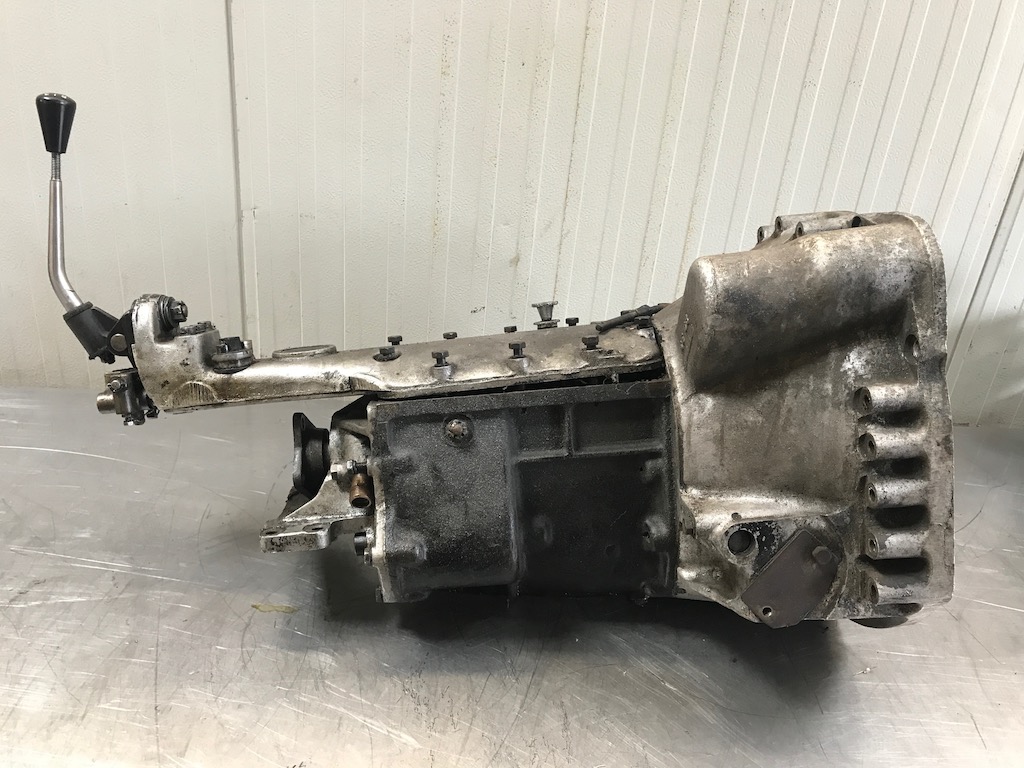
Our first article introduces the (in)famous Moss gearboxes fitted to various British cars between 1945 and the 1960s
History
The Moss Gear Company was established in 1910 in in Aston, West Midlands, by the Duckett family who were originally from Moss Side in Yorkshire.
The company started by manufacturing spiral bevel gears and gearboxes for the car and motorcycle industry. From the 1920s the company expanded production into industrial gear boxes, propellor shafts, agricultural axles and other mechanical components; eventually moving to bigger premises in Tyburn.
During the Second World War, Moss Gear was requisitioned by the Ministry of Defence to make heavy duty transmissions for military vehicles; causing the factory to be targeted by air raids. This did not, however, stop production throughout the war.
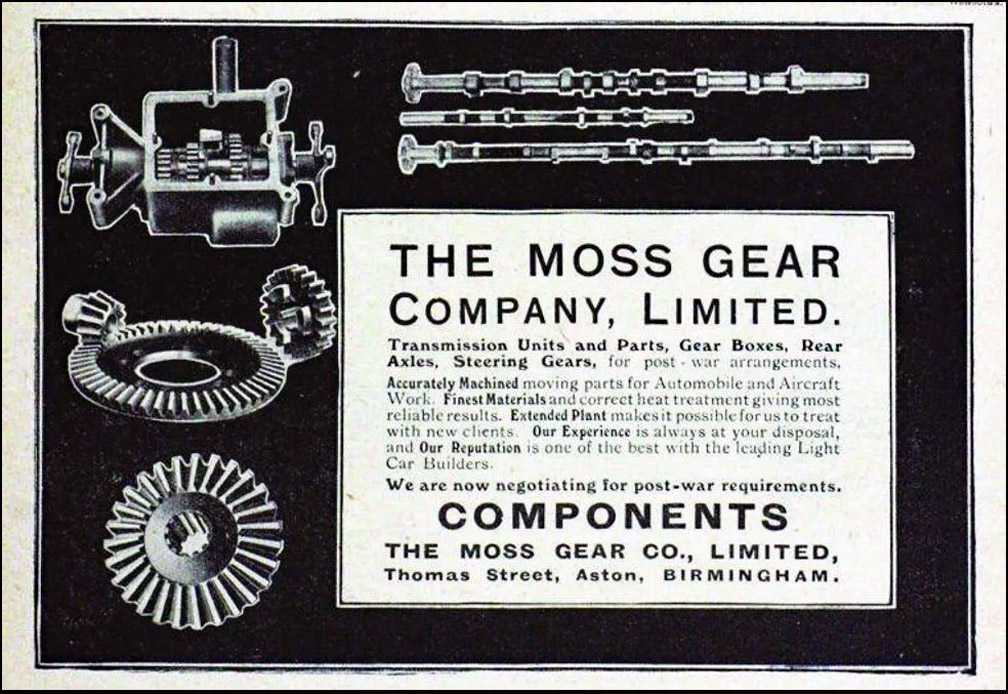
Moss Gear resumed business after the war and began making transmissions for clients such as Jaguar, Jensen, Morgan, Alvis, AC and Triumph, among others, while continuing to supply the general industrial and aircraft industries. In 1966, Moss closed the Tyburn factory and opened two sites; one in Wales and another in Accrington, splitting production between the two. By 1982, however, the company had to undergo restructuring and the Accrington site was sold to a newly formed company established by its own management team, F. P. W. Axles. A year later the Wales factory went into receivership and the remaining company was sold.
Today, F.P.W. continues making axles for utility vehicles such as street sweepers, forklifts and electric-powered vehicles.
Moss Gearbox
The Moss gearbox was used in Jaguar cars up through the 1964 model year, generally, and in the Mark 2 for another year or two after that. While the design of the gearbox did not change, the gears were made in three different machining processes during those years and they do not replace each other by simply counting the teeth. Mismatched gears, not made by the same machining process, will nearly always be noisy when rotated under load.
When the synchros on second, third and fourth gears become worn, they will no longer shift properly; even if you know the proper shifting technique (see below). Resorting to slow shifting, crash shifting or double-clutching are only temporary tactics to get the car to a point where you can remove the transmission from the car and rebuild it.
At least one company developed a process, some twenty years ago, whereby the synchros are re-machined and made to work better than they did originally. All internal gearbox parts are carefully examined, repaired or replaced if no longer serviceable. If low gear is noisy new mainshaft bearings will, in many cases, make it quieter. Technicians also examine the shifter, and top cover of the transmission, to ensure proper functioning of detents and shift rails. Sometimes the nose of the mainshaft is worn out; in which case re-sleeving the front of the shaft gives it new life.
These are very robust transmissions and in most cases have been abused for at least 20 of their 50- to 60 years. Rebuilding the transmission, and getting it to shift correctly again, should add another 50- or 60 years to its life.
How to shift your Moss Transmission
The secret to shifting these transmissions is to hesitate slightly in neutral between gears. Once you learn the technique you can shift very quickly if the gearbox is in good condition.
Lubrication
The handbook says SAE30 mineral oil and most enthusiasts agree: “Classic SAE30 mineral oil. Works great in my MK V.
Most modern oils reduce friction far too much and thus the synchros do not work.”
How to tell which one you have
Try this identification guide: https://jag-lovers.org/xk-lovers/library/gearbox_reilly/moss_gearbox_identification.html
Here’s an article on overhauling them: https://oldcars.net.za/blog/2025/01/25/the-moss-box-can-be-properly-fixed/
As promised, ‘snippets of misfortune’ or ‘the truth behind some common workshop tools’: https://oldcars.net.za/blog/2025/01/26/workshop-tools/
Views: 17