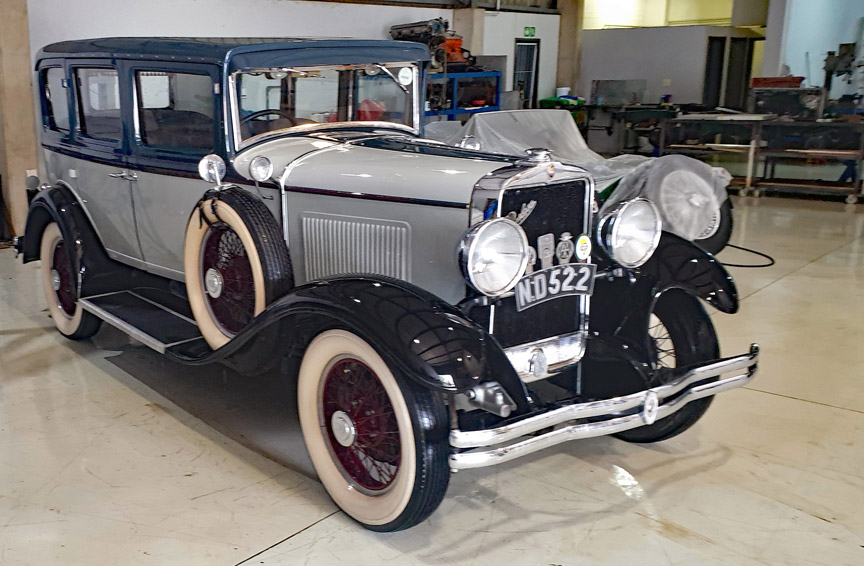
Rarity: 1929 Peerless Model 6-81 Sedan
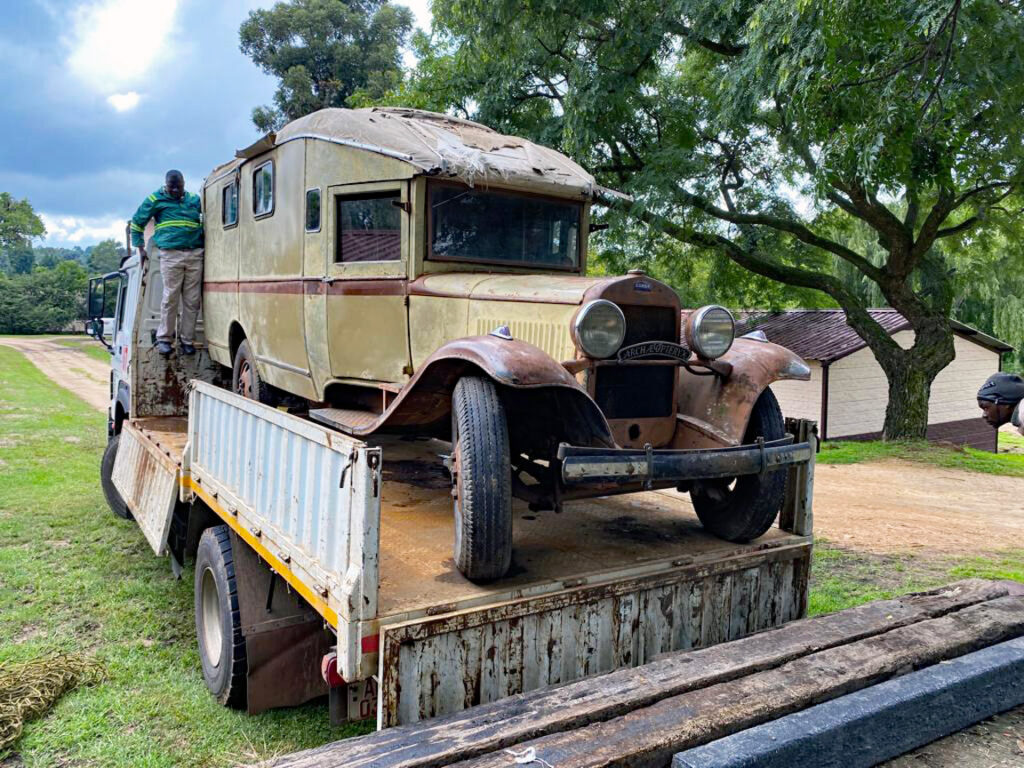
Hail-damaged treasure
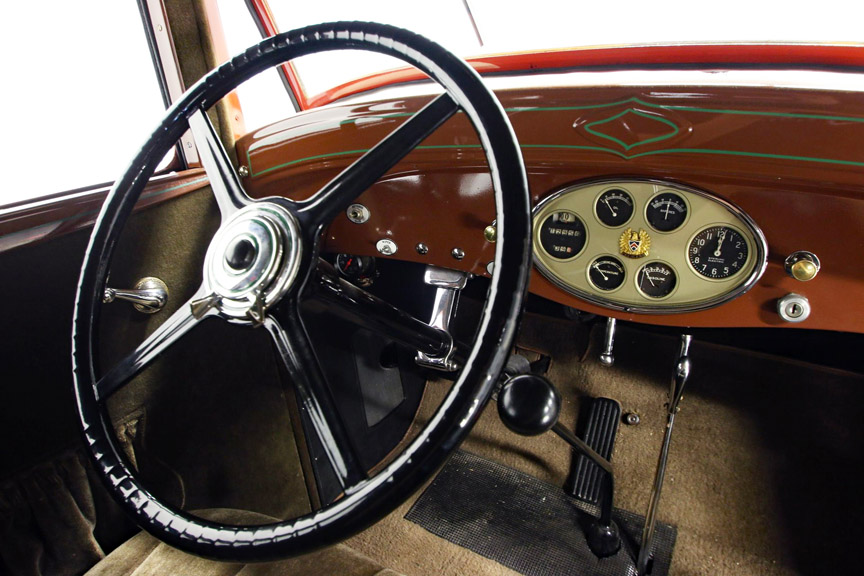
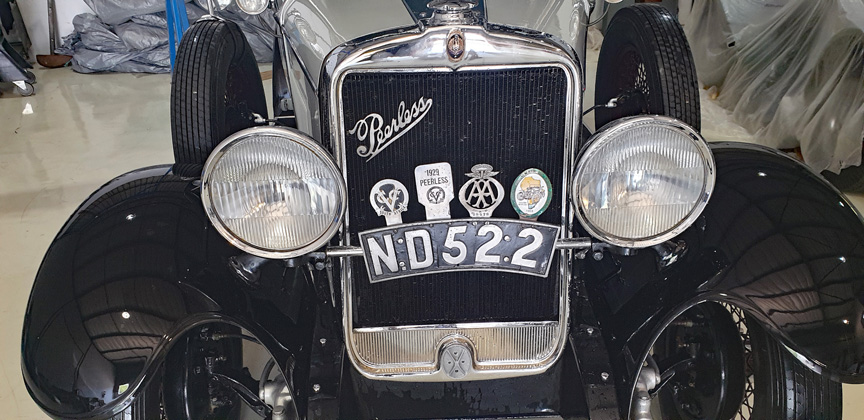
Main pics by Peter Micklewright, rearview and instruments borrowed off internet
The background: The Peerless Motor Company produced cars from 1900 to 1931. One of the “Three Ps”- Packard, Pierce-Arrow and Peerless – it was known for high-quality, luxurious automobiles.
The company, established during 1900 in Cleveland, Ohio, at 43 Lisbon Street, began manufacturing automobiles using De Dion-Bouton engines under license from the French company bearing that name. Engineer Louis P. Mooers designed, in the meantime, the first Peerless-branded models and in-house power units. The new cars debuted in 1902; featuring front-mounted engines and shaft-driven rear wheels. This layout subsequently became the industry standard.
From 1905 to 1907, Peerless grew rapidly in size and production volume. As its fame spread, the company produced increasingly higher-priced models; all focussed on luxury. In 1911 Peerless was among the first car companies to introduce electric vehicle lighting, with electric starters following in 1913. Two years later, the firm introduced its first V8 engine; developed to meet competition from Cadillac’s similar layout that had been introduced in 1914. That unit powered Peerless’ staple production vehicles until 1925 when the company began using engines bought elsewhere.
Peerless pioneered a number of innovations, that later became standard equipment, including drum brakes and the first enclosed bodies on production cars. The entire range was redesigned in 1929 – to compete with innovations from Stutz and Marmon – accelerating sales until, for 1930, designs were refreshed yet again with the Peerless-designed V8 replaced, as a cost-saving measure, by a Continental straight-eight.
The Great Depression of 1929, however, similarly depressed sales of luxury automobiles. Peerless cut production drastically while maintaining a single line of vehicles aimed at wealthy buyers who hadn’t been badly affected by the downturn. At some time during 1930-31, Peerless commissioned Murphy Body Works to design what it envisioned as its 1933 model.
The task was assigned to Frank Hershey who produced a remarkably clean, elegant vehicle. Unfortunately only one, V16-engined, prototype was completed. Finished in June 1931, it was the last Peerless ever built; remaining in the factory until the end of World War II. It was then, reportedly, donated to the Crawford Auto-Aviation Museum in Ohio but I have not found supporting evidence of that.
Peerless remained fallow until Prohibition ended, in 1933, re-opening opportunities for interested parties to produce alcoholic beverages. The company then abandoned car manufacture, repurposed its factory, and obtained a license from the Brewing Corporation of Canada to make beer under the Carling Black Label and Red Cap Ale brands.
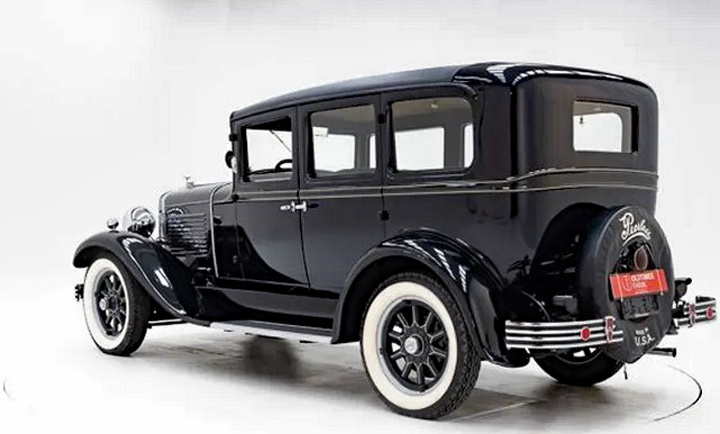
The car under review: Believed to be one of only eight Peerless 6-81 Sedans left in the world, this particular vehicle began its South African adventures in 1929.
While being delivered to its prospective first owner by Mr. Spence, the Durban dealer for Peerless, it was damaged during a hail storm – possibly the worst the area ever suffered – that covered the city in hailstones as big as tennis balls. These, according to people who remembered it, were still evident in gutters three days later.
Cars on the road at the time were severely damaged; canvas roofs ripped to shreds, windscreens smashed and bodywork badly pitted. Because the Peerless had suffered too, Mr. Spence decided to keep the car for himself; delivering an alternative vehicle to his client, Vernon Hooper, erstwhile owner of the Royal Hotel in Durban.
The model was expensive for its time, costing £885 (US$1595) when a new Chevrolet could be had for £225. To add perspective, though, the 248-cubic inch (4069 cc) Model 6-81 developed 66 horsepower against the 194-cubic inch (3179 cc) Chevrolet’s 46 bhp. It was also far more luxurious.
Mr. Spence, in time, relocated to Mooi River; using the car as a daily runabout until his passing. His daughter, Sylvia (Bowden), plumped for it as her wedding car in 1953. The move inland had spared the Peerless from “Durban Cancer” as there was no rust anywhere on the body when D.K. Lane acquired it from Spence’s widow in 1966.
Mr. Lane restored the vehicle in time for the 8th International Veteran and Vintage Car Rally, run in 1968 from Cape Town to Durban, that it completed without a moment’s trouble.
One P. Redman purchased the vehicle in 1994. It remained in his family until 2009 when the next guardian, Ballito resident Peter Micklewright, resurrected it to its former glory. He, in turn, passed the baton in 2023 to local farmer, Greg Howden, who exercises it regularly.
What’s it like? An American couple commented on theirs: “It’s very roomy. In the back you can stretch your legs straight out and not touch the seat. It’s also roomy in the front seat. A lot of cars from that era do not have a lot of room in the driver’s compartment … Peerless really has two things. One is all that the name implies, but the other is silence and comfort. This is a very silent and comfortable car to drive. There is a footrest in the back, a handrail, pull-down shades for privacy and a rear-mounted spare tire”.
Some numbers:
Production: All models, between 1900 and 1931: 108 116
Production, all models 1929: 8318
Specifications:
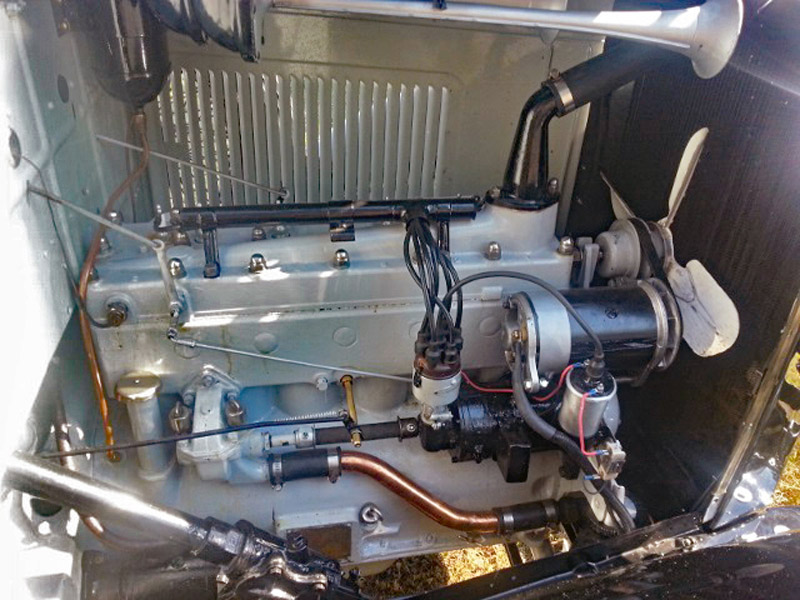
Engine : Continental straight six 4069 cc (248.3 cu in), flat head, side valve, with seven-mainbearing crankshaft
Ignition: Distributor and coil
Bore x stroke: 3.375 inches x 4.625 inches (85.725 mm x 117.475 mm)
Compression ratio: 5.06:1
Power: 66 hp at 2900 rpm
Rated horsepower 27.3
Carburettor: Single Stromberg
Transmission: Three-speed manual, single-plate clutch
Differential ratio: 4.22:1
Steering gear: Cam and lever
Suspension: Semi-elliptic leaf springs front and rear
Service brakes: Four-wheel drum, hydraulically operated
Parking brake: Mechanical, acting directly on propellor shaft
Wheels and tyres: Spokes on steel rims, 5.50 x 19-inch biasply (Wheels with wooden spokes, and steel dish wheels were optional)
Wheelbase : 294 cm (116 in)
Weight : 1383 kg (3050 lbs)
Views: 25