Continuing the hard way
Original story by Lennie Gouws on the Heritage portal
Postcard pics from South African Nostalgia on Facebook
Edited by Gordon Hall
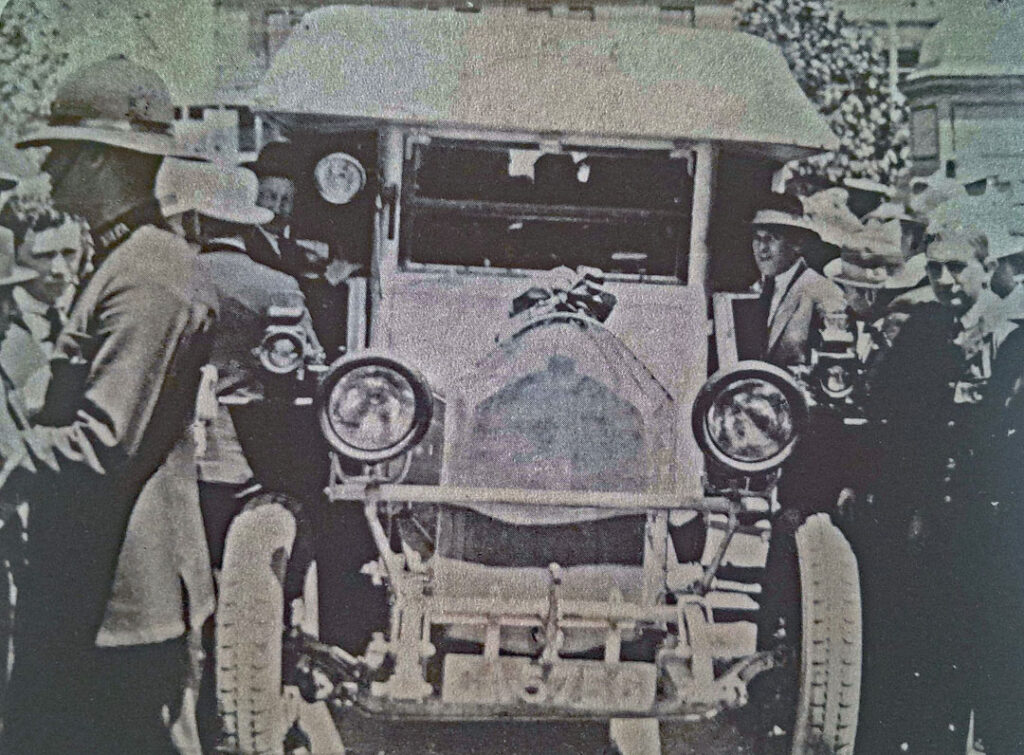
Everything was prepared in an old rented warehouse. Food, fuel and oil were bought and, on 23 September, the expedition left Cape Town in lovely sunny weather.
The first evening was spent in Bainskloof, near Wellington. Later, somewhere in the Karoo, Stella decided that her thick, heavy coat was unnecessary and left it next to the road. It was returned the following day, neatly folded and packaged in brown paper. She later wrote: “I think Africa, from the Cape to Cairo, is strewn with oddments from my personal kit.”
They completed the first 1,000 km, in Kimberley, on 2 October. Two days later, one of the trucks broke down. It took a week for the spare part to arrive from Johannesburg.
They stopped over in Johannesburg for a few days to rest and re-organise; departing on 25 October. A week later, on 2 November, they reached the Limpopo River.
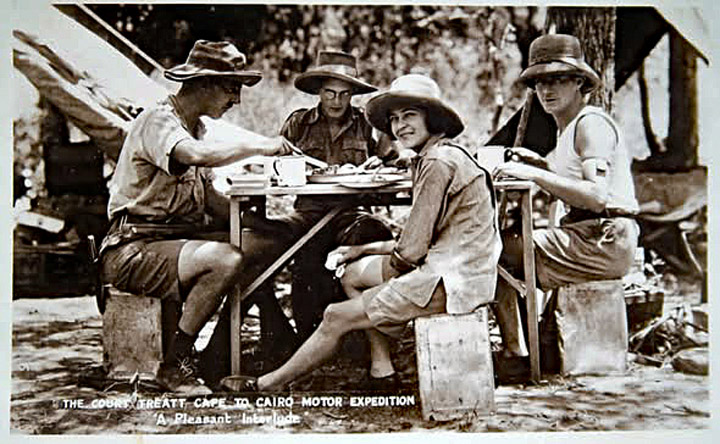
The rainy season had arrived earlier than usual but they reached the Great Zimbabwe Ruins on 12 November. They took a few days to repair clothes and camping equipment and to service the vehicles. After becoming stuck in mud a few times, they arrived in Bulawayo on 25 November. Here they repaired one truck’s rear axle and built a trailer.
Despite heavy rain they decided to attempt a section that had never been traversed by car before. To lighten the load, they left some food behind. Their diet subsequently comprised Bovril, Bully Beef, salt, coffee, flour and dried fruit.
The new trailer was left behind at Nyamandhlovu, along with the aluminium roofs that were to have served as pontoons. The Kelsey attempt of 1913 had discarded a similar contraption in Paarl.
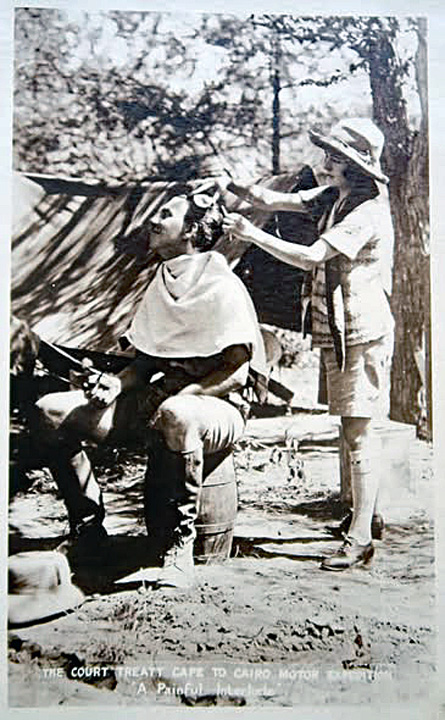
Today’s road from Bulawayo to Victoria Falls is 435 km long and can be travelled in just over seven hours. It took the Court-Treatts four months. Just beyond Bulawayo the mud seemed determined to engulf the vehicles. After each one was dug out, it was able only to cover a few metres before getting stuck again. It was regarded as a good day if they could advance 10 km. It rained incessantly and the air was so damp that, in spite of the heat, nothing dried out.
Camping was terrible. Christmas was celebrated in rain, under a sopping wet tent, with a warm meal, cake, plum pudding and champagne drank from tin mugs. Stella wrote that the situation reminded her of what soldiers experienced, a few years previously, in the trenches in France: “Can anything be more beastly than this Christmas Day?”
A trip to Wankie, supposedly a day’s journey, took a month. Food stores ran low and a tent was blown away. Errol Hinds proved to be a skilled assistant mechanic but suffered a broken arm while trying to hand-start one of the trucks. The crankhandle lashed back and his arm was in the way.
Having discarded the roof pontoons, alternative plans had to be made to cross rivers. These included pulleys, pontoons, and bridges cobbled together. Were it not for the muscle power of locals and their oxen, the expedition would have come to a sorry end. Stella’s book suggests that this labour was not always appreciated. Helpers, however, each received a penny for a day’s labour.
Until then they had stayed near the railway line but, after crossing the Gwayi River, they switched to higher ground. This meant that thickets had to be chopped to make roads. Progress dropped to walking speed.
They reached Victoria Falls on 25 April and obtained special permission to cross the Zambesi ravine via the railway bridge.
With the rainy season over, they encountered a fresh obstacle. Deep sand slowed the vehicles considerably, managing only 29 km on the first day .
At Kafue they met a French team, also led by an ex-military officer, journeying from Algiers to Cape Town. Its leader, Captain Delinqette, was accompanied by his wife, a mechanic and others. They reached Cape Town on 5 July 1925 after travelling for eight months.
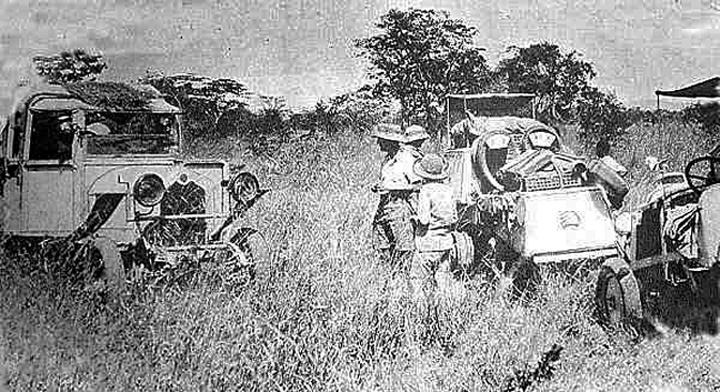
Early in July the Court-Treatt company reached the southern shores of Lake Tanganyika. Here they turned east to travel through a swampy area. They had to cross about 200 rivers. Approximately 180 had bridges made from tree stumps, most of which had to be rebuilt before the Crossleys could use them.
On 24 July a steep incline almost resulted in catastrophe. The second Crossley couldn’t climb it, started running backwards, and was luckily stopped by a tree before it could gather much speed. After being winched back up, it was found that damages included a broken axle and a holed radiator. The team’s blacksmithing capabilities had it repaired, right there, the following day.
Part 3 coming soon.
Views: 26
Leave a Reply