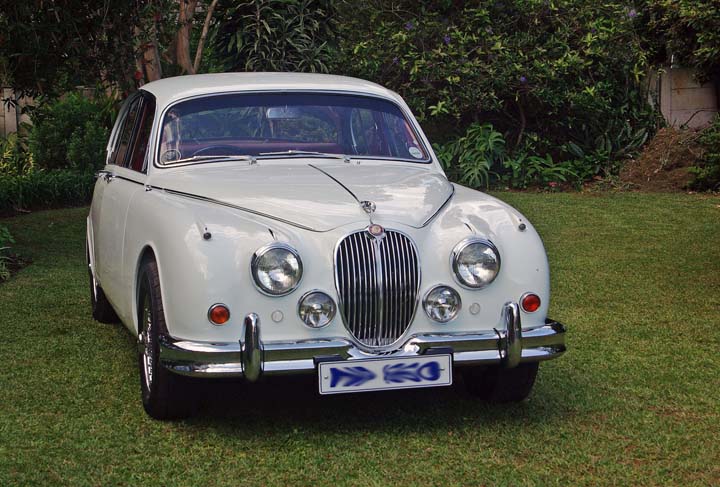
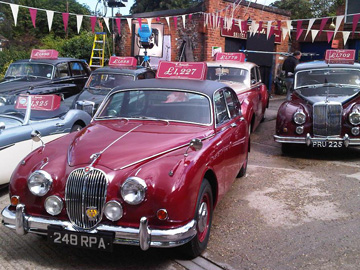
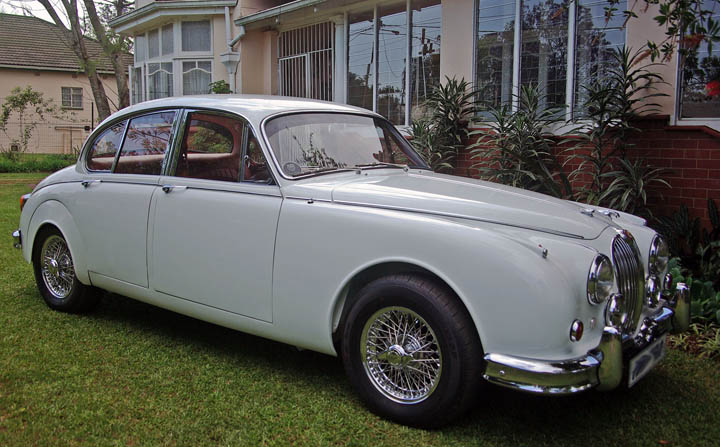
The Mini turned 50 in 2009, but so did two other British icons, the Triumph Bonneville and the Jaguar Mark 2. We look back on the Jaguar.
Originally published in The Witness Motoring on Wednesday November 18.2009
Fast, spacious, luxurious and affordable
While Minis captured the hearts of housewives, businessmen, race- and rally drivers and penniless students alike, it was Jaguar’s medium-sized family sports saloon, the Mark 2, that endured as an all-time classic.
Taking over in 1959 from the “2.4” and “3.4” saloons, later called Mark 1, Jaguar’s Mark 2 boasted improvements to suspension, handling, braking, rear axle and body styling. Unfortunately its increased weight saw it lose a little performance to similarly spec’ed Mark 1s.
Mark 2 was fitted with a choice of three versions of the classic XK engine. These were the short-block 2483cc unit, the earlier 3.4 litre and the bored- and uprated 3.8 litre motor. This developed 220 bhp (164 kW) and was capable of up to 125 mph (201 km/h) and zero to 60 mph in 8,5 seconds, making it the fastest production saloon in the world at the time.
While the smaller versions proved popular as family cars and as weekend motorsport machines, the 3.8’s performance and racing pedigree endeared it equally to bankers and to wealthy underworld leaders in need of nimble getaway cars. Needless to say, highway patrol police quickly adopted the 3.8 as weapon of choice on the UK’s unlimited-speed freeways of the time. Some found their way to pre-independence Rhodesia to defend the honour of law and order in that country as well.
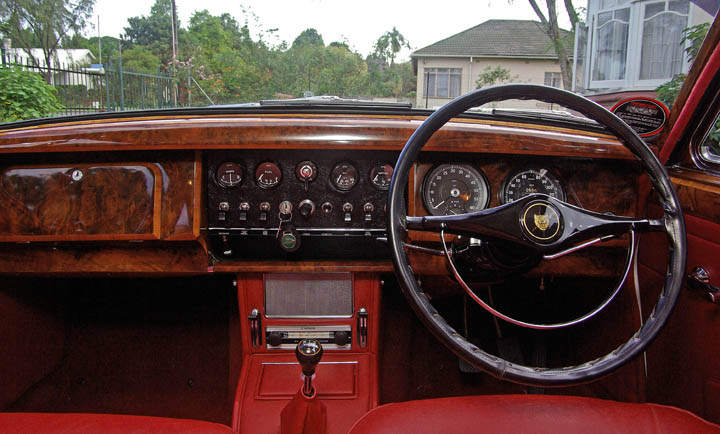
Civilian Mark 2s were true to Jaguar’s mission at the time to provide fast, spacious and luxurious family cars at affordable prices; an element that fans might say is lacking today. Interiors were dominated by the obligatory spread of dials, across beautifully polished walnut instrument panels, and real leather upholstery. Unfortunately leather made way for vinyl in 1966 when bean counters insisted on lopping Pounds off showroom price tags to compete with upstart Rover 2000 TCs.
By 1967 the 2.4 and 3.4 litre cars were renamed “240” and “340” while the 3.8 was dropped to make way for the incoming XJ6. The new cars were identified by means of slimmer bumpers, while cylinder head and carburettor changes increased performance slightly. They were phased out in 1969.
Altogether, 83 976 Mark 2s were produced, including 2 050 shipped out to South Africa for assembly at the CDA plant in East London. An unknown number were exported, fully assembled, to Rhodesia. The “240” and “340” runout models accounted for a further 7 234, including seven “340/3.8” versions built to special order.
Jaguar Mark 2s featured in many movies, notably in chase scenes, while a particularly scruffy example starred in the 1980s cult film Withnail and I. On the small screen, Mark 2s were seen in episodes of The Professionals, The Avengers and The Baron. Most familiar to SA viewers though, was probably the clean-looking but mechanically suspect 1960 model 2.4 of the late John Thaw’s Inspector Morse character.
Morse was originally intended to drive a Lancia but no suitable example was available so a cheap, used, 2.4-litre Mark 2 was bought for the purpose. This was the basic steel-wheeled version with a vinyl roof added by the producers to cover cosmetic flaws. Its suspension and brakes were dodgy at best and was famously described by Thaw as “a beggar to drive.” The engine was no better, so the car was regularly pushed into scenes, with mechanical sounds overdubbed.
After the series ended, the car was given away in a raffle, then famously auctioned for £53 200, some £45 000 above its expected value, purely as result of its famous history. After a comprehensive rebuild, it sold again for “over £100 000”. When we last heard of it, the car graced the garage of property management tycoon Ian Berg, who made it available for shows and promotions across the UK.
Update: December 19, 2011
Owned by Australian publishing company, International Publishing Group, the distinctive car remained housed in the UK and featured in a cameo role in a prequel to the series. An ITV production entitled ‘Endeavour,’ its first episode was timed to coincide with the 25th anniversary of the first instalment.
Set in 1965, Shaun Evans played Morse as a junior detective who’d just dropped out of Oxford University and was investigating the disappearance of a schoolgirl. John Thaw’s daughter, Abigail, starred alongside Evans in the eight-season drama that piloted on 2 January 2012 and went on to become a fully-fledged series: https://en.wikipedia.org/wiki/Endeavour_(TV_series)
Deecie’s specifications make today’s youngsters shake their heads in disbelief
A tale of two bakkies
Pics by author
Original was published in the March 2018 edition of The Meander Chronicle
Gather around and let me tell you a tale of two very similar, yet quite different, elderly pickup trucks. So you can remember which is which, let’s call them Deecie (double cab) and Essie (single cab). They entered the equipment shed on Mark Pistorius’ Midlands farm at different times and for different reasons.
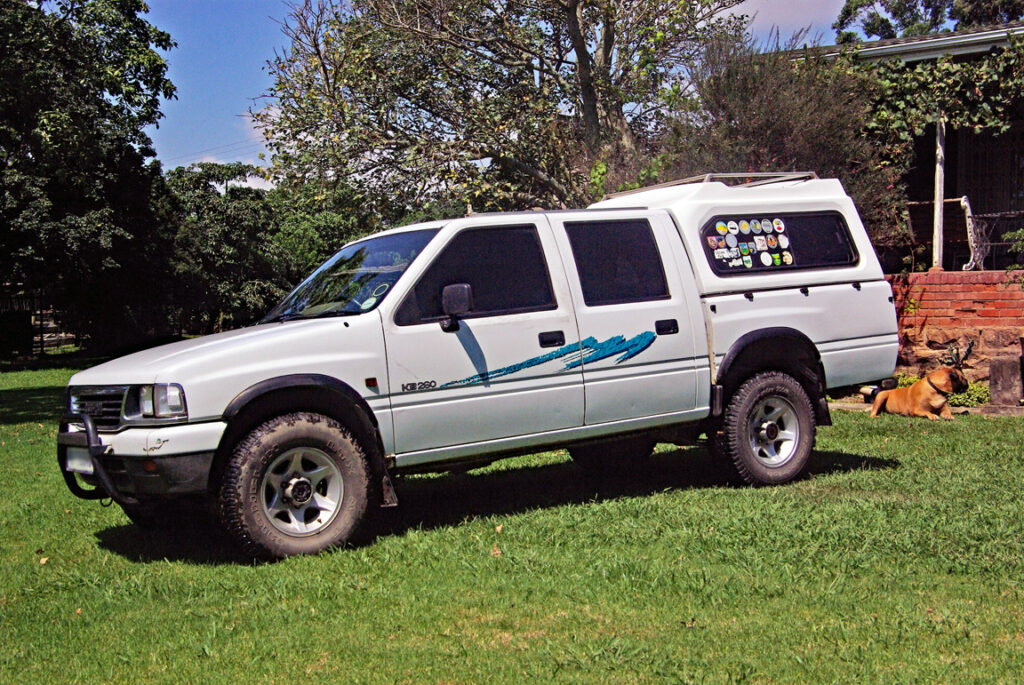
Deecie was first. An early-1997 runout model of the now-iconic ribbed tailgate Isuzu, she is a KB260 LE 4×4 double cab and was bought for use in Mark’s then-day job as a mechanical engineer with the Department of Transport. Her specifications make today’s youngsters shake their heads in disbelief.
Its petrol engine is fed by carburettor; power output is a humble 80 kilowatts coupled with maximum torque of 205 Nm; a second, stubby, gear lever selects 2High, 4High and 4Low and, before engaging in off-road roughhousing, you need to stop and lock the front wheel hubs by hand. Rear differential locking is by means of a lever on the transmission tunnel.
The first, work-related, accessory was a fibreglass canopy. This was later supplemented by gear for his family’s favourite holiday activity, touring the Republic and surrounding countries. Kit included a long-range fuel tank, roof rack with two rooftop tents, mini safe for securing travel documents, dual battery setup, three-way (gas, 12-volt and 220-volt) refrigerator and high lift jacking points. A water storage tank came later. As Mark says, “The best places to see can only be reached the hard way.”
A shakedown weekend at Albert Falls (the dam was full back then) saw the heavens open to drench their campsite. The children’s tent on the ground was flooded, leaving them floating on their air mattresses, but canopy and vehicle were declared weatherproof.
Having established that the basics were right the clan took off on its first major adventure in mid-1998; a four-week, 5038-km tour of Botswana. Apart from previously mentioned camping gear they carried every scrap and drop of food and water, needed for the trip.
Critics could suggest that this possibly exceeded the vehicle’s payload capacity of 830 kg, but perhaps we might turn a deaf ear… Mark, being an engineer, recorded every detail meticulously. Despite being heavily loaded and travelling mainly on gravel roads, where there were any, average fuel consumption worked out at 15.23 l/100 km.
Later tours included Mozambique, Namibia, Swaziland, Lesotho and Zimbabwe, a second trip through “Bots” and the length and breadth of South Africa. Mark admits to getting stuck once – in sand during the Mozambique trip. They were towing a trailer and he forgot to deflate its tyres. Although it makes sense with hindsight, few might realise that skinny trailer tyres can dig in too. We learn something every day.
“Brag” stories (every off-roader has a few) include recovering his brother-in-law’s highly rated Japanese 4×4 SUV on two occasions. Once was out of sand and the second time was from a river.
Despite being underpowered by today’s standards and punished beyond the dictates of reasonable duty, Deecie’s odo currently registers 261 000 km. Subsequent new Isuzus did day-job work over the intervening years but the old workhorse soldiers on, still touring occasionally but mostly helping out on the farm.
Essie wears her scars proudly
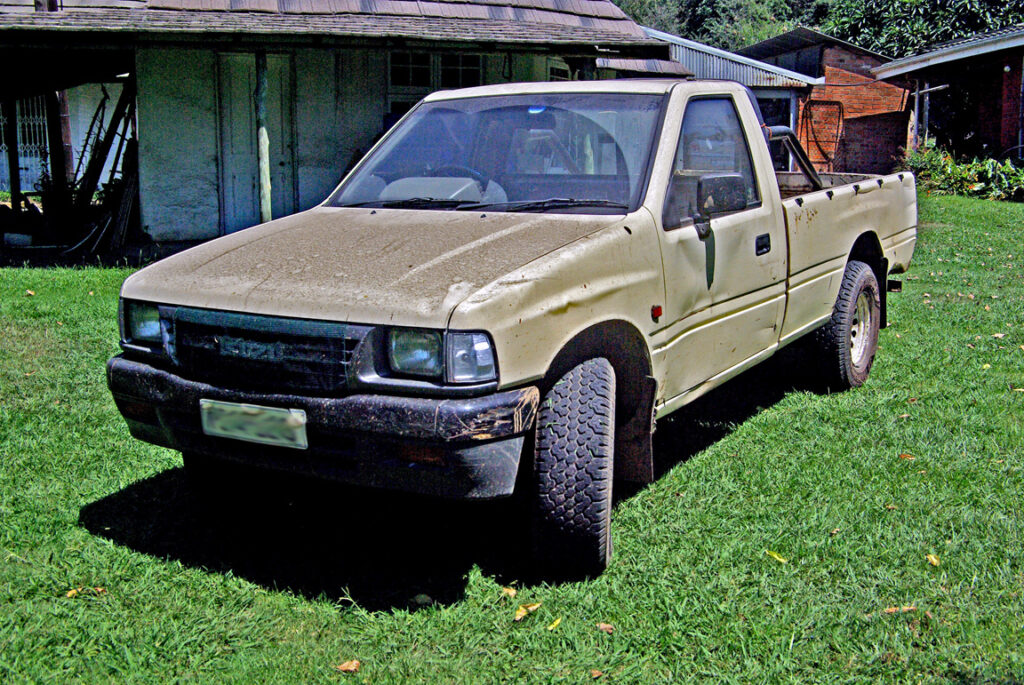
Essie, a long wheelbase single cab 4×4, was bought purely for agricultural use at a Provincial vehicle auction in 2010. It, too, is a 1997 KB260 petrol 4×4 with the ribbed tailgate. Her specification sheet is much simpler than Deecie’s. For example, most modern must-haves like air conditioning and powered windows simply aren’t there. The front seat is a vinyl-covered bench and floor mats are rubbery plastic. A CD-compatible radio and tape unit was optional but a cell phone cradle was standard. It was, however, one of only two Isuzus available at the time with a standard, galvanised chassis; something shared with Deecie.
Its work consists of farm patrols, securing fences, fighting fires, tending to cattle and transporting livestock. Her first long trip, towing a double-deck trailer, was to the far end of the Free State to collect 72 juvenile goats. Retired teacher Stefan (Stef) Marran, to whom farming activities have now been outsourced, quips: “If you’re in a hurry, use something else.” But it gets the job done.
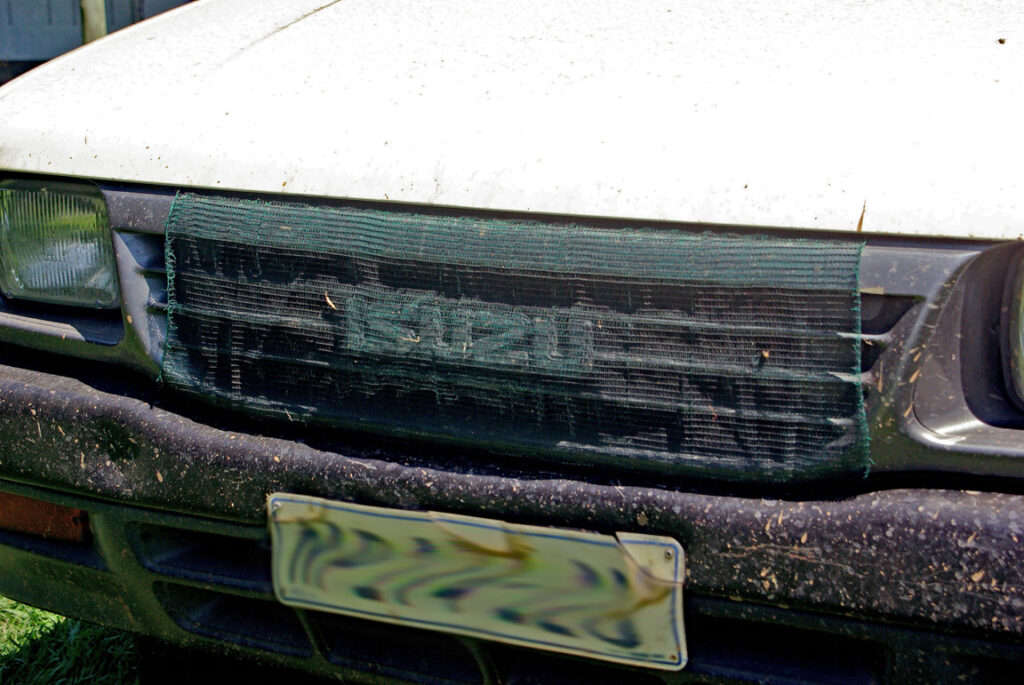
Cheap plastic mesh keeps fire-borne grass seeds out of Essie’s radiator
Essie’s winter kit consists of a 500-litre water tank, pump and hoses and a quick and cheap plastic mesh filter over the grille. That’s to prevent wind-borne grass seeds from blocking the radiator. Fire season, says Stef, is when the real excitement happens. They don’t break out in convenient places and the quickest way to them is usually via the least-hospitable route – across dongas, up steep and rocky hills, fording streams or crashing through bushes. Nothing has stopped Essie yet and she wears her scars proudly.
Some bakkies are built for heroics with qualifications to make it so. Others have victory thrust upon them despite apparently lacking the necessary qualities. Deecie and Essie are that kind of heroine.
The numbers Engine: Toyota 2E-ELU, 1296 cc, SOHC belt driven, 12-valve, inline four Power: 55 kW at 6200 rpm Torque: 103 Nm at 4200 rpm Zero to 100 km/h: About 13.8 seconds Maximum speed: 160 km/h Real life fuel consumption: See text Tank: 60 litres Boot: 360 litres Ground clearance: 150 mm Turning circle: Between kerbs 9.6 m, between walls 10.4 m Brakes: 243 mm solid discs, 200 mm drums Suspension: McPherson struts with gas-filled shock absorbers, front and rear Tare: 936 kg GVM: 1450 kg
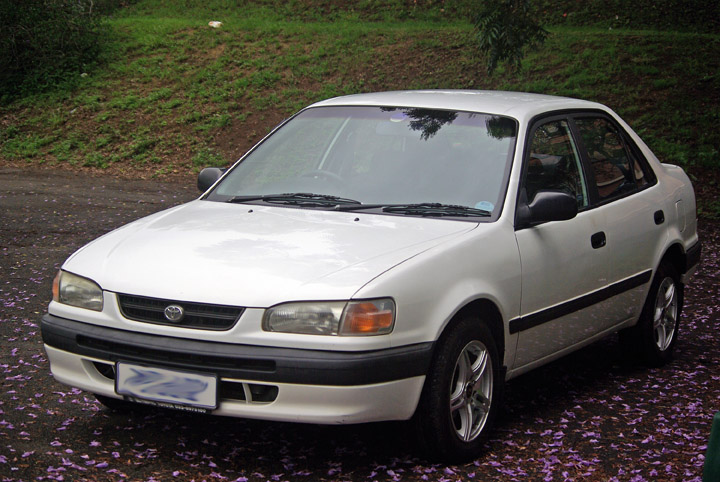
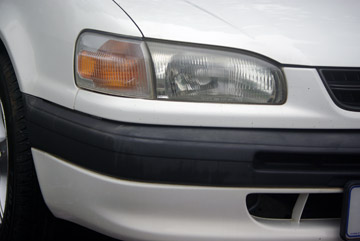
My personal car, a Toyota Corolla 130 GLE, is an anachronism. It’s not very powerful or even especially economical. But we’re together and she isn’t for sale.
First registered on 15th January 1998, my little oriental shopping trolley (Gigi, the Grocery Getter) entered my life second-hand on 1st July 2000. Until then it had been a Toyota SA office car used, I suspect, as a gofer; running errands and ferrying personnel to and from the airport. I figured it for a good buy reasoning that, being a “factory” car, it would have been well looked after and serviced meticulously.
I picked it up from my local Toyota dealership with 55 000 km on the clock. Priced at R59 000, it represented a saving of roughly R15 000 over what it had cost new. The paint looked immaculate and everything appeared ship-shape but there were to be surprises in store.
It served as my daily driver until early 2008 when press cars took over my life. Since then it’s only used regularly for five to six weeks a year when the factories shut down for the holiday season and test vehicles are withdrawn for safekeeping.
Driving other people’s vehicles most of the time blurs one’s grasp on reality until certain “facts” become ingrained. I mean, every car has ABS brakes, airbags, electric windows and mirrors, power steering, all manner of electronic safety aids and wondrous connectivity, right? Well, no. Most didn’t twenty-pus years ago. A few expensive cars boasted some of the up and coming modern conveniences but little Corollas and similar budget vehicles generally did without.
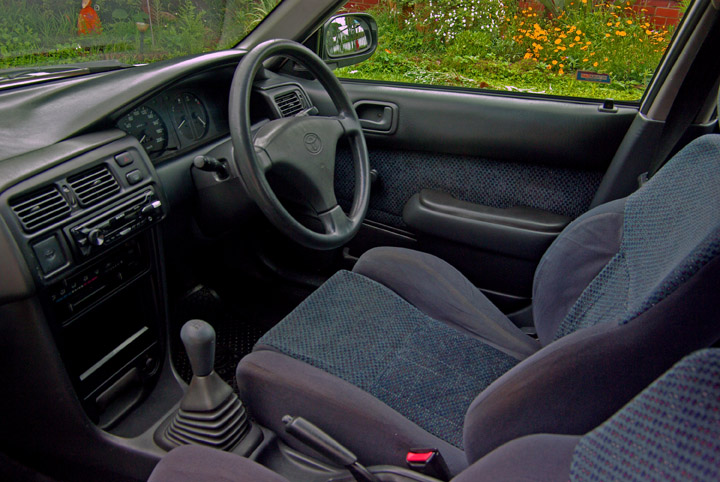
Gigi is horrifyingly basic by today’s standards; she has no airbags at all although a single restraint was offered optionally overseas. Forget, also, about power steering; central locking; ABS brakes with or without EBA and EBD; ESP; automatic climate management; cruise control, adaptive or otherwise; powered windows and mirrors; a rev counter; height adjustment for the driver’s seat; reversing camera; a touch-screen infotainment centre or even Bluetooth.
The radio/CD player is an after-market item.
That came bundled with a radio and CD-player combination I bought to replace the original cassette tape machine when that technology went the way of the buggy whip. As for automatic locking on the move, follow-me lighting or auto-on lights and wipers, you jest, surely?
Do I miss all that stuff? Some, yes, but just a little. I miss power steering the most because low speed manoeuvering is difficult for the first couple of weeks until one gets accustomed to doing without.
My conscience says that airbags save lives but my practical voice objects that many users have also been seriously injured when bags deployed – and there’s the worrying thought that the world’s largest manufacturer of them sank into bankruptcy after multiple recalls resulting from unscheduled incidents.
As for ABS brakes with all the add-ons, I grew up in an age when youngsters were taught how to drive rather than to fudge their ways through the test. You overcome aquaplaning by braking in short, sharp jabs rather than by panicking. ESP becomes unnecessary if you drive sensibly. I cringe when drivers lurch around the sharpest of corners, at high speed and in top gear, while trusting man-made electronics to shield them from the laws of physics.
Automatic climate control is nice but my car came with factory fitted air-conditioning that works 90-percent as effectively. Powered windows and mirrors are for the lazy but I do miss central locking. I also miss having a rev counter but it was one of the trade-offs one makes when buying any new, or new-to-oneself, car.
I accept that many drivers are shorter than I am, so they might regret not having an adjustable seat but that isn’t my problem in this particular car. There is more than enough headspace and my eyes are level with the centre of the windscreen – where they should be.
“Missing” gadgets, like reversing cameras, blind spot monitoring, lane keeping assistance and following distance control are de-necessitated by two simple, old-fashioned rules: look where you’re going, and stay alert.
Oh yes, the surprises. From the beginning, the car tended to bottom out when crossing gutters with a third person on board. I thought they all did that and shrugged it off as one of Life’s little trials. After new dampers all around however, replacing the rubber bump stops and fitting new rear springs, the car was transformed. I should have done it earlier.
The other surprises included finding shards of glass under the carpets after a few months of ownership and bubbling paintwork, on both left doors, that appeared years later. It was attributed by a local panel beater to shoddy surface preparation. I guess the mollycoddling expected of a factory-owned car was actually a myth. We live and learn.
Thankfully, the Corolla has cost very little to run. In the course of a further 85 000 kilometres and almost eighteen years, I have used up one clutch assembly and two sets of tyres, replaced front brake discs and rear drums once each, visited the CV joint guy twice, replaced a section of front seat fabric, done up the suspension (see above) and the radiator’s top tank rusted through. Apart from the necessary repair and cleaning, the cylinder head obviously needed attention too. Beside that, ordinary servicing, including a precautionary new camshaft belt at 80 000 km, was all it needed.
The old 2-E motor (other markets enjoyed the 1331 cc, twin-cam, 16-valve 3-E by that time) isn’t particularly powerful or economical. It is carburettor-fed and variable valve timing was still new back then, so performance is not exactly exciting. But it gets the job done. Little pleasures include a slight power surge as the second stage of the carb kicks in at about half throttle and the way it picks up its skirts when the cam starts working hard at around 4000 rpm. Modern 1300s have nothing to fear from it, however.
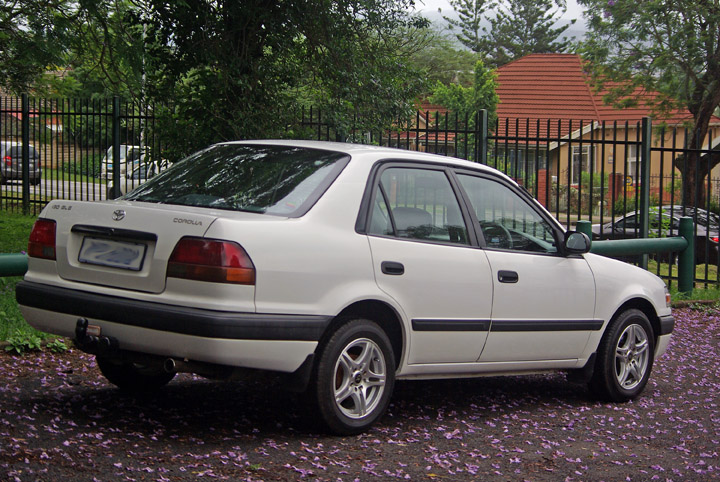
The alloy wheels are after-market accessories
Careful driving on long trips returns about 15 kilometres per litre while town use requires around 10. Thanks to decently sized windows all around and a fairly tight turning circle, it handles and parks easily while a roofline that doesn’t slope away to nothing means that those in the back can sit comfortably. The boot is very reasonable at 360 litres (See pic below) and split rear seat backs can be laid down to provide more volume. Runflats and space savers were still novelties back then, so the spare is fully sized.
Current book value is around R30 000 but a dealer told me I shouldn’t accept a cent less than R60 000. Current on-line asking prices for Corollas of this vintage seem to bear this out but, as I tell enquirers regularly, we’re together and she isn’t for sale.
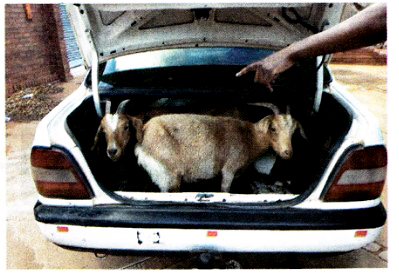
As this clipping from a January, 2020 newspaper shows, the boots of Corollas like mine (this one belonged to a stock thief) can hold two small goats.
Originally published in Weekend Witness Motoring on Saturday April 23, 2011
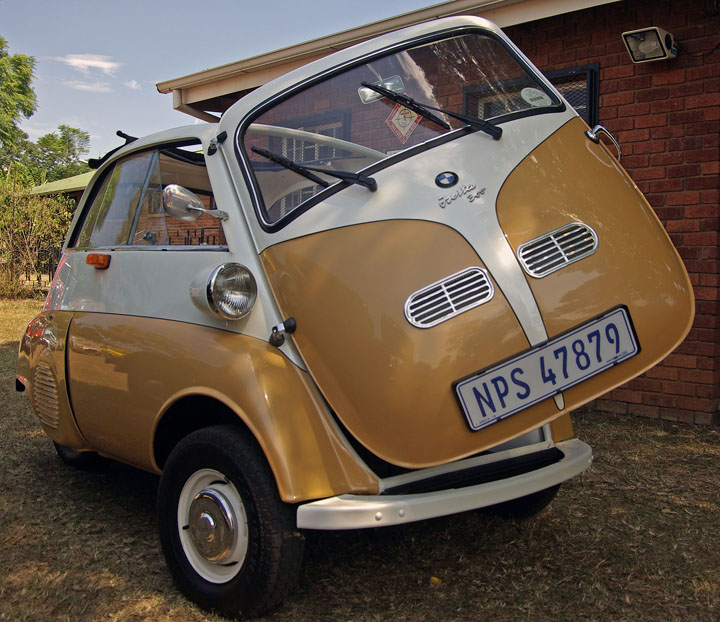
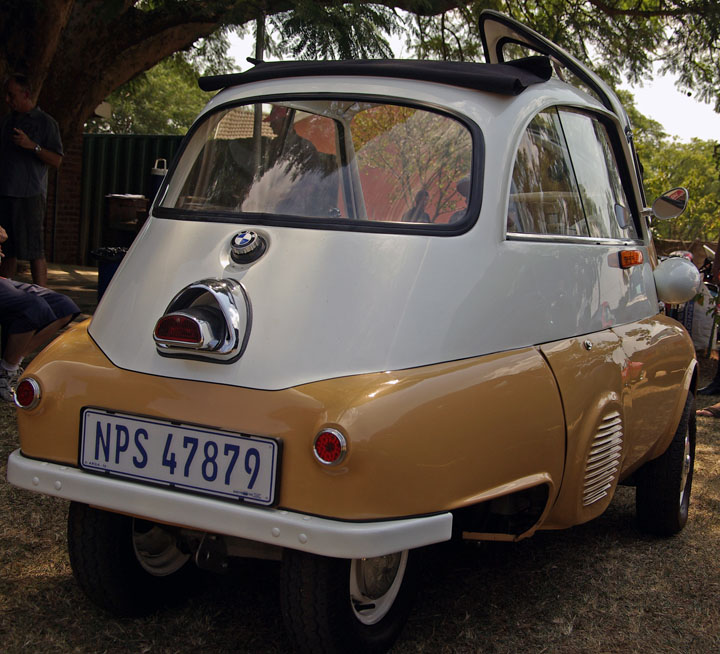
“The microcar bug is a disease,” said Bruce Baker “and there is no known cure.” He should know. Shortly before Baker and his wife Pat moved from Johannesburg to the South Coast, they owned seven. “It’s all her fault actually,” Baker grins, “fifteen years ago she told me she wanted a BMW Isetta and, well, what can a man do?” An advertisement in one of those freebie car-ad magazines led them to the home of an artist in the Cape winelands and a deal was struck. The Isetta was restored and the rest is history.
Microcars, also known affectionately as bubble cars because many were egg-shaped with bubble-like windows, were a phenomenon of the post-WW ll era when fuel and raw materials were in short supply. Ordinary people needed cheap, short-range cars; so various manufacturers willingly filled the need. Most were single- or two-seaters with or without nominal luggage space and powered typically by small motorcycle engines.
Brands reaching our shores included BMW Isetta, Goggomobil, Bond Minicar, Heinkel Kabine and Messersmitt KR. Interestingly, Isettas were built under a variety of names under licence from Italian company Iso in France, Spain, Belgium, Brazil and the UK, where the BMW badge was used as well. BMW bought not only a manufacturing licence but the body tooling too, so most cars built by other manufacturers had their own coachwork. Despite owning the tooling, BMW modified the car to such an extent that its own version had no panels in common with the original Iso body. Even the engine made way for a modified version of BMW’s own R25/3 unit.
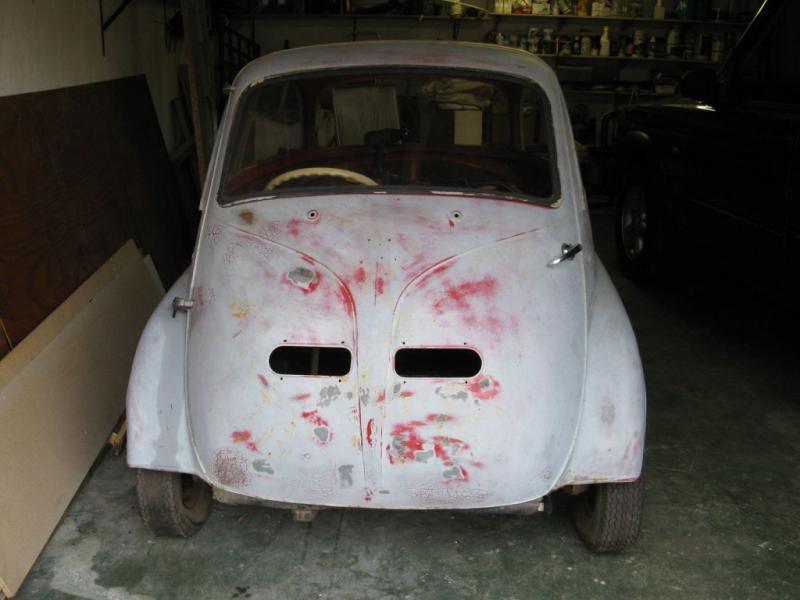
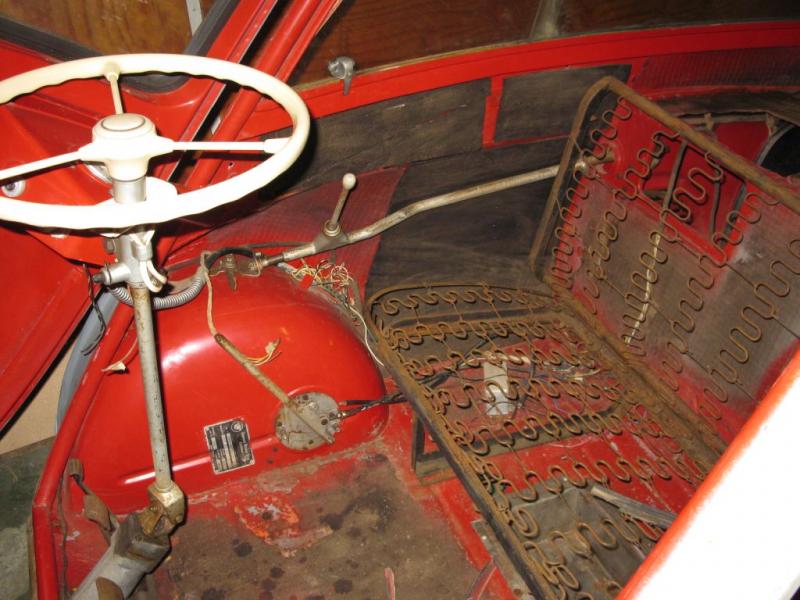
Proof that microcars are addictive is the fact that the Bakers simply could not shake off the disease after settling into their new habitat. A 1957 BMW Isetta 300 surfaced (yawn if you’ve heard this before) in a garden shed in Eshowe some 18 months previously. (Yes, it had weeds growing out of it.) Money changed hands and restoration began with the Bakers doing everything except upholstery and paintwork. The result is the magnificent little car pictured here. “Pat helps a lot,” Baker grins, “because microcars need small hands to work on them.”
Since then the collection has grown with two Messerschmitt KR 200s, one running and one a work in progress and a Goggomobil coupé fitted with a 400cc two-stroke twin. The latter is Pat’s present car, with a history of its own. One of the original seven, it was sold to a Ladysmith enthusiast when they left Johannesburg. He completed the restoration but subsequently passed away. Fittingly, the Bakers bought it from his estate.
Messerschmitts have a certain cachet. After WW ll, the fighter plane company was forbidden to follow that particular line of work so it turned to manufacturing microcars. First up was the KR 175 kabineroller (cabin scooter) powered by a 173 cc Fichtel and Sachs two-stroke single. This was manufactured between 1953 and 1955, when a much-improved KR 200 with 191 cc motor took to the streets.
There remained a hint of aircraft heritage in all but the rag-topped cabriolet versions however. A distinctive, side-hinged acrylic bubble provided access to the two seats set in tandem. Another distinctive feature is that these cars have four forward speeds and four reverse. Heard of that? Of course you have. The secret lies in the fact that the engine runs backwards when the ignition key is pressed in to a second position and the motor restarted. “Messerschmitts sell purely by word of mouth because they are so eagerly sought,” Baker told us. Having turned down an offer well into six figures for his own running example, he should know.
The couple is currently restoring an Isetta coupé on behalf of a German enthusiast who will take it back home with him once it’s complete. There are only two known running examples in Germany at present. This project will make it three.
“Microcars are among the few classics with investment value,” Baker said, “and there is some money to be made from good examples, but that’s only because they truly are an incurable disease.”
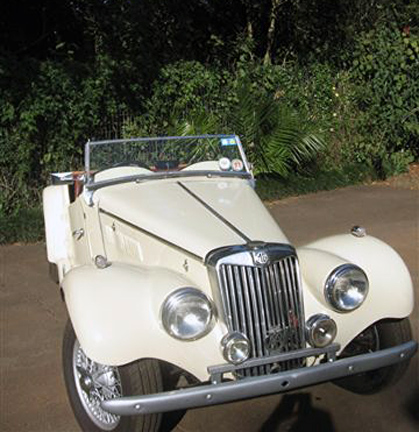
The first thing to know about MG TFs is that there were two versions. The first, introduced in 1953, was fitted with BMC’s 1250 cc XPAG engine that produced 43 kilowatts and 88 Nm. For a mid-1954 update that motor was switched out for the 1466 cc XPEG unit developing 47 kW and 106 Nm. The wizards of Abingdon also wanded away 39 kilograms of excess mass. That Chapman chappie’s “Just add lightness” Lotus Seven arrived in 1957. Just mentioning…
Here’s a tale about one man’s 1954 TF 1500: People make plans. Life gets in the way. So it was with Ian Grieve. He’d planned, following school, to study medicine in Cape Town. Fate saw to it that he read the Hippocratic Arts at Trinity College, Dublin, instead. While there, he owned an MG TC and the damage, as they say, was done.
Back home in Pietermaritzburg life went on but, one day during the ‘seventies, the MG bug bit again. He bought a bundle of parts, supposedly a complete 1947 TC, firmly intending to reassemble them. They remained on shelves in his garage.
A complete TC: Or is it?
A more approachable project, a 1954 TF 1500, came his way a few years later. This was noticeably complete, standing on its wheels and recognisable. It just didn’t run and the fine old English Ash framework had succumbed to dry rot. He disassembled the car, during the ‘eighties, with imminent intent to restore.
Living unfortunately intervened again and the project was shelved. Literally. Grieve retired in 2007 after 40 years in family practice. Then, following a long-awaited extended safari into Africa, he looked around for something to do.
Life made up for past interferences by stepping in, with a Grand Sign, during a visit to Weekend Witness/VSCC Cars in the Park the following year. A magnificently restored TF, belonging to Charles Rilett, caught his eye and Grieve knew that the time had come. Work resumed in earnest during 2009.
Rust was brushed, buffed and cut away, rotten panels patched or replaced and most of the wooden framework remade in Meranti and heavy plywood. Genuine Ash doesn’t grow on trees ‘round here you know. How does one remake a wooden part that’s rotted away to a fraction of what it should be? Take what remains, measure carefully, then reconstruct according to the drawing in the parts book. Thereafter, trim and shape until it fits into the space provided.
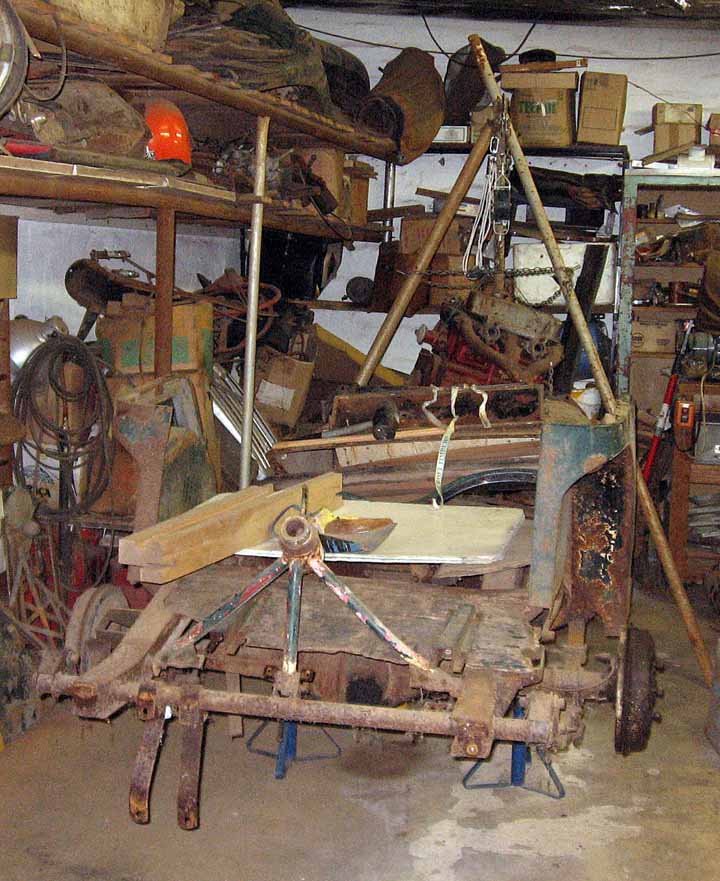
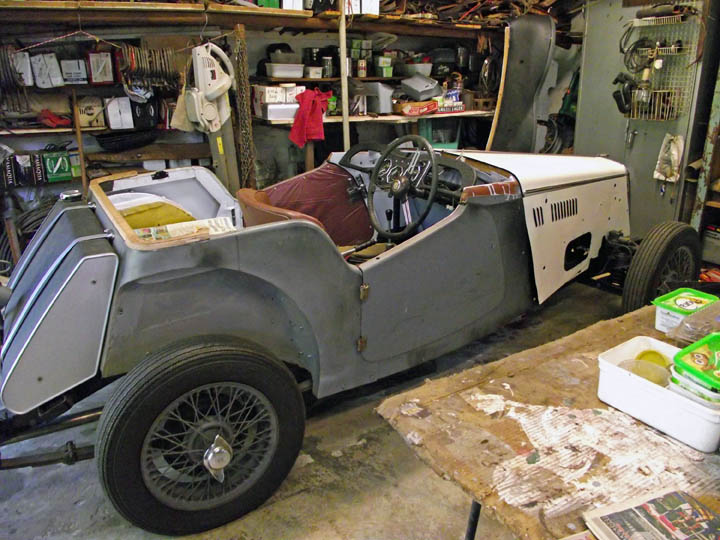
Getting there, but still a long way to go
The chassis had to be stripped of rust, repaired and repainted, while body parts required thorough cleaning, panel beating where necessary, and repainting or replating. Metal parts damaged beyond repair, or rusted away, were remade; using basic tools and old-fashioned ingenuity.
Then came the upholstery. Very little had withstood the ravages of time. As Grieve said: “I didn’t consciously learn new skills. I solved problems as I went along.”
New skills learned, or problems overcome, included spray-painting, panel beating, upholstery, soldering, parts fabrication, brazing, carpentry and rust removal.
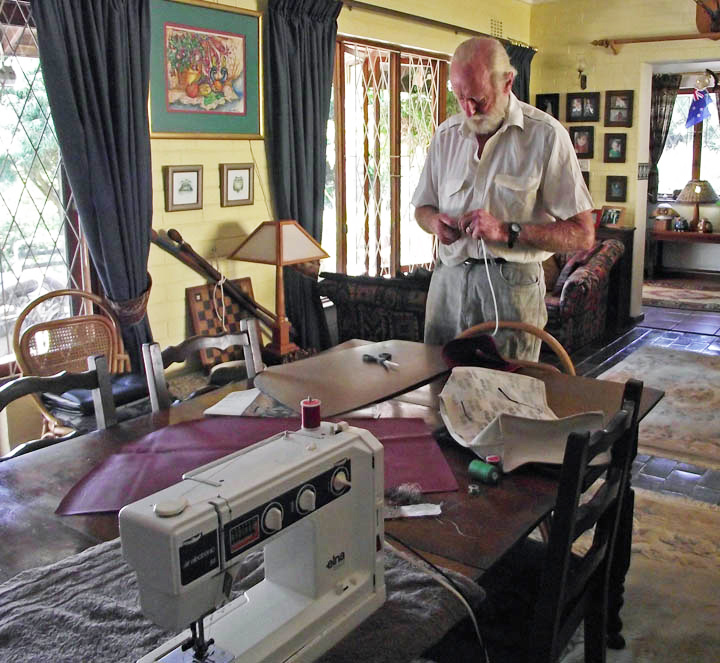
Ian Grieve about to re-cover a door panel
Luckily, the MG’s wings were in good shape but among the items Grieve figured out how to reproduce were the pair of bonnet strip supports – those little brackets that the long centre hinge-pin of the bonnet fits into – at either end.
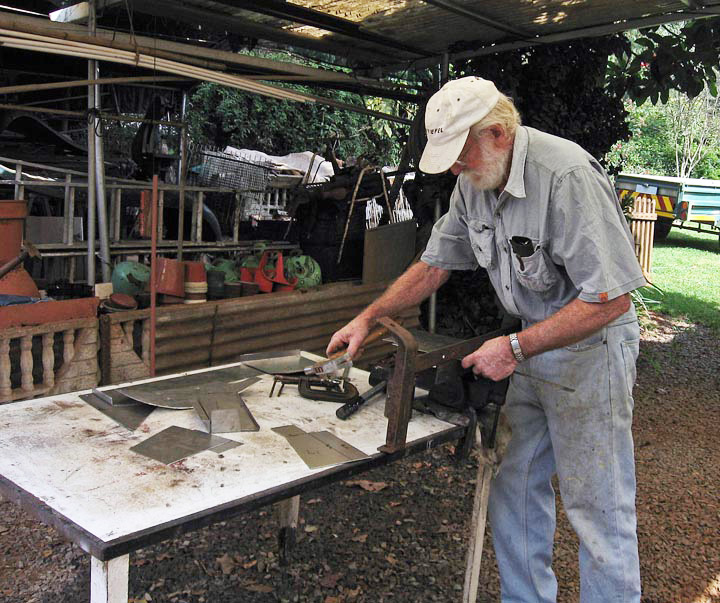
These were available from the old country at ‘only’ £9.15 each, plus sundry other charges, but it’s far more interesting to fettle from mild steel sheet for a few Rand. It wasn’t all ‘making do’ however; he admitted to having gathered and hoarded ‘a few’ MG parts over thirty-odd years.
The restorer fabricating parts at home
A guaranteed way to spend heaps of money is the “cheque-book” route: It results in a car costing so much that one’s afraid to take it off its show trailer. Grieve did not subscribe to that notion. In his view, the whole point of nostalgia was revisiting the fun and sensations of driving cars you enjoyed when you were young.
That’s why his TF ultimately harboured a few pirated parts, non-imperial fasteners and perhaps even a modern alternative, here and there. The aim was to produce a nimble, sporty driving machine that he could enjoy, despite life’s little interruptions, for years to come.
“Migs” was completed, and ready to run, in May 2013.
Footnote: Ian Grieve passed away in 2022, aged 87, following a bout with bone cancer.
The numbers Engine: BMC XPEG, 1466 cc naturally aspirated, Pushrod OHV, petrol Fuel feed: Twin SU4, semi-downdraft, constant vacuum, carburettors Power: 47 kW @ 5000 rpm Torque: 106 Nm @ 3000 rpm Drive: RWD Gears: Four-speed manual with synchromesh on second, third and fourth Clutch: Single dry plate. Chassis: Steel box section; over-slung at rear Body style: Two-door Roadster Acceleration, 0-100 km/h: 18.1 secs Maximum speed: 137 km/h (85 mph) Average fuel consumption: 12.5 l/100 km Measurements, L x W x H, mm: 3734 x 1518 x 1334 Wheelbase, mm: 2388 Kerb weight: 876 kg Ground clearance: 150 mm Tank: 54 litres Quantities produced: 3400 x 1500 cc, 6200 x 1250 cc
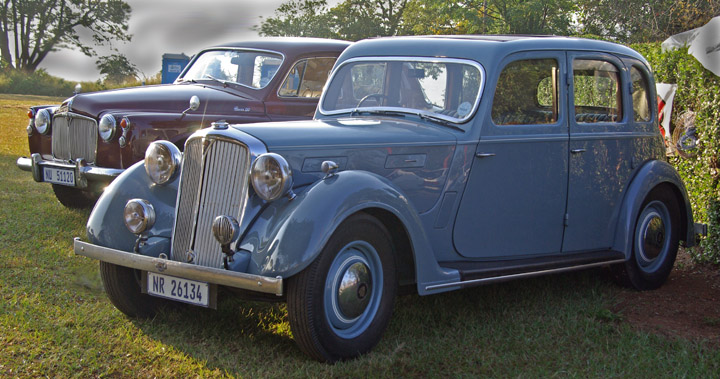
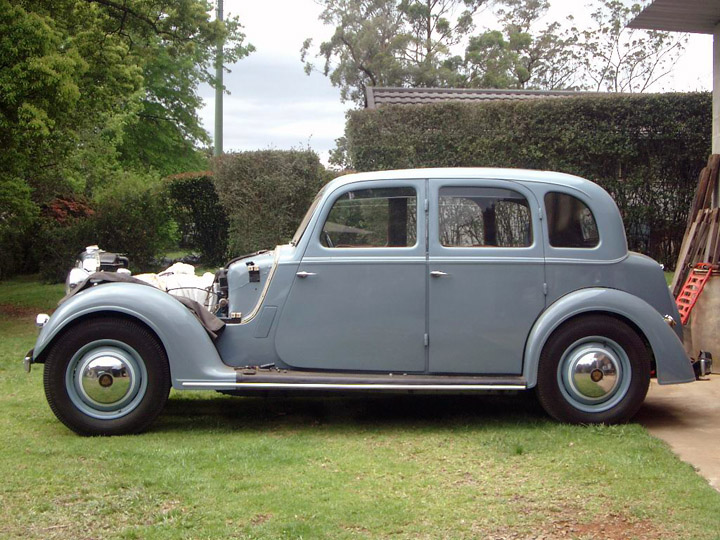
Cedric MacDonald’s Rover P2 seen at a local car show after completion
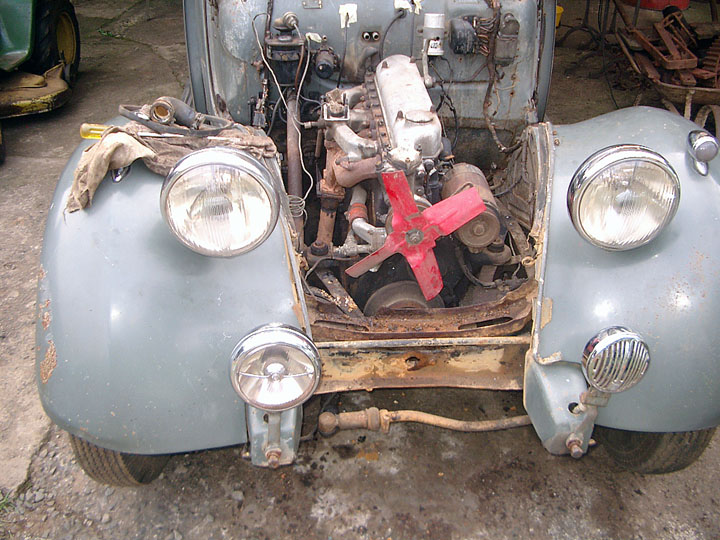
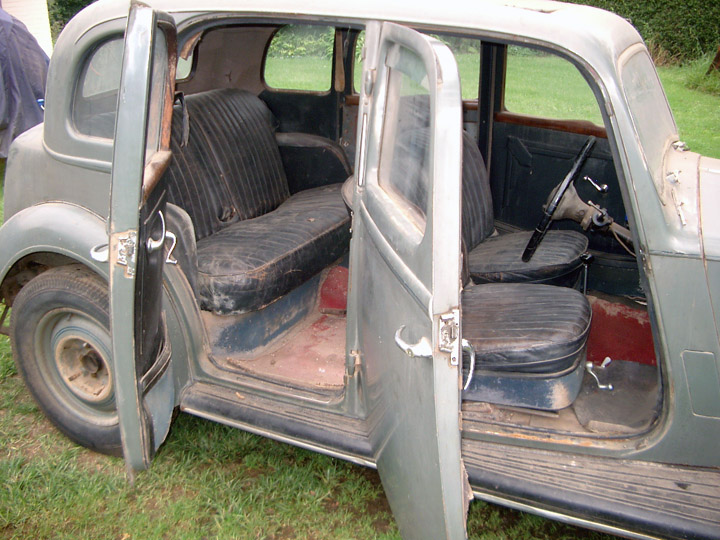
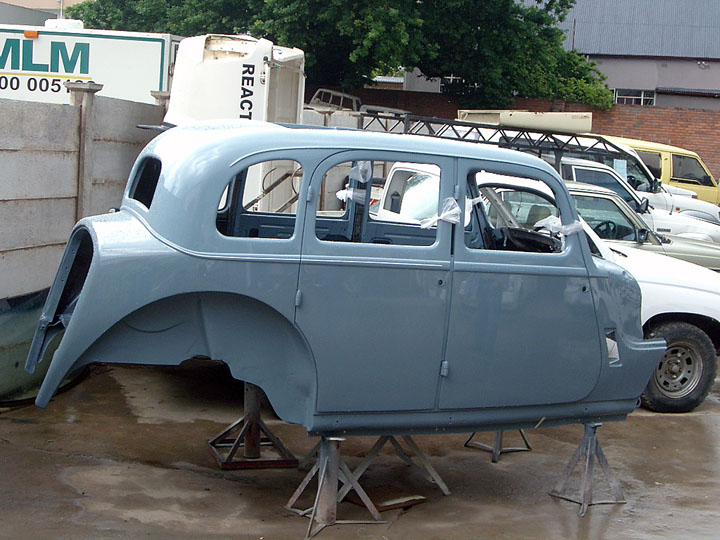
1947 Rover P2 16 HP
Getting by with a little help from one’s friends
Original version published in Weekend Witness Motoring on Saturday April 7, 2012
“Ever seen a P2?” asked the first Rover enthusiast. “Never,” replied the second, ”I doubt whether there are any in South Africa at all; or even in the whole of Africa.” “Actually,” offered the third, “I think I might have one in my garage.”
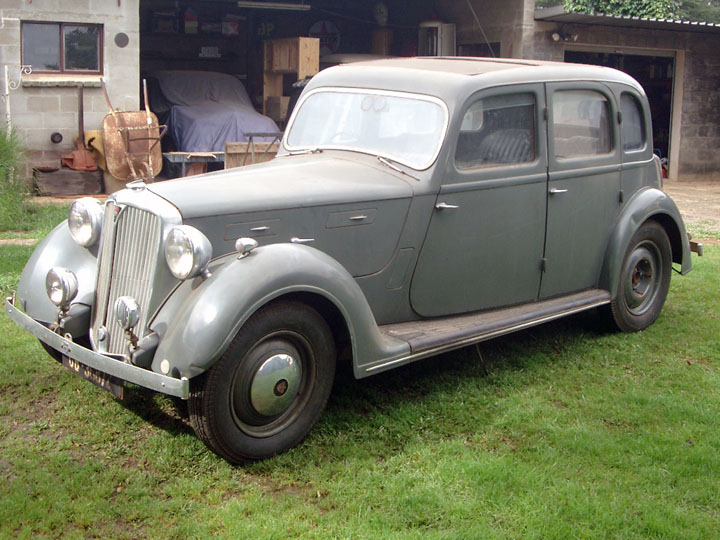
And so he did: Pale greeny-grey it was, with some surface rust spots just appearing and woodwork, carpets and upholstery in need of replacement, but essentially complete. It was a 1947 Rover P2 16 HP, built at Solihull from 1937 to 1940, put on hold for the War years, then continued from 1945 to 1948, when it made way for the P 3.
The enthusiasts in question were Clyde Wyatt, referred to affectionately as “the foreman,” Rob North, provider of workspace and an encyclopaedic knowledge of all things Rover, and Cedric Macdonald, owner of the almost-forgotten P2. They got together most Mondays to chat, have tea and work on the car.
In the glove box was an ancient Shell logbook detailing fuel and oil top-ups and consumption calculations. The final entry was on February 13, 1963, when its owner purchased 9 gallons and four pints of petrol at 87330 miles. The odometer now read 87331, so we can be pretty sure of the date on which the then-sixteen year old Rover breathed its last. It was left with a Grahamstown-area farmer but never reclaimed.
The agriculturalist in question passed away some years later with the undertaker, Odi Inggs, taking the Rover in part payment for his services. Inggs in turn parted with it to his old mate Macdonald, who trailered it home and forgot about it for 30-odd years. That is until the conversation outlined above, because other projects had demanded his attention in the meantime.
Not much is known about the original owner apart from the fact that he farmed near Port Elizabeth, was ex-military and loved fishing. A rubber stamp on a document confirmed the first two, while bulging door pockets filled with fishing line, hooks and other paraphernalia confirmed the rest. Sea sand in body crevices and in chassis cross members indicated that his preferred fishing spots were at local beaches. The chassis, once the body had been separated from it, was found to be buckled, indicating either extremely rough farm tracks or some off-road adventuring.
It turned out that, although he had kept strict records of fuel and oil purchases, routine servicing had not been a priority. The engine was seized solid and, instead of finding ancient oil in the sump, Macdonald and his helpers found jelly-like sludge. It was so bad that the camshaft had to persuaded from its nest with a hammer, while the main bearings were worn away to nothing and wear on other mechanical parts was severe.
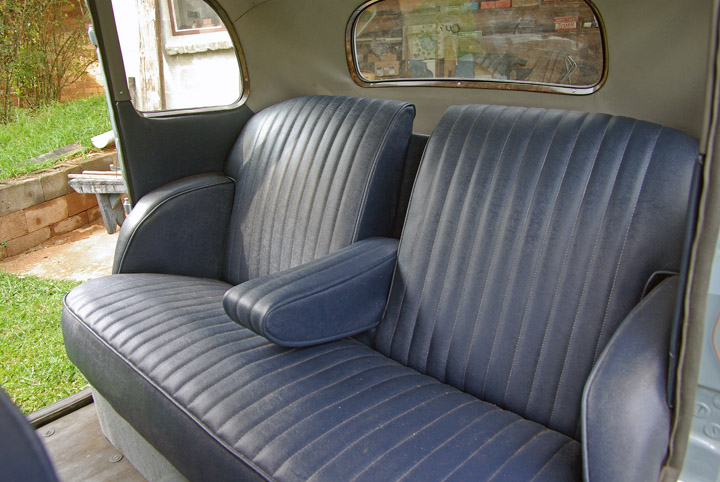
While the team set about stripping, straightening and repainting the riveted ladder frame chassis, the body and seats were sent out to specialists for refurbishment in its new colour scheme of two-tone blue-grey with blue upholstery. Then followed cutting and remaking of rotted wooden floor panels and sunroof framework. They refurbished door panels, carpeting and headlining, and stripped and revarnished the decorative wooden trim on doors and dash. Sun visors, windscreen hardware and dozens of other items needed attention, so the team cleaned, resurfaced and repaired those as well.
The engine parts were then sent to McKenzie Auto Engineers in Pinetown for machining and repair. This part of the project was delayed for some time owing to non-availability of crankshaft main bearings, a problem eventually overcome with assistance from Bob McCosh of Federal Mogul. He helped source the needed materials and to build up a one-off set. Once everything was ready, North, the most mechanically knowledgeable member of the team, tackled assembly of the engine.
Despite best intentions, the car wasn’t complete in time for Weekend Witness/VSCC Cars in the Park 2012, so it was reassembled as a rolling dummy for display as a work-in-progress.
But the best things take time; skip forward two-and-a-half years to October 2014 when Rob North reported via email:
“We have achieved a significant milestone – The engine runs – beautifully.
“Yes, after the long-winded overhaul, for some reason the engine was very tight and the starter was unable to turn it over. Some freeing-off was necessary so we towed it round the garden in gear with the spark plugs out. After many laps, it freed off sufficiently for the starter to work and, once the timing was correctly set, she started up easily and runs beautifully. From our calculations, it has been 51 years since the vehicle last ran!
“The next step is to sort out an “S” licence so we can use it on the road and try out the mechanical brakes – adjustment of all those rods is new to me! The main work still to be done is the cover of the gearbox. The original was a rubber tunnel and completely perished. I have made up a metal copy which has to be more exact in dimensions than the rubber one.
“We have had a lot of hassle with the rear springs. Being an underslung chassis at this point, makes setting requirements more exacting. We have had them reset three times and still the rear end appears low without any passenger load.. We also need to drive it a bit to get them to possibly settle. We have no reference to ride height dimensions.”
At this point in his email, Rob asked John (a reader from Melbourne, Australia and owner of a 1946 P2 12HP Sports Saloon), if he could please measure the clearance heights under the mudguard lips to the ground on his car, unladen, front and rear as this would be a big help.
John indicated his willingness to assist but pointed out that his car, now also elderly, appeared to be suffering from spring sag as well. (Sigh: Don’t we all, eventually?)
Foot note: According to a Wikipedia entry found at the time the original article was written, there were 25 surviving Rover P2s in the world, with 10 of them running. We have since been informed that the number of survivors is actually higher.
While on the subject of the free online encyclopaedia, we thought you might enjoy this extract from an entry we found in October 2016:
Rover 16 (P2) Manufacturer: Rover Production: 1937–1940, 1945–1948 Body and chassis Body styles: four-door “six-light” saloon, four-door “four-light” sports saloon, two-door drophead coupe. Powertrain Engine: 2147 cc straight 6 Dimensions Wheelbase: 113 in (2,870 mm)[1] Length: 175 in (4,445 mm) Width: 62.5 in (1,588 mm) Chronology Predecessor: Rover Meteor 16 Successor: Rover 75
“The Rover 16 was a medium-sized family car announced in mid-August 1936 and produced by the British Rover car company between 1936 and 1940 as a successor to the Rover Meteor 16. It was put back into production in 1945 following the Second World War and remained on sale until replaced by the Rover P3 in 1948. The 16 was part of the Rover P2 range, along with Rover 10, Rover 12, Rover 14 and Rover 20 models.
“The car, with its mildly streamlined form, resembled the existing Rover 10 and the Rover 12 but was slightly longer and featured a more rounded back end. The six-cylinder ohv engine had a capacity of 2,147 cc. A top speed of 124 km/h (77 mph) was claimed. In addition to a “six-light” saloon and a “four-light” “sports saloon, a two-door cabriolet was available, usually referred to as a drophead coupé, with bodywork by Tickfords.
“The sports saloon and the drophead coupé had slightly less length between the front and rear seats, but a longer bonnet, with the front footwell extending further beneath the bonnet.
“A version called the Rover 14 saloon combined the same body with (from 1938) a 1,901 cc six-cylinder engine. There was also a version called the Rover 20 with a 2512 cc. engine.
“Notable features included a “freewheel” system, Bijur-Luvax automatic lubrication of the chassis, and Girling rod actuated fully compensated mechanical brakes of exceptionally high efficiency.Road test
“Said the correspondent of The Times, ‘The Rover Sixteen is exceptionally attractive by reason of its quiet gentle manner, sweet running, comfort and spruceness in and out.’ Further lengthy comment was lyrical. The sole concern was that the engine could, with advantage, be rather more powerful. Comfortable maximum speed was 75 mph.
“The Rover 16 saloon returned to production almost unchanged after the war, although the drop head coupe version was no longer listed.”
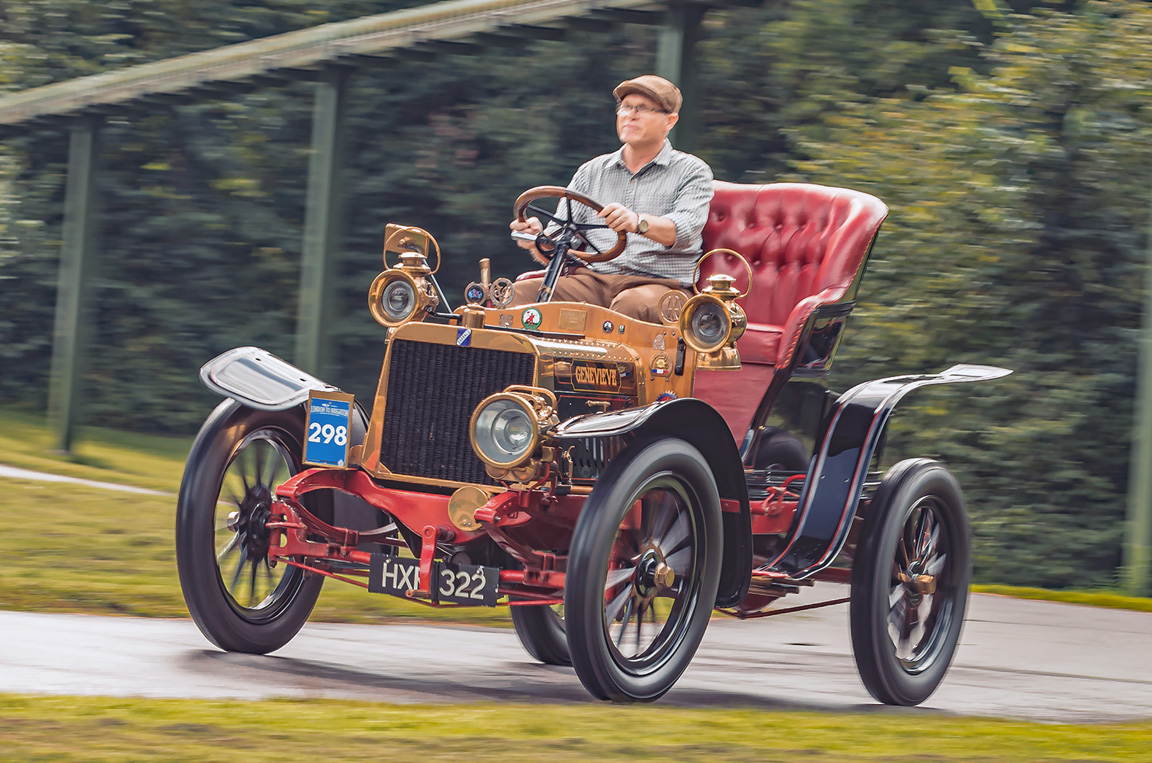
This is Genevieve, the 1904 Darracq from the 1958 movie of the same name
Karl Benz’s 1886 Patent-Motorwagen was no more than an interesting toy for parading around in until his wife, business partner and majority shareholder in the business, Bertha, decided to shake things up a bit.
So, one day in 1888, she packed some bags, loaded up their two teenage sons and drove the car to visit her mum who lived just over 100 kilometres away.
It was quite an adventure, with the first challenge being to find pharmacies that stocked the petro-benzine (dry-cleaning fluid/cigar lighter fuel) needed to fuel the vehicle on its journey.
She also found that the brakes didn’t work terribly well so a detour, to find a cobbler and have him nail pieces of boot leather onto the wooden brake blocks, was called for. These, incidentally, became the industry’s first brake linings. No kudos expected or called for; a woman’s just gotta do what a woman’s gotta do.
Word of the adventure spread, giving their little automobile company the exposure needed to make it the success it is today. And set in motion a revolution that motorised the world.