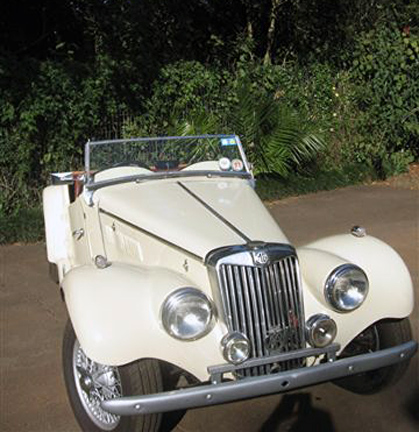
A nimble, sporty driving machine
Pics supplied by restorer
Updated, with additional material, on 2026-01-26
The first thing to know about MG TFs is that there were two versions. The first, introduced in 1953, was fitted with BMC’s 1250 cc XPAG engine that produced 43 kilowatts and 88 Nm. For a mid-1954 update that motor was switched out for the 1466 cc XPEG unit developing 47 kW and 106 Nm. The wizards of Abingdon also wanded away 39 kilograms of excess mass. That Chapman chappie’s “Just add lightness” Lotus Seven arrived in 1957. Just mentioning…
Here’s a tale about one man’s 1954 TF 1500:
People make plans. Life gets in the way. So it was with Ian Grieve. He’d planned, following school, to study medicine in Cape Town. Fate saw to it that he read the Hippocratic Arts at Trinity College, Dublin, instead. While there, he owned an MG TC and the damage, as they say, was done.
Back home in Pietermaritzburg life went on but, one day during the ‘seventies, the MG bug bit again. He bought a bundle of parts, supposedly a complete 1947 TC, firmly intending to reassemble them. They remained on shelves in his garage.
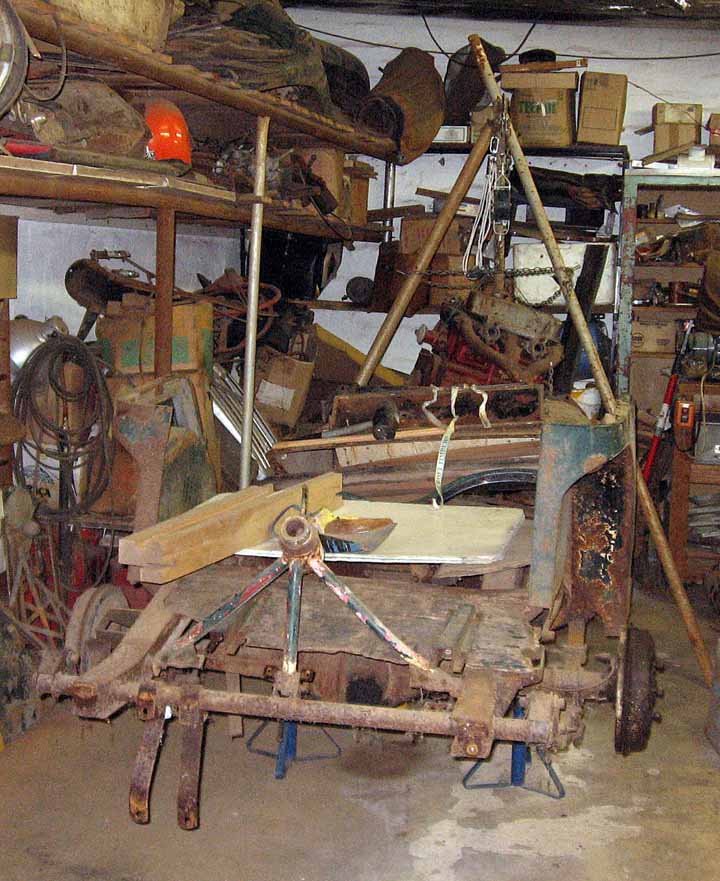
A more approachable project, a 1954 TF 1500, came his way a few years later. This was noticeably complete, standing on its wheels and recognisable. It just didn’t run and the fine old English Ash framework had succumbed to dry rot. He disassembled the car, during the ‘eighties, with imminent intent to restore.
Living unfortunately intervened again and the project was shelved. Literally. Grieve retired in 2007 after 40 years in family practice. Then, following a long-awaited extended safari into Africa, he looked around for something to do.
Life made up for past interferences by stepping in, with a Grand Sign, during a visit to Weekend Witness/VSCC Cars in the Park the following year. A magnificently restored TF, belonging to Charles Rilett, caught his eye and Grieve knew that the time had come. Work resumed in earnest during 2009.
Rust was brushed, buffed and cut away, rotten panels patched or replaced and most of the wooden framework remade in Meranti and heavy plywood. Genuine Ash doesn’t grow on trees ‘round here you know. How does one remake a wooden part that’s rotted away to a fraction of what it should be? Take what remains, measure carefully, then reconstruct according to the drawing in the parts book. Thereafter, trim and shape until it fits into the space provided.
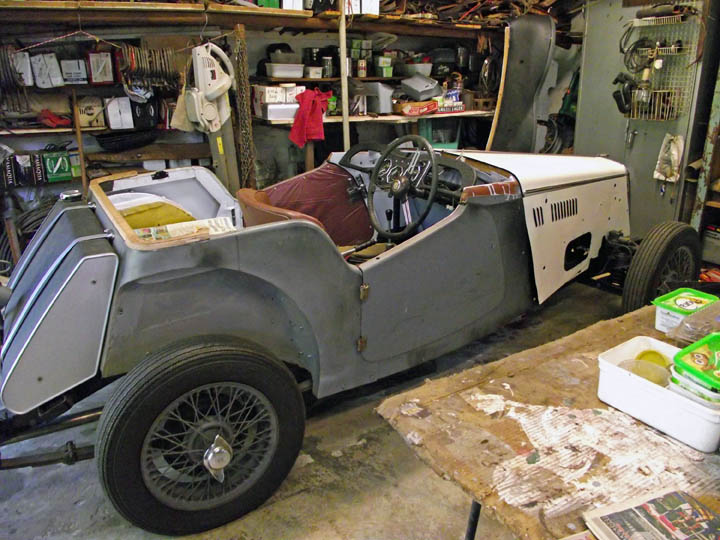
The chassis had to be stripped of rust, repaired and repainted, while body parts required thorough cleaning, panel beating where necessary, and repainting or replating. Metal parts damaged beyond repair, or rusted away, were remade; using basic tools and old-fashioned ingenuity.
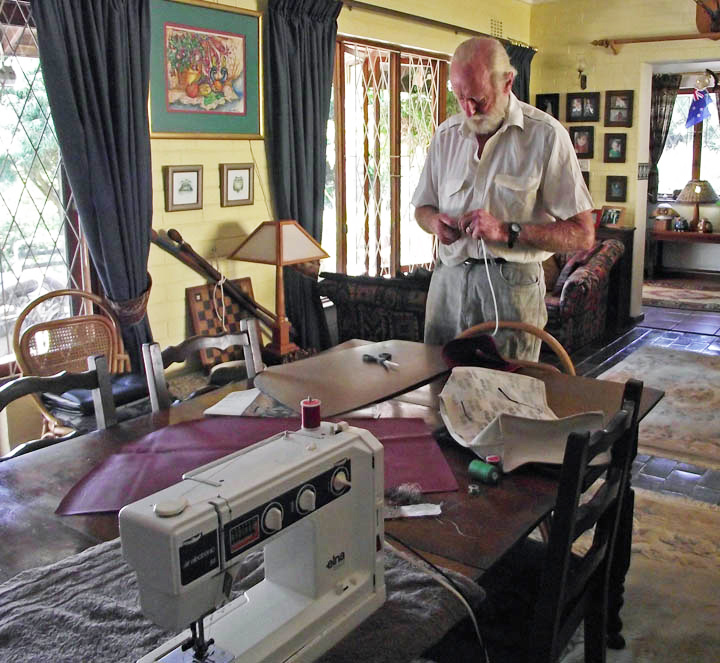
Then came the upholstery. Very little had withstood the ravages of time. As Grieve said: “I didn’t consciously learn new skills. I solved problems as I went along.”
New skills learned, or problems overcome, included spray-painting, panel beating, upholstery, soldering, parts fabrication, brazing, carpentry and rust removal.
Luckily, the MG’s wings were in good shape but among the items Grieve figured out how to reproduce were the pair of bonnet strip supports – those little brackets that the long centre hinge-pin of the bonnet fits into – at either end.
These were available from the old country at ‘only’ £9.15 each, plus sundry other charges, but it’s far more interesting to fettle from mild steel sheet for a few Rand. It wasn’t all ‘making do’ however; he admitted to having gathered and hoarded ‘a few’ MG parts over thirty-odd years.
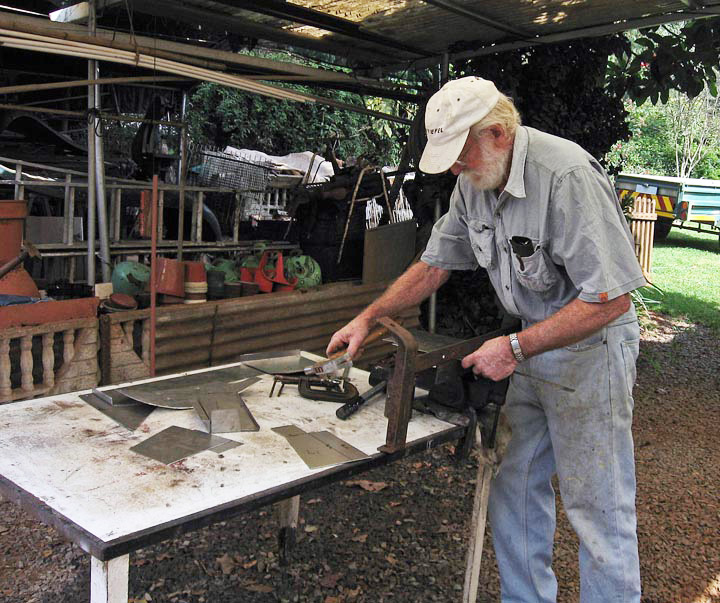
A guaranteed way to spend heaps of money is the “cheque-book” route: It results in a car costing so much that one’s afraid to take it off its show trailer. Grieve did not subscribe to that notion. In his view, the whole point of nostalgia was revisiting the fun and sensations of driving cars you enjoyed when you were young.
That’s why his TF ultimately harboured a few pirated parts, non-imperial fasteners and perhaps even a modern alternative, here and there. The aim was to produce a nimble, sporty driving machine that he could enjoy, despite life’s little interruptions, for years to come.
“Migs” was completed, and ready to run, in May 2013.
Footnote: Ian Grieve passed away in 2022, aged 87, following a bout with bone cancer.
The numbers
Engine: BMC XPEG, 1466 cc naturally aspirated, Pushrod OHV, petrol
Fuel feed: Twin SU4, semi-downdraft, constant vacuum, carburettors
Power: 47 kW @ 5000 rpm
Torque: 106 Nm @ 3000 rpm
Drive: RWD
Gears: Four-speed manual with synchromesh on second, third and fourth
Clutch: Single dry plate.
Chassis: Steel box section; over-slung at rear
Body style: Two-door Roadster
Acceleration, 0-100 km/h: 18.1 secs
Maximum speed: 137 km/h (85 mph)
Average fuel consumption: 12.5 l/100 km
Measurements, L x W x H, mm: 3734 x 1518 x 1334
Wheelbase, mm: 2388
Kerb weight: 876 kg
Ground clearance: 150 mm
Tank: 54 litres
Quantities produced: 3400 x 1500 cc, 6200 x 1250 cc
END
Views: 31
Leave a Reply