Blog

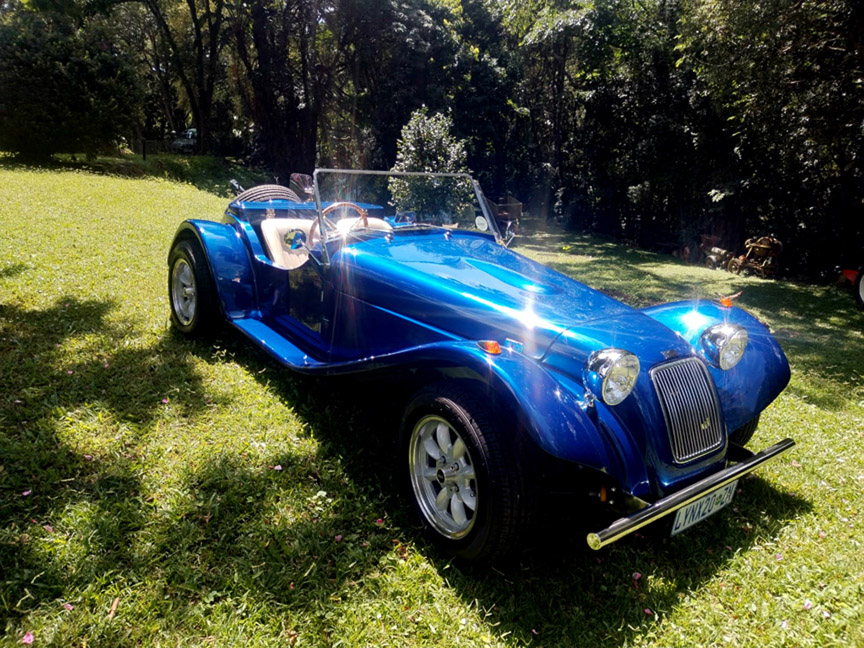
  • One man’s dream project: Lynx-Ford 2.0 Roadster

    Son of Merlin

    Pics by owner

    Kit Car Centre (Pty) Ltd – under the watchful eye of founder-owner Rudi Malan – was based in Kempton Park and, from information available, was in business for about 23 years before closing in 2003.
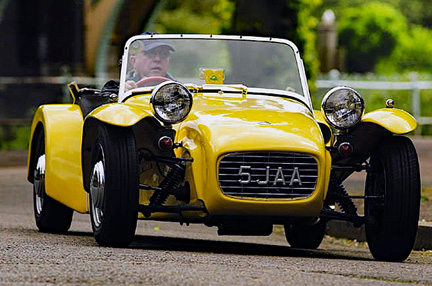
    The car that started it all: 1957 Lotus 7

    The following description appeared in its sales brochure:

    “The Lynx Roadster is a South African reproduction of the Merlin kit car from Britain.
    “It affords individuality in today’s motoring world where mass produced cars seem all too similar. Enthusiasts, seeking performance and handling, will be rewarded beyond expectations.

    “Building a Lynx Roadster is where the enjoyment begins. Being custom-built, it allows one to tailor it to exact taste and performance requirements; economical Sunday cruiser with 1,6- or 2,0-litre engine, or fierce road-burner with a 3-litre V6.

    “Designed so that a novice can build it, in a home workshop, no special skills are needed. Each kit comes with a detailed manual for guidance, and expert advice is only a phone call away.

    “A specially fabricated chassis accepts the front and rear suspension of Ford Cortina Mk 3, 4 or 5. It is fully bracketed and drilled to bolt suspension, steering and brake components on to it. Engine and gearbox mountings are built-in to accept Ford four-cylinder (1,6- and 2,0-litre) and three-litre V6 engines. It can accept almost any other make of four-cylinder engine but suitable mountings would need to be specially fabricated.

    “The glass-fibre body is a high-quality, hand-laminated, moulding that’s colour-impregnated to the buyer’s choice of colour (two-tones also available) – no painting needed, no rust problems. Based on the popular Ford Cortina’s mechanical components, it is both easy and cheap to maintain, making it all the more pleasurable to own.”

    Come 2022: Pietermaritzburger Dave Tanner, a retired engineering Diplomate, managed to locate and purchase an unused, complete, Lynx Roadster body shell with a few accompanying bits and pieces. He already had a retired, Pinto-engined, Ford Cortina 2.0-litre as donor for mechanical parts.

    Then the fun started; stripping, cleaning and reassembling various components before painting. During this process things like seals, bearings, etc. were replaced with new parts. All wearing components in the front and rear suspensions were replaced as well.

    The 2.0 litre engine was fully overhauled with new pistons, rings, bearings, valves, oil- and water pumps, electronic distributor and cambelt with tensioner. The Ford type-9, five-speed, transmission was also overhauled. Parts for this had to be shipped in from the UK. Motor engineering, propshaft shortening and balancing, radiator recoring, and upholstery were all outsourced, but Tanner did the rest himself.

    An interesting part of the build was to not use the donor car’s live back axle but to substitute a complete, independent rear suspension, unit from a Ford Sapphire 2.0 GL. This ensured having the correct differential ratio. It took some thinking and engineering to successfully do so but the result, and time taken, was worth the effort.

    Once the chassis was sorted the various rebuilt, and freshly painted, components were fitted. Then, after removing it from the assembly trolley to stand on its own wheels, the body was trial-fitted to ensure that doors, boot lid and bonnet lined up as they should. Once done, it was returned to the assembly trolley to prepare for painting.

    Then came sanding. and filling of tiny pin holes. Tanner estimated that he spent over 200 man-hours on body- and paintwork alone. The body was fitted back onto the chassis once all the brake- and fuel piping had been fitted.

    Much time was spent making various components to complete the car. For example a pedal box had to be fabricated to fit into the confined space and function correctly; the vacuum-assisted brake booster needed fitting into the drivers footwell, linked to the dual-circuit brake master cylinder in the engine bay, and then coupled together to hold the vacuum. The rear brake line was fitted with an adjustable bias controller to enable correct braking balance.

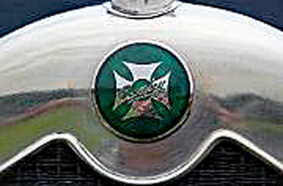
    When KCC closed in 2003, that source of special kit components also came to an end. Things like badges, grille and windscreen frame, to name a few, were no longer available. Tanner fortunately managed to source a second-hand grille from a member of the Lynx Car Owners’ Club in Gauteng. With the aid of a photograph of the badge he was able to find a company in Pinetown to laser-etch one for him. He crafted the windscreen frame, using homemade dies and rollers, from aluminium section.

    Later, with chassis and body rejoined, came fitting of exterior components – windscreen, lights, mirrors and bumpers – followed by electrical wiring and testing to ensure that everything functioned as it should. The dashboard, made from a sheet of Blackwood that had been in storage for over 50 years, houses the Smith’s gauges. The interior was then carpeted and seats fitted.

    The car was finally started, after making sure that all fluids had been put in, followed by a test run around the block. A few minor adjustments later, the car was ready for its mandatory Roadworthy test and issue of licencing documents, in February 2025.
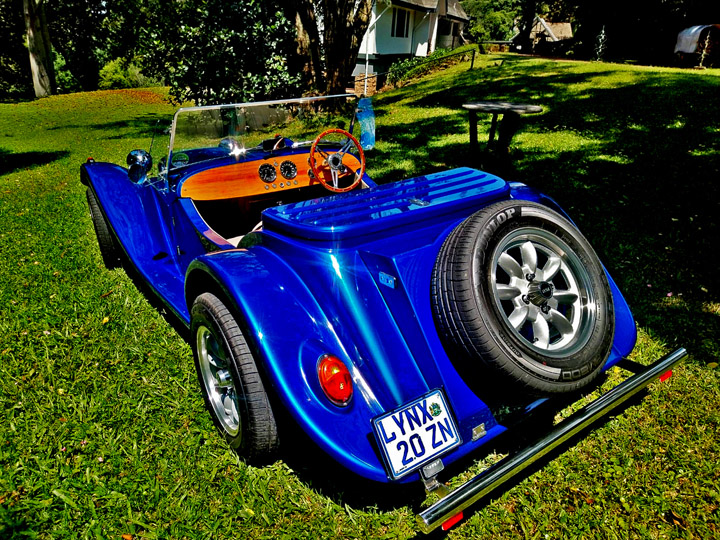
    The numbers
    Engine: Ford “Pinto” 1993 cc, SOHC four-cylinder naturally aspirated
    Bore x stroke: 90.8 mm x 77 mm
    Head and block: Cast iron
    Carburettor: Weber DGAV 32/36
    Power: 81 kW at 5500 rpm
    Torque: 163 Nm at 4000 rpm
    Dimensions: 3290 mm long x 1680 mm wide x 1200 mm high
    Ground clearance: 135 mm
    Tare mass of Cortina: 1090 kg
    Tare mass of Lynx: 900 kg
    Zero to 100 km/h: Cortina, 11.2 seconds. Lynx, not measured but pdq
    Maximum speed: Cortina, 167 km/h. Lynx, not measured but sufficiently rapid
    RPM at 120 km/h in fifth gear: 3200

    Views: 32
  • Crossley Cape-to-Cairo Expedition cars

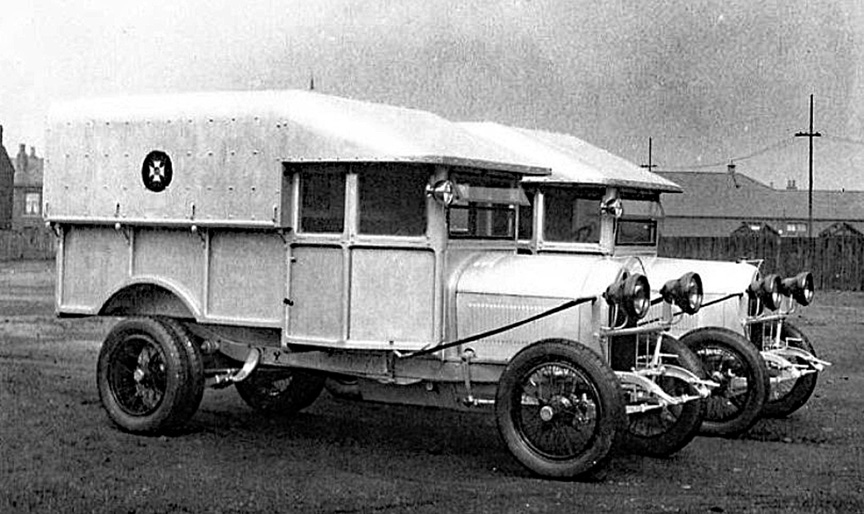
    The Crossley 25/30 expedition cars

    Crossley 25/30 expedition cars
    Early innovation

    Crossley Motors was an interesting company. It boasted a number of “firsts” – some of which might tip a few “sacred cows” tail-over-horns – but let’s begin at the beginning:

    The company was founded in 1867 when Francis Crossley bought an engineering business that made pumps, small steam engines and other mechanical devices. They took designs and developed them further with improved valves, more efficient ignition systems and a new device; the carburettor. This had been designed variously by Karl Benz and other contemporaries although the modern, spray version, was perfected by Wilhelm Maybach.

    Among other “firsts”:
    • Obtaining British and World (outside Germany) rights to the Otto Cycle four-stroke engine in 1875,
    • Acquiring rights to an early diesel-style engine and building its own version, in 1896, about a year before Rudolph Diesel filed his patent.

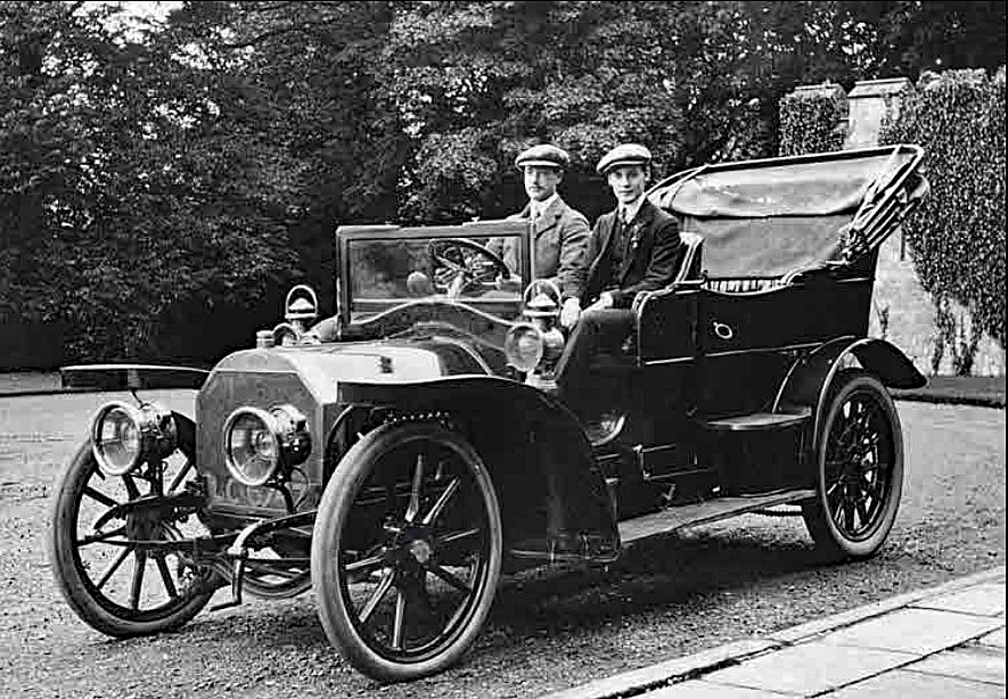
    None of the original 22 horsepower cars have survived but here’s a slightly later one

    By the turn of the century Crossley’s petrol engines were finding their ways into road vehicles and, encouraged by car dealer Charles Jarrott and Letts of London, Crossley developed a 22-hp open tourer in 1904. It thereafter bought the dealership, formed Crossley Motors in 1906 and started building its own “English Mercedes.” Car production was spun off, in 1910, leaving the founding firm to continue its original activities.

    The open tourer was followed by a seven-litre, 40 hp, model with chain drive and a pump that circulated water through the engine for cooling. Both models were fitted with four-cylinder motors and delivered complete or as powered chassis’. This allowed customers the option of choosing their own coachbuilders. An early design change saw chain-drive replaced by a shaft.

    Next, in 1909, came the 12/14; one of the first cars to have engine and gearbox fitted in-line down the chassis. It was powered by a 2.3-litre four-cylinder producing 15 hp. The following year, Crossley continued the “15 hp” name but increased capacity to 2.6 litres.

    Then came the 20/25; bought in volume by the British Army and its newly-formed Royal Flying Corps, as staff cars and light trucks. Manufactured for about ten years, production exceeded 10,000 thanks to military sales that included some ambulances and equipment carriers.

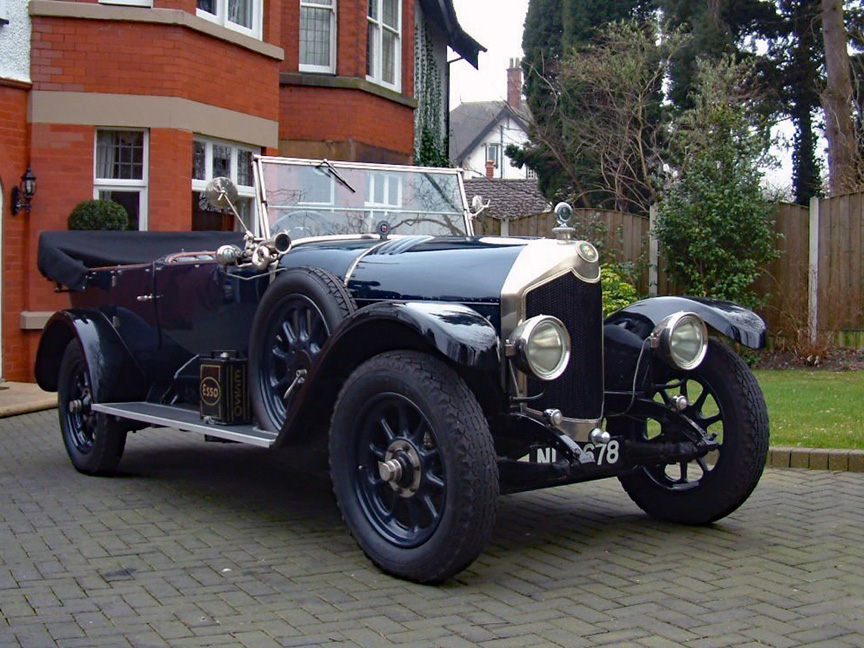
    A 1923 Model 19.6 Tourer

    After the war Crossley resumed civilian vehicle fabrication with a new model, the 19.6, fitted with a 3.8-litre four with detachable head. Like most engines of its time it utilised side-valves. This model spawned the 75-bhp, 20/70 sports version with performance-boosting features in use today; high-lift camshafts, higher compression, improved fuel delivery and lightweight wheels. It was joined in the early 1920s by a 2.4-litre, 14 hp, version.

    When the army began selling off surplus staff cars, Crossley introduced a slightly redesigned model called the 25/30 or “RFC” (listed as Type J by Quartermasters). Versions included a 19.6-based six-wheeler.

    Crossley built its first six-cylinder engine in 1925 and fitted it to a new model, the 18/50 or 20.9. This started as a three-litre but, because of excess weight, it was soon increased to 3.2 litres for more power. Then, to bolster business, Crossley launched a range of trucks and busses that would be its eventual salvation.

    Because its car sales had been slowing (too luxurious and too expensive) during the 1930s’ Great Depression, Crossley developed its final model, the 26/90, in 1937. It’s believed that only one example, fitted with a 3.5-litre Studebaker motor, was built before production was stopped in favour of busses, commercials and military vehicles.

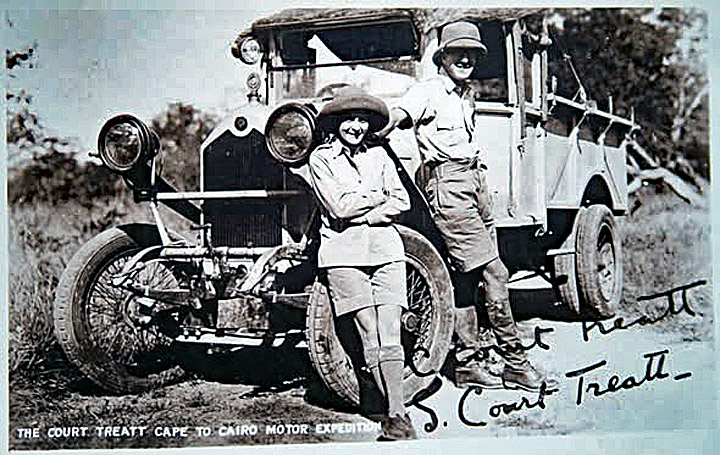
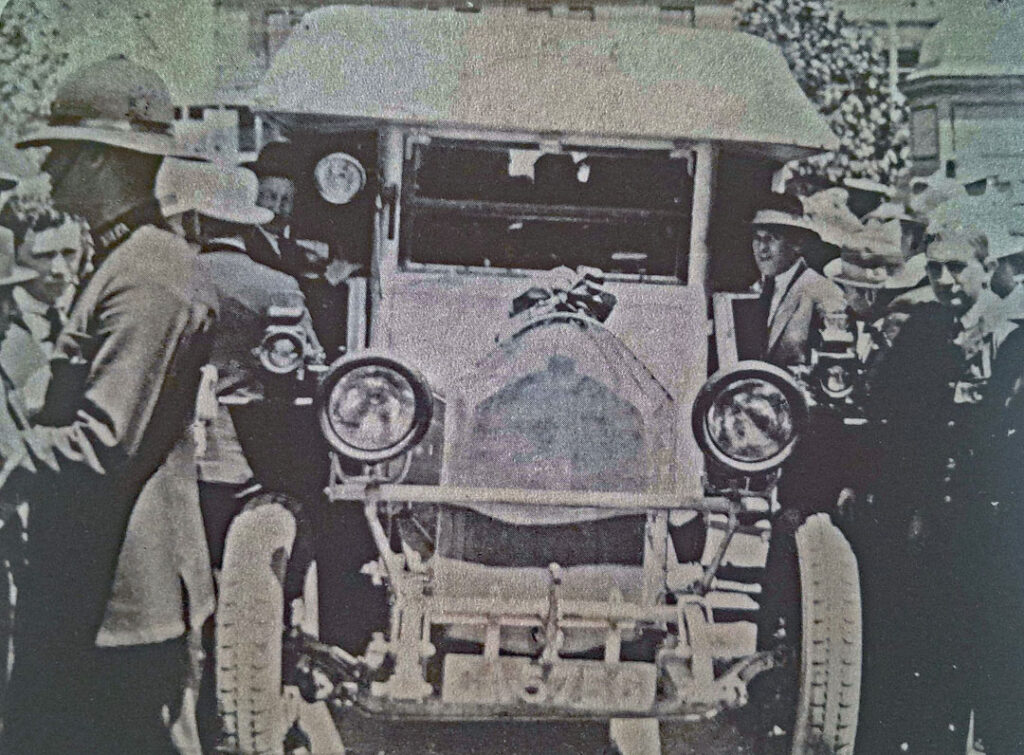
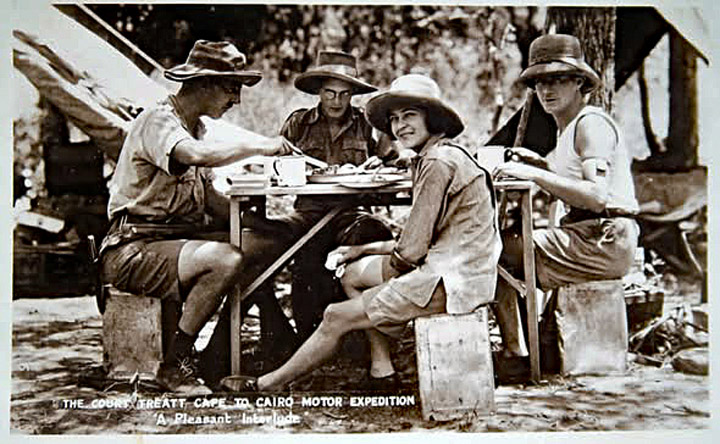
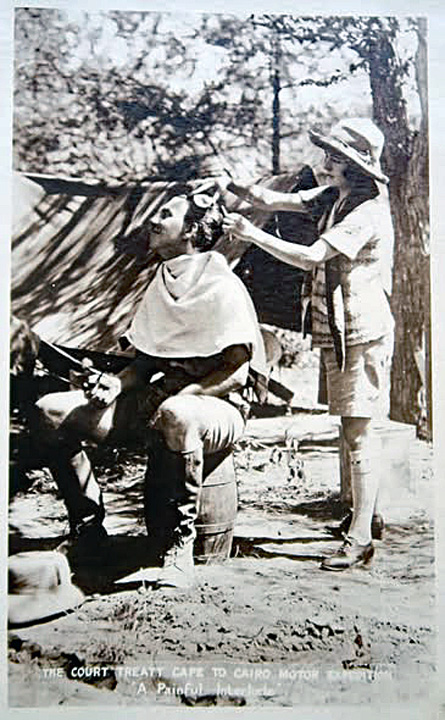
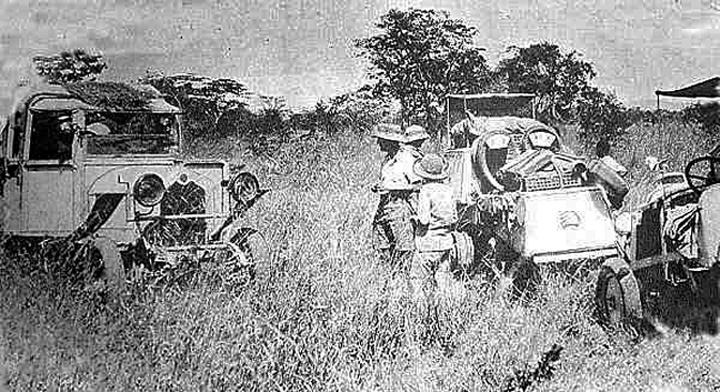
    Fittingly two updated, modified and more powerful, post-war 25/30s served the Court-Treatt expedition on its pioneering, South-to-North, crossing of Africa between 23 September 1924 and 24 January 1926.

    Some 25/30 numbers
    Engine/gearbox/transmission
    Capacity: 4531cc
    Cylinders: Four, cast in pairs
    Bore: 4 inches (102mm)
    Stroke: 5 1/2 inches (140mm)
    Compression ratio: 4.29:1 (fixed head – early), 4.64:1 (detachable head – late)
    RAC Horse Power: 25.6
    Carburettor: Smiths 5 jet
    Valves: Side
    Lubrication: Full pressure fed
    Ignition: Magneto (Lucas EB4)
    Max power: 45 bhp (33 kw) @ 1750rpm (fixed head)
    62 bhp (46 kw) @ 2300 rpm (detachable head)
    Fuel consumption (typical): 13-15 miles per gallon (20 litres/100 km)
    Max speed (approx): 60 mph (95 km/h)
    Acceleration: n/s
    Gears: Four forward and one reverse gears. Right hand change.
    Clutch: Cone type See: https://www.youtube.com/watch?v=3ORIWwh8NdI
    Drive: RWD, shaft:
    Rear axle: Spiral bevel 4:1 ratio, straight cut (WD spec) 4.07:1
    Electrical system: 12 Volt.
    Body/chassis
    Wheelbase: 11 feet 3 inches (3429 mm)
    Length: 15 feet 5 inches (4572 mm)
    Track: 4 feet 6 inches (1372 mm)
    Width overall: 6 feet (1829 mm)
    Weight: Tourer approx. 38 cwt (1930 kg), saloon 40 cwt (2032 kg)
    Steering: Worm and roller
    Suspension – front: Semi-elliptic springs
    Suspension – rear: Three quarter-elliptic springs
    Brakes: Handbrake operating on rear wheels, foot operated transmission brake.
    Wheels/tyres: 30-inch rims, doubled at rear, with 920 x 120 beaded edge (tourer), 895 x 135 beaded edge (saloon, landaulette and coupé)

    END

    Views: 30

  • Up into Africa: Part 3

    Journey’s end, Cairo, 24 January 1926

    Swamp fever

    Original story by: Lennie Gouws on the Heritage portal
    Postcard pics from South African Nostalgia on Facebook

    The company camped out for a few months, in southern Tanzania, to give Thomas Glover opportunities to film wildlife. They departed in mid-October. After meeting the Governor-General and his wife in Nairobi, the journey to the Sudanese border proceeded rapidly; reaching Mongala, 1280 km away, in eight days.

    Ahead of them lay the infamous Sudd swamp. The name means “blockage” or “obstacle”. It’s one of the largest wetlands in the world but the expedition declined advice to circumvent it by steamboat. They did, however, use one to cross the upper Nile.

    A rest stop somewhere in Africa

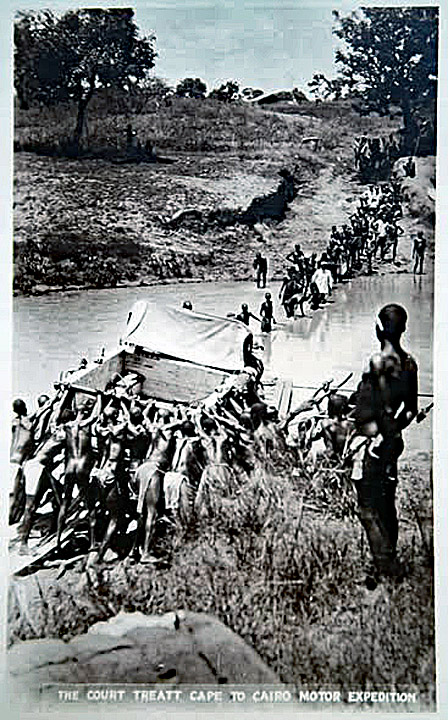
    Those 1700 kms of oppressively hot, malodourous, mosquito-ridden, swamp taxed the team severely. Dinka tribespeople assisted by dragging the Crossleys through. The team all fell ill, but soldiered on.

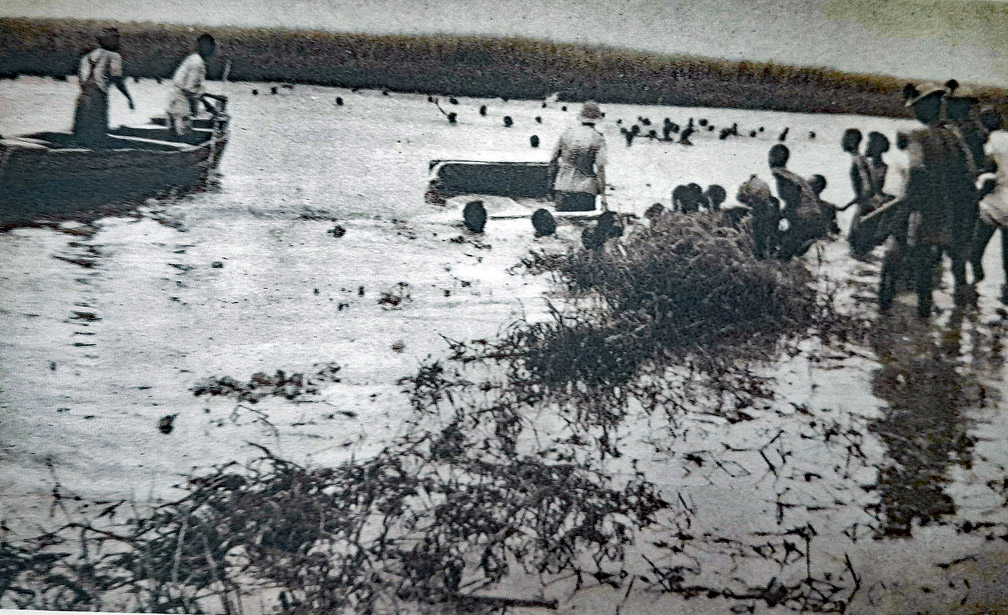
    The vehicles were repeatedly hauled, underwater, through rivers after draining fluids, plugging openings with wooden blocks and wax and lashing steering wheels with minimal give. The first time was at the Bahr-el-Gell River. Two ropes were tied to the front and fifty people heaved. A float was tied to the ropes in case they broke. They did.

    C-T remained on each vehicle while it was dragged

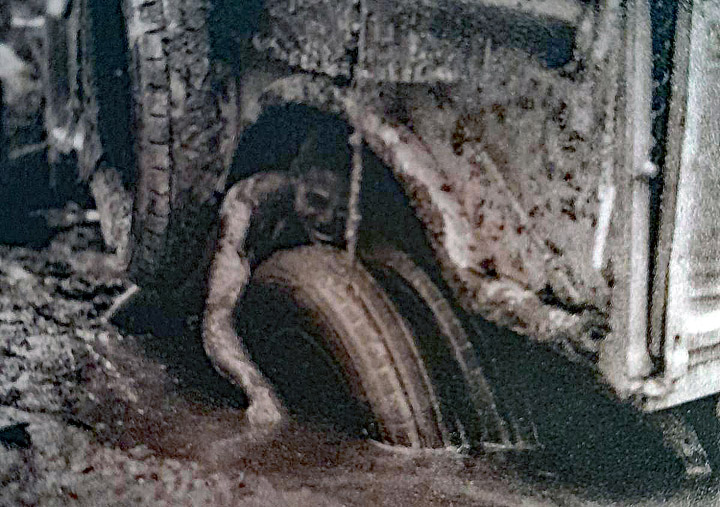
    C-T remained on each Crossley while it was dragged. Once, he and vehicle disappeared underwater completely while he clung to the steering wheel with hands and feet. The onlookers eventually saw bubbles and the vehicle emerged slowly from the water. But, just as they thought the Crossley was through, it dropped into a trough. The only remedy was to dive in, scoop out mud and build an incline against which the vehicle could be dragged free.

    They reached Wau, where Musa joined them, on 14 November. He spoke Arabic, Swahili and a smattering of English. To communicate, CT routed messages via Julius who translated into Swahili for Musa, who sometimes had to find an Arabic-speaking Dinka for further translation.

    The next big river was the Bahr-el-Arab, a tributary of the Nile. Adjacent swamps were, in places, up to 13 km wide. There were no maps but a crossing had to be found. En-route to one possibility, some youngsters burned grass to make a road. This got out of hand and the vehicles were almost destroyed.

    Arabs, not well-disposed towards the Dinka, lived across the river. There is, to this day, still ethnic conflict in the area. Four Arabs, caught on the Dinka side of the river, were unwilling to indicate where they had crossed but were eventually persuaded to show where the crossing was.

    The river was about eight metres deep at this point but C-T believed that a bridge could be built. There were no trees nearby so logs had to be carried a long way. The bridge was ready on 5 December. They reached the opposite bank but still had to cross the swamp.

    Being Arab territory, the Dinkas were unwilling to help but were eventually persuaded, with two antelope carcasses, to drag the cars through the swamp on the Arab side.

    This was not the only river to cross and, in places, branches and leaves had to be packed over sodden ground so the vehicles could proceed. In other places elephants created immense potholes in roadways. Each car suffered a broken wheel as a result. They repaired one and departed in it to their next destination, El-Obeid, about 64 km away. Spare parts were brought in from Khartoum for the second vehicle to be repaired and collected.

    Their second Christmas on the expedition saw them camping in the desert. Memories of the previous, soggy, Yuletide occupied everyone’s thoughts. Julius acquired a festive turkey in El-Obeid and had it cooked.

    The next destination was Khartoum and the expedition progressed swiftly. They covered about 180 km per day, sometimes reaching speeds up to 65 km/h. Although forewarned that travel from Haifa in the Sudan, to Shella in Egypt, was impossible, they tried anyway. Rough terrain caused many flat wheels and breakages and they became completely lost. Food and water stores became dangerously low, but a search-party from Aswan luckily found them.

    A Felucca, a traditional Egyptian sailboat, transported the Crossleys over the Nile on a platform specifically installed to carry vehicles.

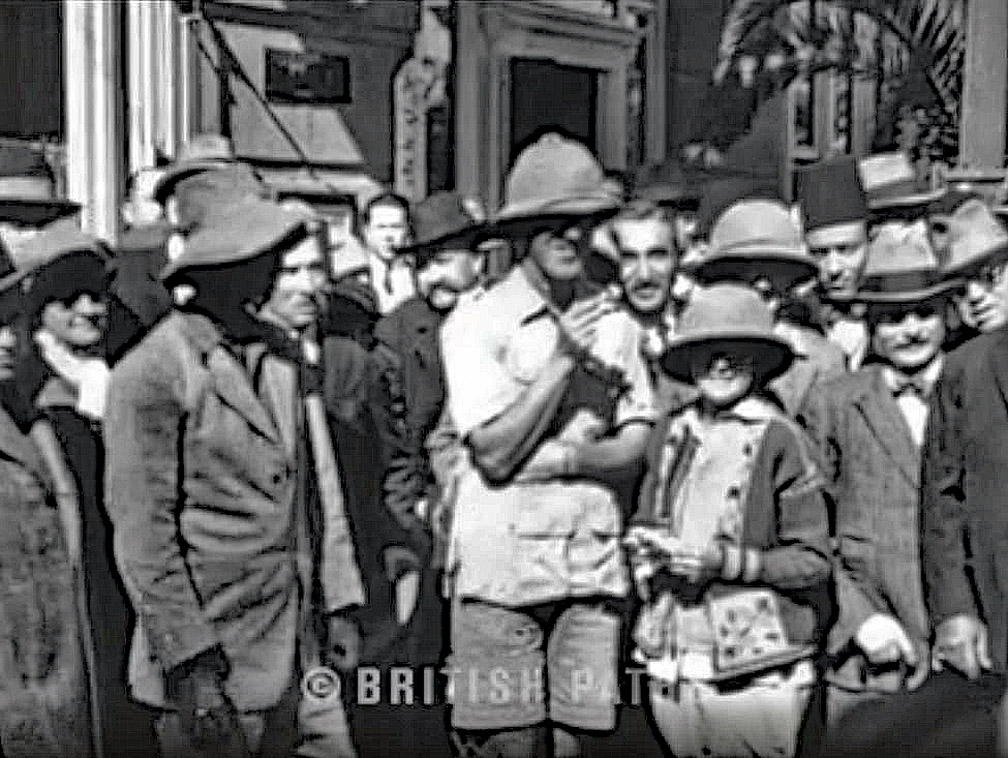
    They were welcomed at Giza with flowers, reporters and cameramen. The road from there to Cairo was closed so they could travel on it. Crowds of onlookers greeted them enthusiastically. This was 24 January 1926, the final day of the expedition.

    The Crossleys were then loaded onto a ship in Alexandria for transportation to Marseilles, before travelling under own steam to Calais where a ferry took them to England. Radio broadcasts, newspaper reports and parties followed.

    The Crossleys were taken on a publicity roadshow that crossed all of Britain. At the same time Glover’s film about the expedition was shown. What subsequently happened to the vehicles remains unknown.

    END

    Views: 13

  • Up into Africa Part 2
    Departing from Johannesburg on 25 October 1924

    Continuing the hard way

    Original story by Lennie Gouws on the Heritage portal
    Postcard pics from South African Nostalgia on Facebook
    Edited by Gordon Hall

    Everything was prepared in an old rented warehouse. Food, fuel and oil were bought and, on 23 September, the expedition left Cape Town in lovely sunny weather.


    The first evening was spent in Bainskloof, near Wellington. Later, somewhere in the Karoo, Stella decided that her thick, heavy coat was unnecessary and left it next to the road. It was returned the following day, neatly folded and packaged in brown paper. She later wrote: “I think Africa, from the Cape to Cairo, is strewn with oddments from my personal kit.”

    They completed the first 1,000 km, in Kimberley, on 2 October. Two days later, one of the trucks broke down. It took a week for the spare part to arrive from Johannesburg.

    They stopped over in Johannesburg for a few days to rest and re-organise; departing on 25 October. A week later, on 2 November, they reached the Limpopo River.


    The rainy season had arrived earlier than usual but they reached the Great Zimbabwe Ruins on 12 November. They took a few days to repair clothes and camping equipment and to service the vehicles. After becoming stuck in mud a few times, they arrived in Bulawayo on 25 November. Here they repaired one truck’s rear axle and built a trailer.

    Despite heavy rain they decided to attempt a section that had never been traversed by car before. To lighten the load, they left some food behind. Their diet subsequently comprised Bovril, Bully Beef, salt, coffee, flour and dried fruit.

    The new trailer was left behind at Nyamandhlovu, along with the aluminium roofs that were to have served as pontoons. The Kelsey attempt of 1913 had discarded a similar contraption in Paarl.

    Today’s road from Bulawayo to Victoria Falls is 435 km long and can be travelled in just over seven hours. It took the Court-Treatts four months. Just beyond Bulawayo the mud seemed determined to engulf the vehicles. After each one was dug out, it was able only to cover a few metres before getting stuck again. It was regarded as a good day if they could advance 10 km. It rained incessantly and the air was so damp that, in spite of the heat, nothing dried out.

    Camping was terrible. Christmas was celebrated in rain, under a sopping wet tent, with a warm meal, cake, plum pudding and champagne drank from tin mugs. Stella wrote that the situation reminded her of what soldiers experienced, a few years previously, in the trenches in France: “Can anything be more beastly than this Christmas Day?”

    A trip to Wankie, supposedly a day’s journey, took a month. Food stores ran low and a tent was blown away. Errol Hinds proved to be a skilled assistant mechanic but suffered a broken arm while trying to hand-start one of the trucks. The crankhandle lashed back and his arm was in the way.

    Having discarded the roof pontoons, alternative plans had to be made to cross rivers. These included pulleys, pontoons, and bridges cobbled together. Were it not for the muscle power of locals and their oxen, the expedition would have come to a sorry end. Stella’s book suggests that this labour was not always appreciated. Helpers, however, each received a penny for a day’s labour.

    Until then they had stayed near the railway line but, after crossing the Gwayi River, they switched to higher ground. This meant that thickets had to be chopped to make roads. Progress dropped to walking speed.

    They reached Victoria Falls on 25 April and obtained special permission to cross the Zambesi ravine via the railway bridge.

    With the rainy season over, they encountered a fresh obstacle. Deep sand slowed the vehicles considerably, managing only 29 km on the first day .

    At Kafue they met a French team, also led by an ex-military officer, journeying from Algiers to Cape Town. Its leader, Captain Delinqette, was accompanied by his wife, a mechanic and others. They reached Cape Town on 5 July 1925 after travelling for eight months.

    Early in July the Court-Treatt company reached the southern shores of Lake Tanganyika. Here they turned east to travel through a swampy area. They had to cross about 200 rivers. Approximately 180 had bridges made from tree stumps, most of which had to be rebuilt before the Crossleys could use them.

    On 24 July a steep incline almost resulted in catastrophe. The second Crossley couldn’t climb it, started running backwards, and was luckily stopped by a tree before it could gather much speed. After being winched back up, it was found that damages included a broken axle and a holed radiator. The team’s blacksmithing capabilities had it repaired, right there, the following day.

    Part 3 coming soon.

    Views: 30

  • Up into Africa Part 1

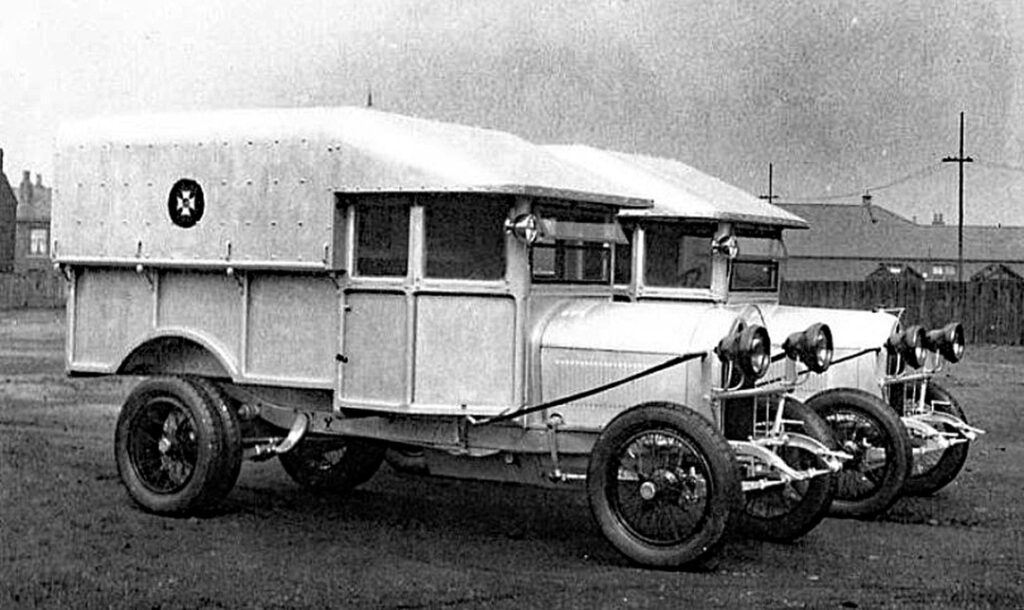
    The modified Crossley 25/30 vans used on the expedition

    Going the hard way

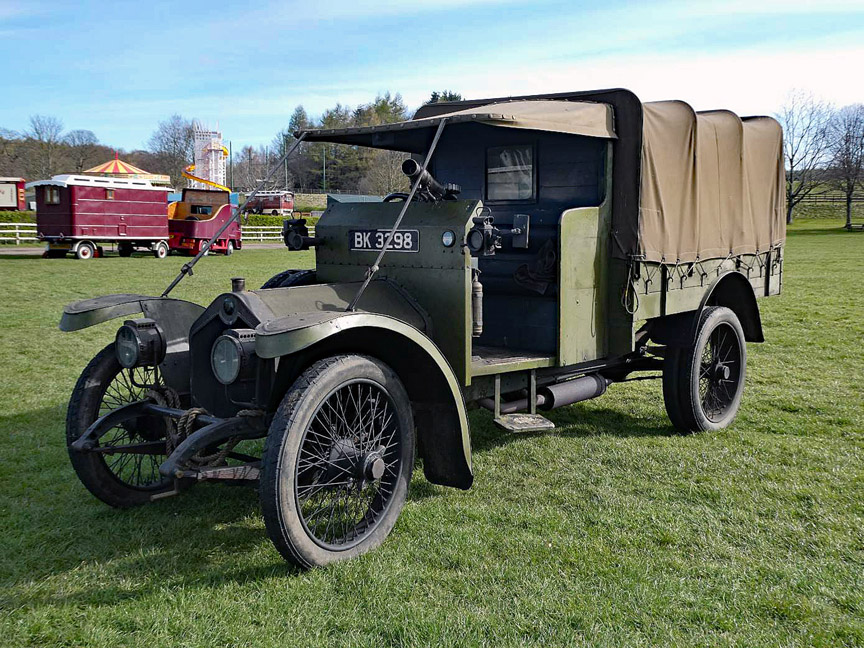
    A Crossley tender from WW1

    Views: 31

  • SS Jaguar 100

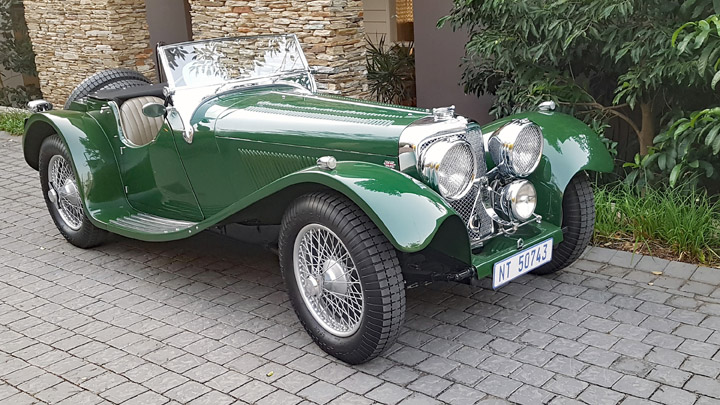
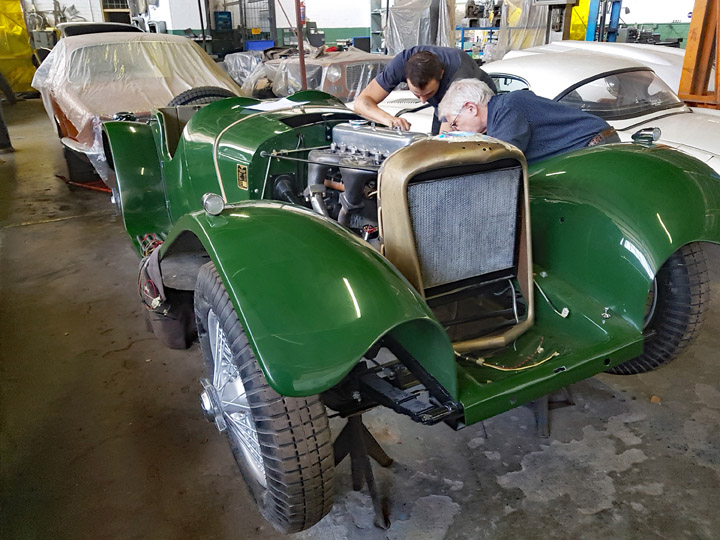
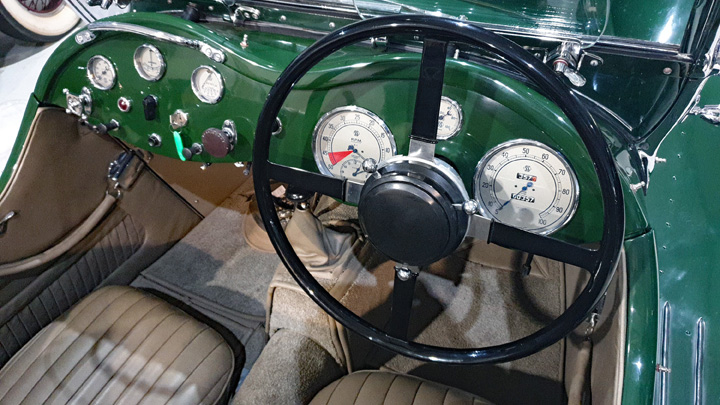
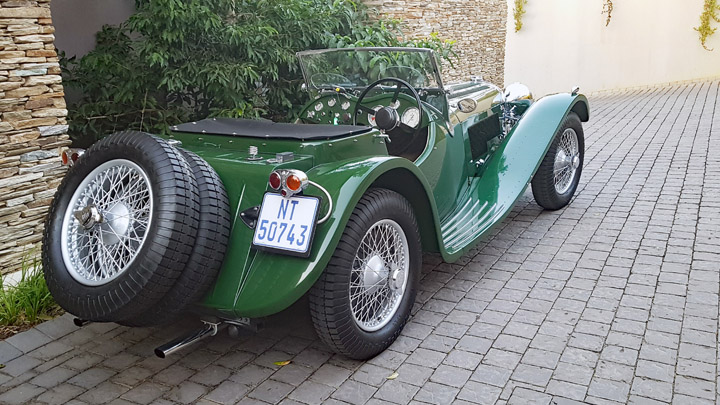
    The first would be an exact, or nearly-so, duplication of an interesting old car. Modern materials and technology could, if necessary, be used in its construction. A Reproduction is a remake of an interesting old car; primarily using original components but allowing for worn, broken or missing items to be carefully recreated using, as far as possible, period-spec materials.

    Peter’s car began life as a 2½-litre saloon. He has the Jaguar Heritage Trust certificate to confirm that. But, although closed-top models are nice enough, SS100 Open Tourers are far and away sexier.

    Background: In 1936 SS Cars produced this advanced and remarkable model at a fraction of the cost of similar high-powered sports cars available at the time. The 2½ litre SS100, presented by William Lyons in 1936, had both outstanding styling and remarkable performance. Even a completely standard example could comfortably keep up with today’s fast traffic.

    Its name, SS100 Jaguar, indicated that it was “as lithe as a jungle cat” and could reach a (claimed) top speed of 100 miles per hour. Original 2½ litre SS100s, with a volumetric displacement of 2.664cc and a final drive ratio of 4:1, had very high torque and were mostly driven in fourth and third gears. Even after cornering at 10 mph, it could accelerate well without selecting a lower ratio. The four-speed gearbox had synchromesh in second, third and fourth gears and non-synchromesh first.

    Peter tried to do the conversion himself but limited funds and expertise saw the project stalling so he acknowledged defeat and sought help. Wally Vorlaufer, the Austrian-born guru who’d wrought magic with many old Jaguars, was the man for the job. That gentleman checked it over and proposed: “Better we start again, ja?”

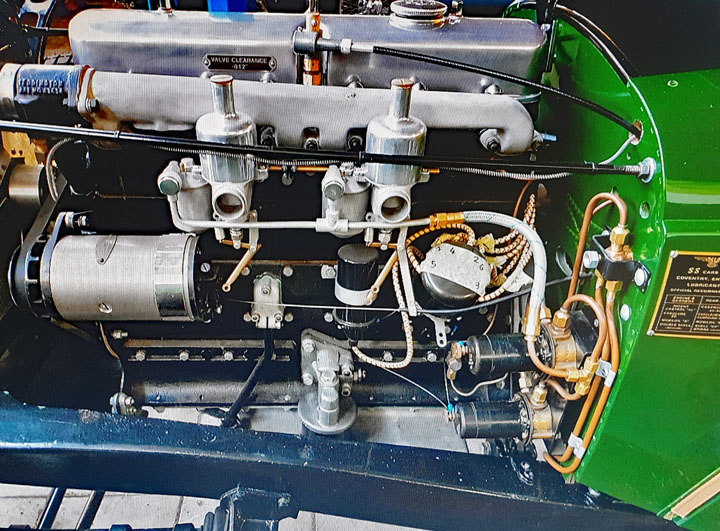
    Wally suggested some mechanical modifications, to make it more driveable in modern conditions, without impairing visible authenticity:
    • Engine capacity increase to 2850cc,
    • Compression ratio increase to 8.5:1,
    • Unleaded fuel-compatible cylinder head components,
    • Final drive lengthened from 4.0:1 to 3.8:1 to provide a speed increase of eight-percent in each gear, more relaxed highway cruising, and a theoretical top speed of 170 km/h.

    Unfortunately that’s beyond reach because, owing to the body’s flowing front wings, air gets trapped under the car and makes steering uncomfortably light at anything beyond 130 km/h. Its low exhaust note is distinctively SS100, fairly prominent around 4200 rpm, but not unduly intrusive to hot-blooded enthusiasts.

    Furthermore the suspension was considered too hard at lower speeds, by modern standards, so each leaf spring had a blade removed to soften the ride. Cruising on the highway, at 120 km/h, Peter’s SS100 rides very smoothly and maintains speed comfortably over long distances.

    The body tub is a reproduction, obtained from Ashley in the UK, rebuilt and adjusted for practicality by Vorlaufer’s. Wally manufactured new wings from scratch although the bonnet is original SS100.

    The cooling system with its original honeycomb radiator isn’t pressurised but, under normal circumstances, engine temperature seldom exceeds 80 degrees Celsius. As a precaution, though, Wally added an accessory electric cooling fan. It was never required on trial runs.

    To round it off they fitted high-performance Blockley 5.50 x 18-inch tyres. These feature a period Dunlop Racing tread pattern but modern internal construction, substantially improved traction and better safety characteristics.


    The rebuild, spanning four years and some 3500 man-hours, was completed late in 2020. Sadly, however, Vorlaufer Cars went into voluntary liquidation the following year.

    Views: 17

  • 1933 Peerless V16

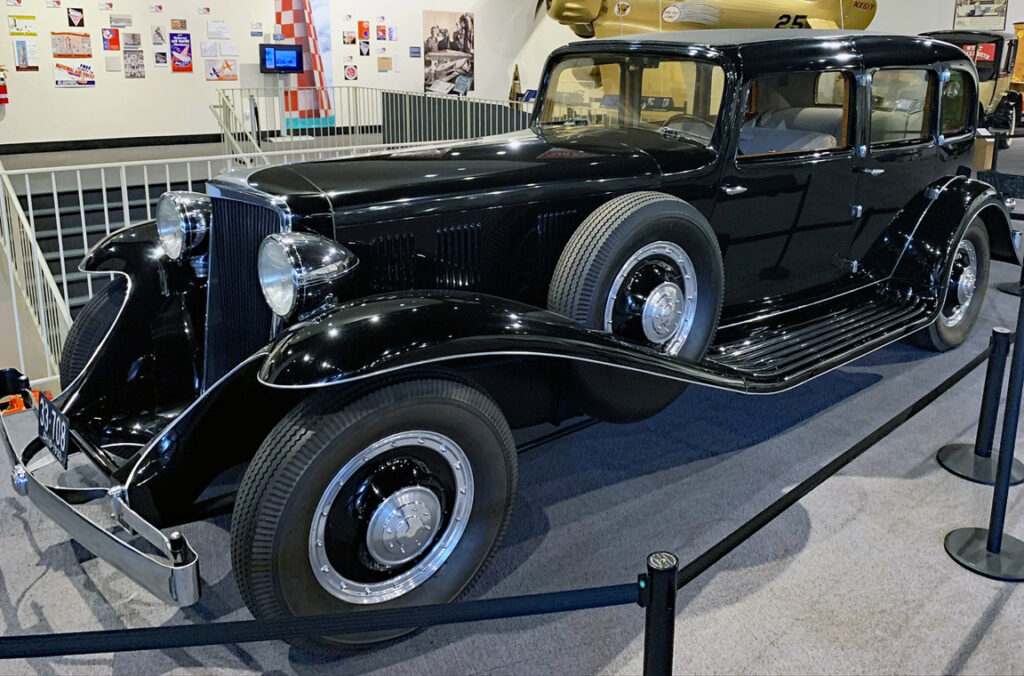
    Christmas Eve adventure: The Peerless Motor Co’s farewell V16 sedan

    Aunt Daisy swears it’s true

    Some technical stuff in case you’re interested:
    Body type: 4/5-seat sedan
    No. of doors: 4
    L x W x H: 4445 mm (175 in) x 1890 mm (74.4 in) x n/a
    Wheelbase: 3683 mm (145 in)
    Mass: 1837 kg (4050 lb)
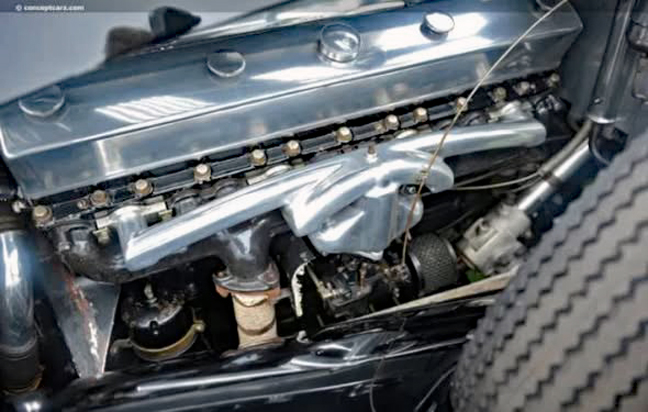
    Engine: V16 OHV, two valves per cylinder, water-cooled
    Displacement: 7613 cc (464.58 cu.in.)
    Bore x stroke: 82.55 mm (3.25 in) x 88.9 mm (3.5 in)
    Compression ratio: n/a
    Power: 129 kW (173 hp) @ 3300 rpm
    Torque: 373.3 Nm (275 lb/ft)
    Power/weight ratio: 70.2 W/kg
    Transmission: Three-speed manual
    Zero to 60 mph: 13.0 seconds
    Maximum speed: 160 km/h (99 mph)

    Views: 20

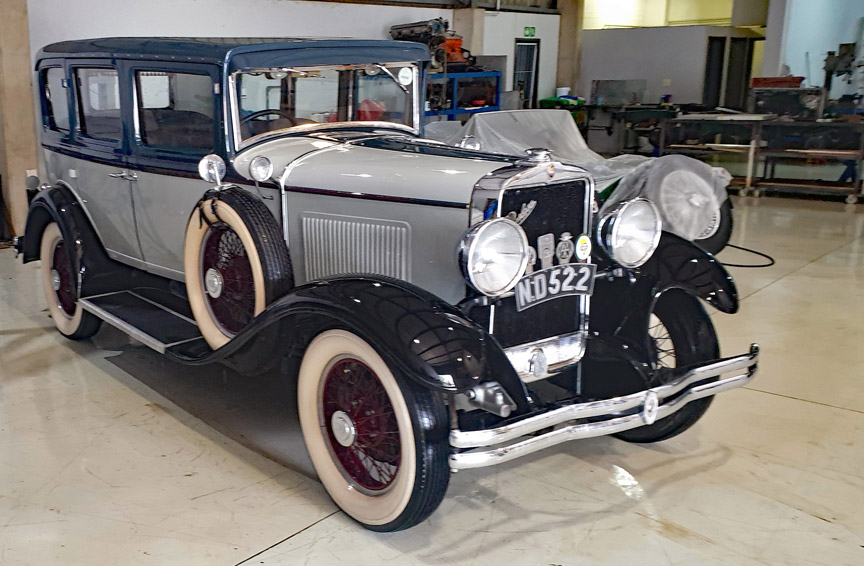
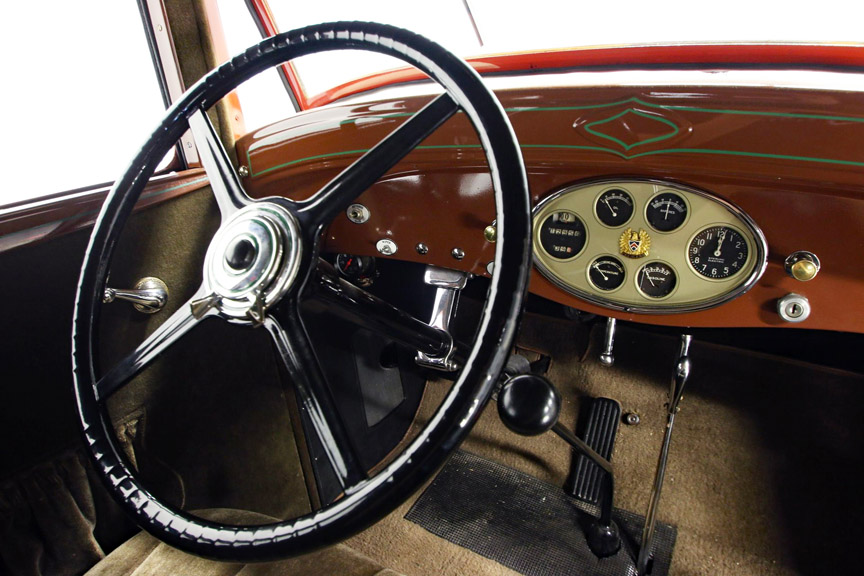
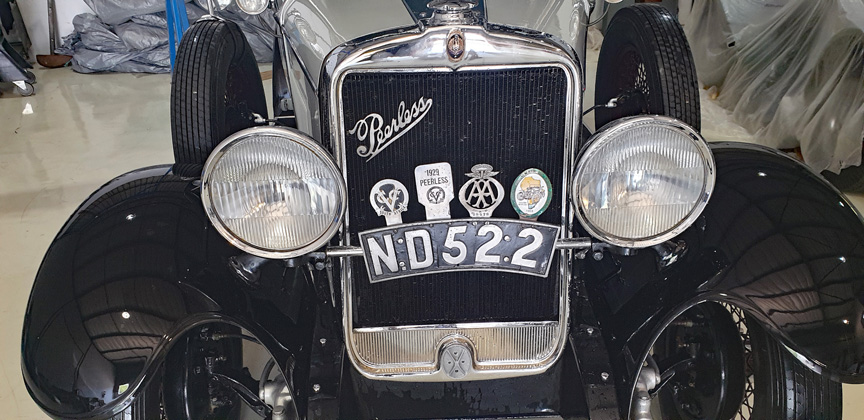
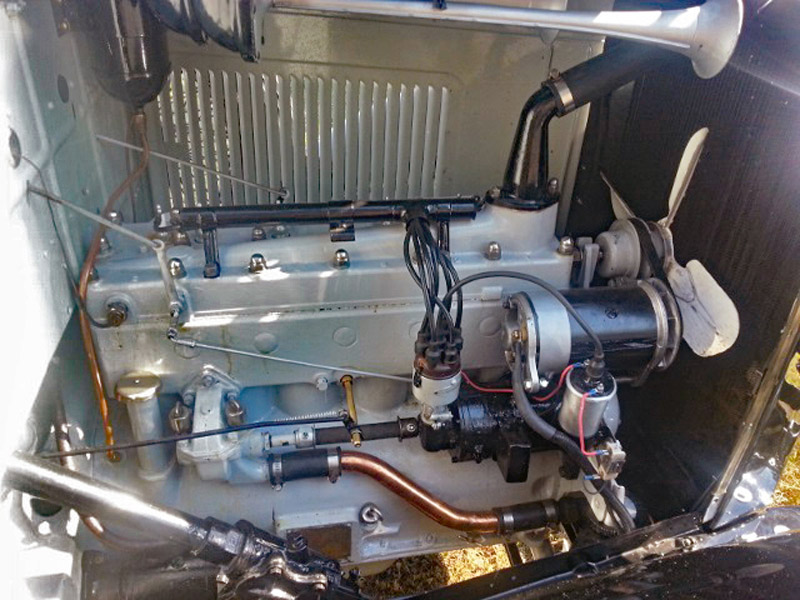
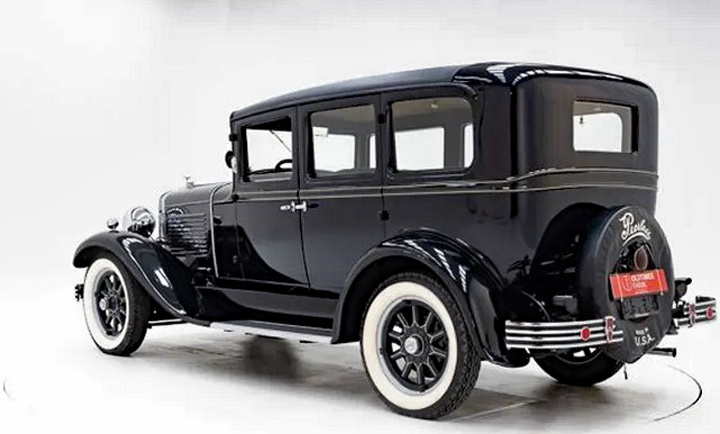
  • 1929 Peerless Model 6-81 Sedan

    ø;
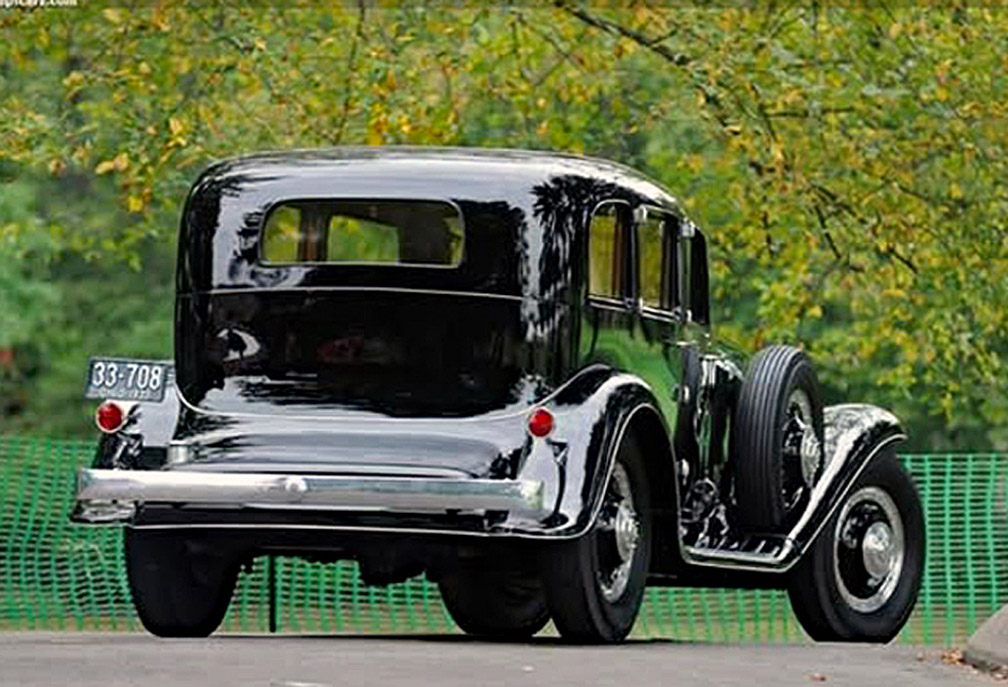
    Another example; just to show what the back end looked like

    Views: 36

  • Midlands Motor Show, Sunday 15 June 2025

    Sightings

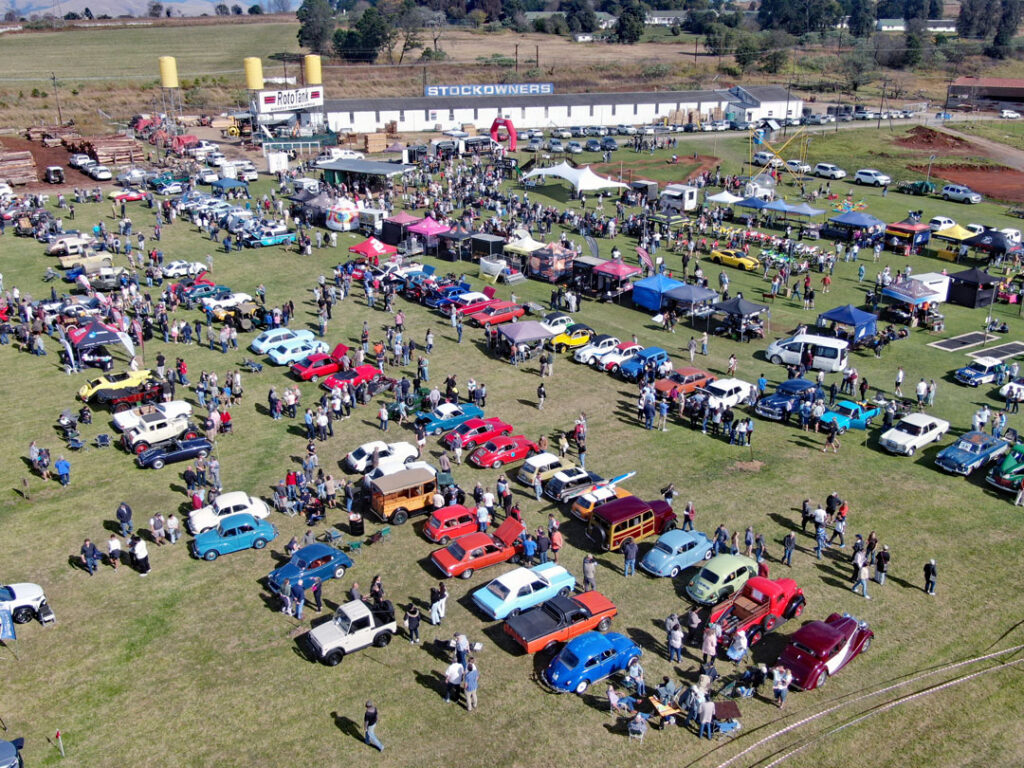
    One-hundred and forty exhibits

    Some pics supplied, others by author

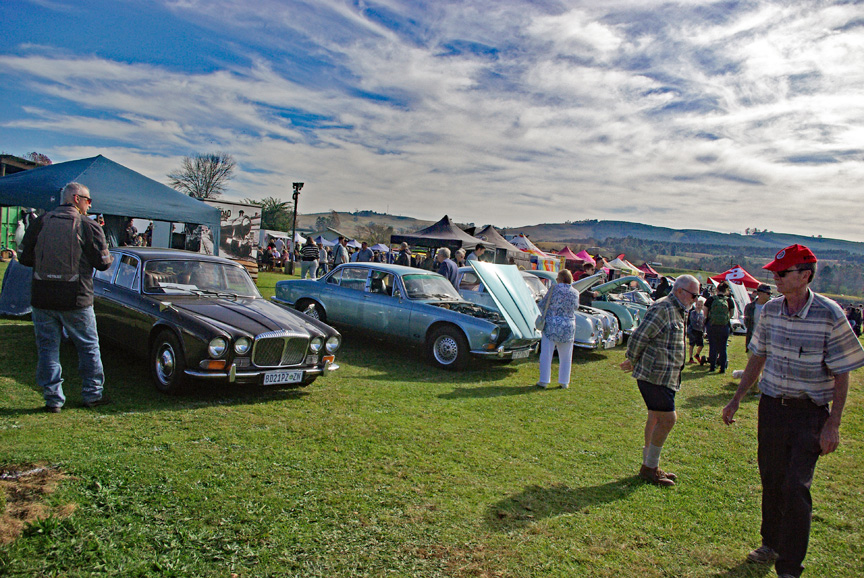
    The smart thing to do with under-utilised real estate is to add alternative uses. Mathew Mundell, son of the owner of Stockowners Farm at Tweedie, Howick, believes in doing that.

    On weekdays a portion is given over to a clubhouse with restaurant, a kids’ playpark with mini BMX track and a driving range. That might explain why I found a shiny new golf ball near my car when I parked in the visitors’ outfield this past Fathers’ Day. But back to the alternatives mentioned earlier: Apart from sundry events staged there by Mathew and local entrepreneur Kelly Gibbs (Evergreen Events, Hilton KZN), there is always time for more.

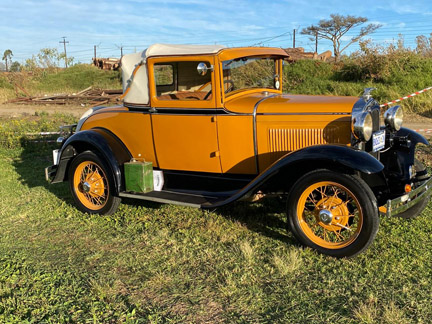
    Co-organiser Mike Leisegang’s 1930 Ford Model A

    A whisper in an ear, from a local old-car enthusiast, suggested that not all Veteran, Vintage, Post-war and Classic car owners are thrilled with what is currently available by way of local display-and-meet opportunities. Some feel that Cars in the Park, at its newish venue near Ashburton, just isn’t what it used to be. Others don’t want to drive their elderly chariots that far along the N3 highway. And there are those who believe that the Howick area is home to sufficient old machinery to warrant staging a local event.

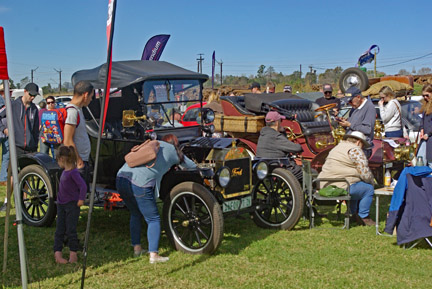
    Model T and Cadillac

    So it came together: A date was chosen (a “holiday” Sunday that conveniently fell over a long weekend), trade sponsors lined up, vendors invited to participate and live music arranged. Gate charge was set at R30 and dogs, provided their minders cleaned up after them, were allowed in free. Cool and sunny weather was a welcome bonus on the day.

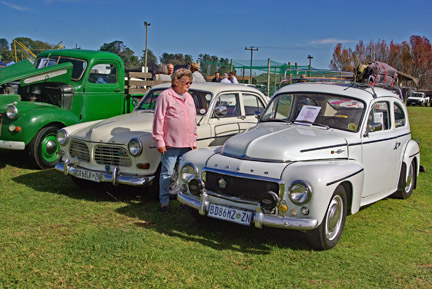
    Volvo 120 series Amazon and PV 544

    Cherry-picking from 140 exhibits, the following come to mind: Fords included co-organiser Mike Leisegang’s 1930 Model A Sport Coupé, a 1936 V8 Roadster, and a 1916 Tin Lizzie that stood alongside a 1904 Cadillac proudly displayed by the same custodian. Also featured were a selection of VW Beetles, buggies and early Golfs along with two iconic Volvos; a PV-series and an Amazon. The “Beetle-back” cars never had OE engines larger than 1600 cc because their three-bearing crankshafts couldn’t handle higher loads imposed by greater capacity. Power-hungry owners discovered that to their cost. 120-series Amazons that followed boasted 1800 cc and two-litre, five-bearing motors that overcame the early weakness. Built tough for Sweden’s rumoured eighty-percent dirt-road network they became the rally cars to beat – practically anywhere in the world.

    A prowl of Jaguars

    The local Jaguar and Daimler group fielded a Mark 5, a pair of Mark 2s that came a while after it, an XK 140, an E-Type, a couple of XRs and two Series-1 XJ6s. One of these, badged Daimler Sovereign, was personally imported. I found an unaffiliated Mark 4 farther down the field.

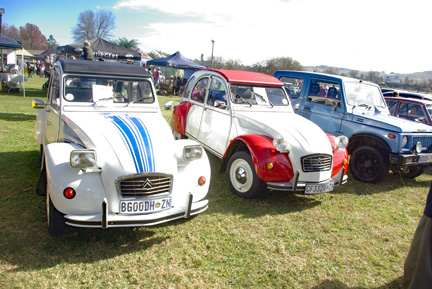
    Half the Deuxs Chevaux

    I then saw four delightful Citroën Deux Chevaux. These were, anecdotally, designed to comfortably transport four burly farmers, minding a basket of unboiled eggs, across a ploughed field; without breaking any.

    Other sightings included a couple of Porsches; three Alfa Romeo Spiders; 1941 GMC pickup; 1914 Buick B25 Tourer; 1931 Chevrolet five-window coupé; a wild MG K3 Magnette with supercharger and a mid-thirties De Soto, a brand in the Chrysler empire between 1928 and 1961. It featured Fluid Drive, an early form of automatic transmission.

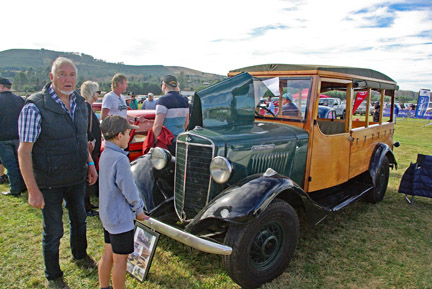
    International wooden-bodied pickup

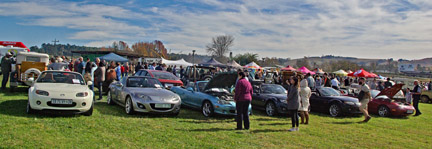
    Also seen were a mid-thirties’ International pickup with wooden body; six Mazda Miatas; a Lancia Fulvia; various Mercedes-Benzes, Toyotas, Jeeps and Land Rovers. I apologise for those unnoticed or not mentioned.

    Wartime BMW and a Moto Guzzi

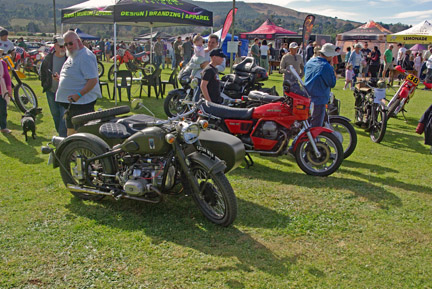
    Scattered in-between were interesting old motorcycles including a WW2 BMW with sidecar, a couple of civilian Bimmers, a red (what else?) Moto Guzzi, a Hog, a 1922 BSA and far too many modern off-roaders. Not biased at all, you understand.

    For a first effort this show was a resounding success, with plans already in mind for next year. Real Estate is there to be utilised after all.

    Everybody loves a Miata

    Some numbers:
    Visitors: Over 3000. They were still arriving at lunchtime.
    Exhibits: 140
    Funds raised for the SPCA: R20 000

    Views: 11

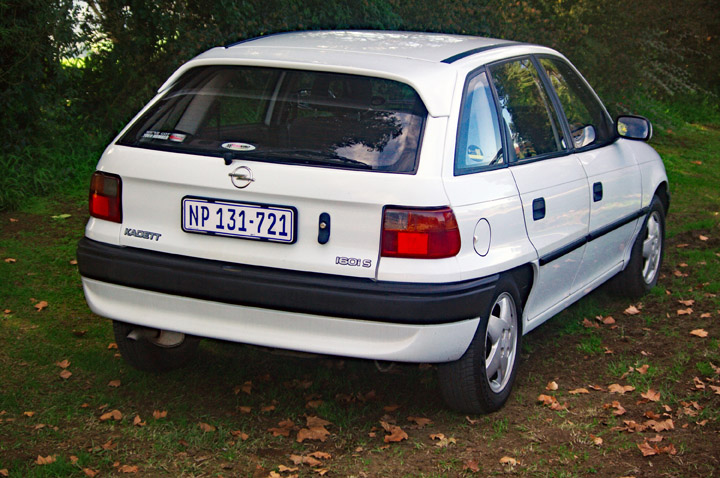
  • 1995 Opel Kadett 160i S

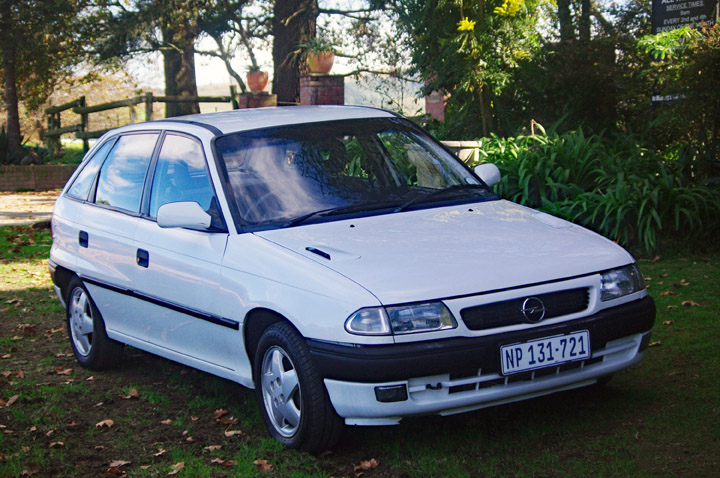
    1995 Opel Kadett 160i S hatchback

    Flexible daily driver

    Pics by author

    Kadett Astra Rautenbach will soon be turning 30. That’s a very desirable age for a car; sufficiently young to prevent culture shock yet mature enough to be interesting.

    Then-Natal Parks Board site inspector, Peter Rautenbach, bought her on 23 June 1995 – the year in which it won SA Car of the Year – as his last official vehicle before retirement. Until then he had usually chosen top models with every bell and whistle but, in order to be sure of getting it paid off before the big day, he “bought down” to entry-level specification.

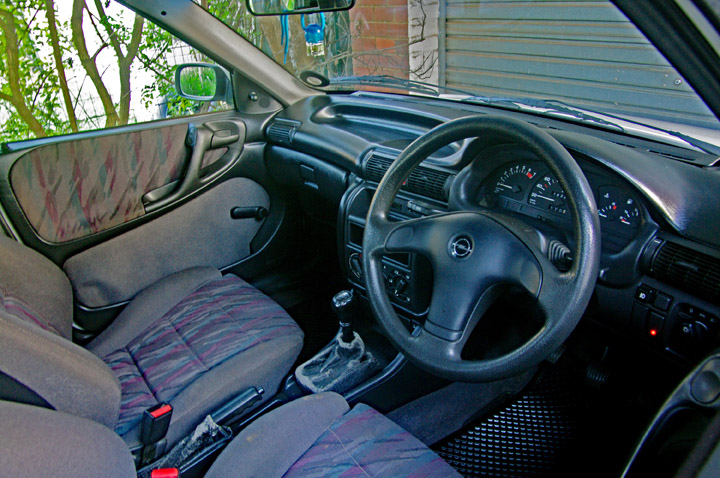
    The car he chose, while sufficiently peppy to get the job done, was pretty basic; manual wing mirrors and windows, no aircon, no central locking, no radio, no power steering. That refinement was added later after he handed the car over to his wife and she found it hard to drive. Subsequently, after the elder Rautenbachs had passed away, the car moved on to their son Paul. He owns the motor workshop and car wash behind the Shell fuel station in Zwartkop Road, Pietermaritzburg.

    Being a product of its age, it was built before the time of ABS, ESP, airbags or cameras. There’s no fault with that; it simply requires that its pilot possesses decent driving skills and remains alert.

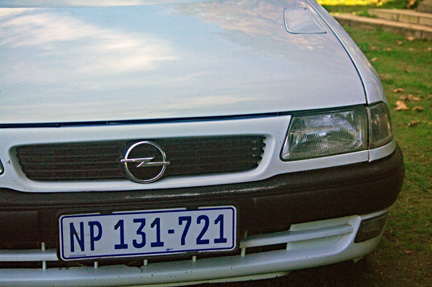
    Although overseas versions of this model range were all labelled Astra, Delta Motor Corporation, South African distributors of General Motors brands between 1986 and 2004, chose to badge hatchbacks as Kadett (an old Opel model name) and sedans as Astra.

    Paul’s comment on handing me the key was: “For an older car it still has plenty of steam, keeping up easily with the youngsters.” It does that, but subject to the usual caveat: “except for VWs, Audis, BMWs, Mercedes-Benzes and big SUVs or double-cabs driven by hooligans.”

    Driving impressions: For a little hatchback with naturally aspirated engine, performance is spirited and flexible; third gear is ideal for city and suburban work, between about 40- and 80 km/h, while fourth will take you from there to freeway entrance speed quickly and safely. The motor turns over at around 3500 rpm in top gear (fifth) and rolls on nicely from there if needed. Although maximum torque of 132 Nm (European figures) kicks in between 3400 and 3500 rpm, ninety percent of that is available from 2500 revs to about 5850.

    Its suspension, McPherson struts with coil springs and anti-roll bar in front and beam axle with Watts linkage, coils and conventional dampers at the rear, is firm but not uncomfortably so. Handling is reassuringly positive and on par with all but really fancy 2020s competitors.

    Controls and interior: Gear shifting is still smooth, positive and free of sloppiness; the centrally placed mechanical parking brake works firmly and progressively, trim is generally in good condition and free of rattles. The only obvious signs of wear are on the faux-leather gaiters surrounding gear lever and hand brake.

    Front seats are fabric, comfortable and adjust mechanically, although this was before seat height adjustment became fashionable. In the absence of touchscreens, secondary controls like HVAC, entertainment (if fitted), lights and trip meter are easy to find and operate.

    Back seat accommodation is a moderately good fit for this 1.85-metre tester who rated headroom (three finger-widths of space between scalp and ceiling) OK, although knee- and foot space is rather tight. Three grab handles and a single courtesy lamp are included.

    The boot loads at 71 cm into a well 23 cm deep, so luggage handling should be quite easy. Its space is nicely shaped; 818 mm long – 1372 with 60:40-split seatbacks folded – 995 mm between wheel arches and 868 mm deep. Luggage capacity is rated at 360- to 1200 litres VDA.

    Although not loaded with modern-day toys, this basic-spec family runabout should fulfil most users’ needs and is a very neat and flexible daily driver.

    Car kindly loaned by owner.

    The numbers

    Retail price at time of purchase: R66 541

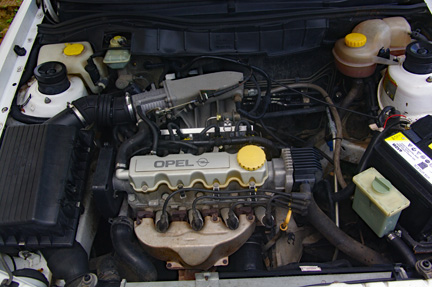
    Engine: GM Opel C16SE, 1598 cc, SOHC, eight-valve, inline four-cylinder

    Fuel feed: Multipoint, indirect petrol injection. Naturally aspirated

    Power: 73.5kW at 5600 rpm

    Torque: 132 Nm at 3400 rpm

    Zero to 100 km/h: 11.0 seconds

    Maximum speed: 185 km/h

    Average fuel consumption (ECE rating): 7.1 l/100 km

    Tank: 52 litres

    Luggage: See text

    Brakes: disc and drum

    Ground clearance: 135 mm

    Turning circle: 10.5 metres

    Standard tyre size: 175/65R14

    Spare: Full size, steel rim

    Towing capacities, unbraked/braked: 500 kg/1000 kg        


    END

    Views: 102