A uniquely Rhodesian build on an American engine and chassis
The former Rhodesia, now Zimbabwe, has always been a haven for interesting, and generally old, motor vehicles. It’s perhaps the British origins of Rhodesia – that carried forward to Zimbabwe – but over the years, since independence in 1980, it has been the source of many interesting finds.
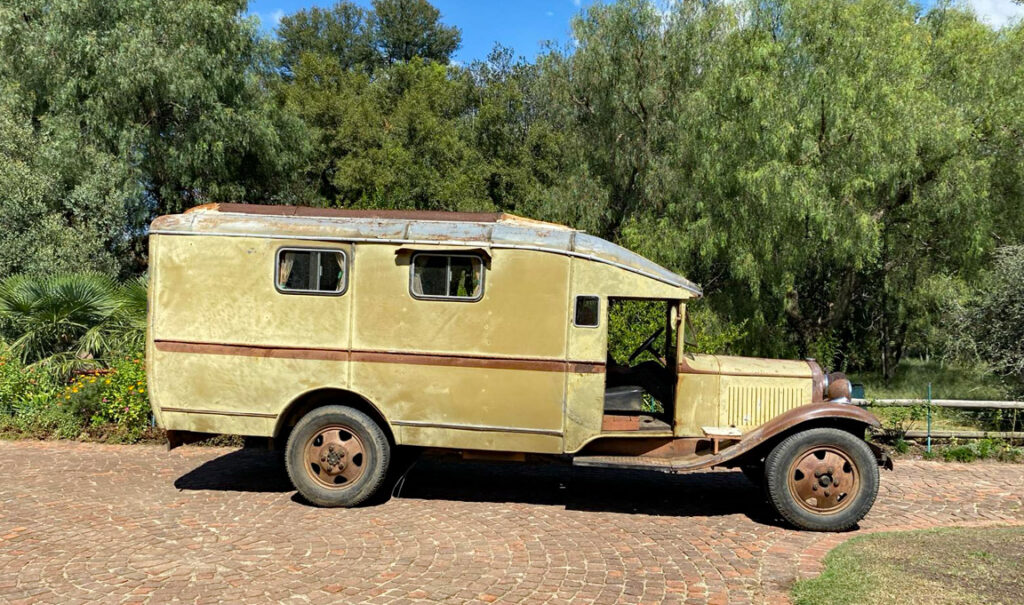
South African historic vehicle preservation trust, Sandstone, responded to an enquiry from Bulawayo, in August 2019, to have a look at some vehicles that were for sale. This was not particularly a collection as such, but rather a property full of vehicles that had been used by the owner, Martin Sanderson, over the past 50 years; some vehicles, in fact, even longer. Examples included four Rhodesian built Minis, an MG Y-type, an MG TC, a British Motor Corporation Marshall coach used for mechanic training – one of only a few built in the world – a 1927 Dodge Sedan, a 1926 Morris Cowley, a Ford Model T that had belonged to H. S. Henderson, a soldier awarded the Victoria Cross in 1896 during the Matabele uprising, and a Model T pick up; all, at various times, used by Martin’s family. The jewel that stood out was a 1931 Dodge Hunting Van built by Marzorati in Bulawayo.
Sandstone decided to purchase this vehicle and so began a three-years-plus operation before it finally arrived in South Africa in February 2023. Documents received with the vehicle, and information from Martin, provide a fairly comprehensive history of this Dodge.
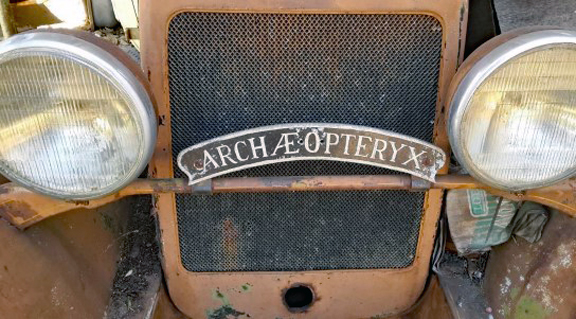
It is known as “Archaeopteryx” because one of Martin’s friends, who worked at the National Museum of Zimbabwe, suggested that the van was left over from the era of dinosaurs; hence ‘“Archaeopteryx”, a birdlike dinosaur from over 150 million years ago. Over the years, however, the van has also been called “Bundu Baby” and “The Caravandah” by friends and their children.
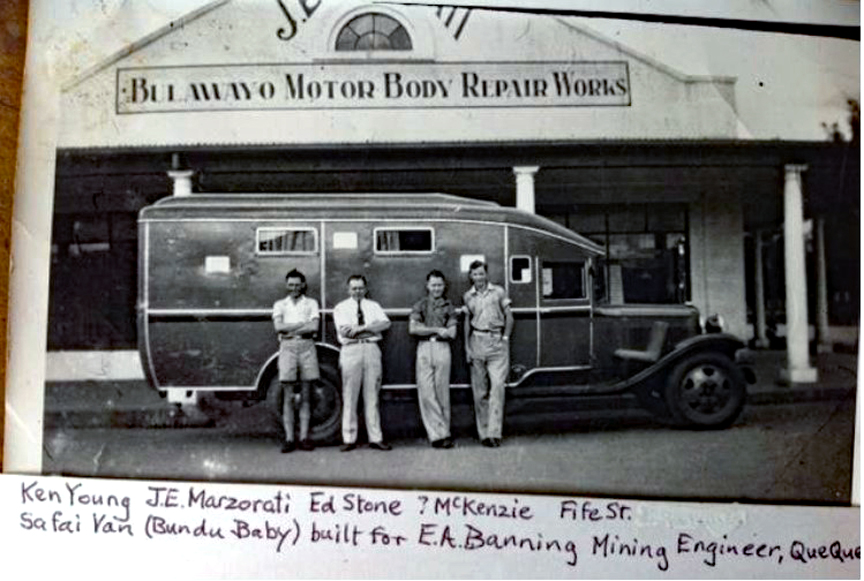
In the late 1920s E. A. Banning, a mining engineer from Que Que in Rhodesia, approached J. E. Marzorati who ran a vehicle body-building business in Fife Street, Bulawayo and commissioned his company to build a caravan-type ‘safari’ body on a Dodge Brothers chassis; a vehicle that could be used on hunting and fishing trips in the remoter parts of the country. It was christened “Bundu Baby.”
When the vehicle was close to completion Marzorati exhibited it at the Bulawayo Motor Show in the Police Drill Hall in Bulawayo. Unfortunately nobody had taken into account the height of the exit from the Marzorati workshop out into Fife Street. This meant that the wheels had to be taken off and the Van edged out on trolley-jacks. The wheels were then replaced and the triumphant team had their photos taken standing next to the Van. The vehicle was registered G3789, signifying Gwelo, now Gweru.
Mr. Marzorati left off one side of the body to enable visitors to the Show to see the interior and the superstructure. E. A. Banning sold it some years later to a friend, George Rudland.
On a brief visit to Salisbury (Harare), on one occasion, Martin Sanderson visited George Rudland at his home in Emerald Hill in the hope that he might have had some photographs of the vehicle out on one of his fishing/hunting excursions. Unfortunately he was not able to help in this respect. However, he enthusiastically said,
“Young man, you are reminding me of a part of my life I’d forgotten about. You know, that Dodge never let us down. It got my wife and myself out of every hole we ever got into”.
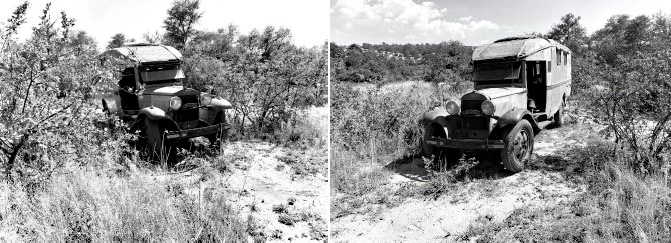
From George Rudland the van went to new owners, a farmer and his wife, who used it as a base while they were building their house on their farm. One day the farmer stopped in the middle of Bulawayo where he saw Martin parked with the Van in shopping centre parking. “My son spent the first six months of his life in this vehicle,” he told him.
This was in the early ’60s and, after the house was built, the van stood out of use on the farm until subsequently rescued by another Bulawayo resident and brought into town. Again it remained out of use. Martin Sanderson saw it in 1974, in a sad state with four flat tyres, and bought it in September 1976. In 1977 he started work on repairing the van as it had been standing in the open for a long time. Martin takes up the story:
“All the tyres were flat when I came across this custom-built safari van. Several families of rats had made themselves extremely comfortable in the many hidden recesses in the interior. The mudguards were painted black. The canvas of the roof was non-existent. The sides of the living compartment were coming adrift from the very well designed and fabricated superstructure that J. Marzorati and his team had constructed in their premises at “Bulawayo Motor Body Repair Works” in Fife Street/9th Avenue in 1931. The entire body had at some time been liberally coated with silver aluminium paint.
“I stripped off the zinc sides and also the disintegrating plywood walls and replaced with marine ply. Aluminium replaced the old zinc sheeting. I then decided to put in slightly larger windows to replace the wooden-framed originals. The paint in the engine compartment was sand coloured; hence my painting of the main body the same sandy shade which reflects so well the Highveld landscape of this part of central Africa. The mudguards I painted brown. The roof I insulated with blanketing, finally covering the whole with white PVC. And so ‘Bundu Baby’, as the van was called at the time, slowly came to life again”.
Rhodesia was granted independence by the UK in 1980 to become the Republic of Zimbabwe after a fierce Civil War. Martin takes up the story again:
“It was pressed into service in the early 1980s on my various forays out into the bush away from the National Museum of Rhodesia (now the Natural History Museum of Zimbabwe. NHMZ). After the demise of Southern Rhodesia I reversed the aluminium sign in front of the radiator and gave Bundu Baby a new name: “Archaeopteryx”. I felt that the flightless ancestor of modern birds may well have glided across the paleo-landscape in much the same way as I have negotiated my way up and down the by-ways of this part of our tectonic plate!”
The history of Zimbabwe is well documented as are the violent land invasions that took place in the late 90s and early 2000s and by this time, the Dodge had suffered a major engine failure. It was during the time of the land invasions, around 2002, that Martin Sanderson stopped using the vehicle and decided to try and sort out the engine.
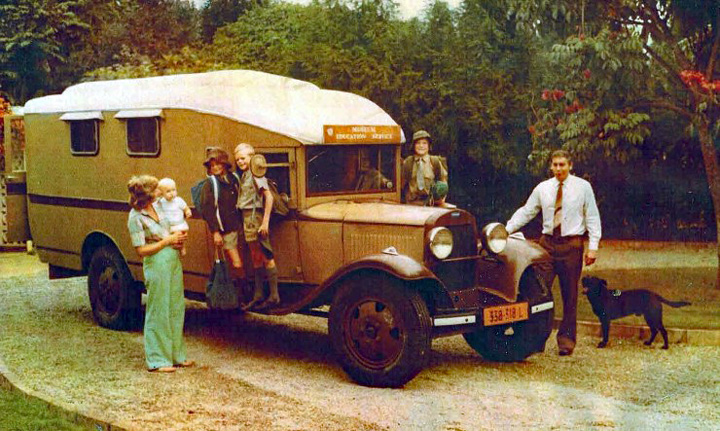
He had used it extensively, up until then, for school environmental education trips into the bush. The Van had also been used on Museum field-trips; forming a “home base” for students.
It had towed a trailer containing all types of equipment to enable young intellects to, hopefully, consolidate what they may have learned from their environmental excursions.
Sadly Martin never actually used the van for hunting or fishing. As he says, “the only hunting or fishing trip I’ve been on with “Archaeopteryx” was to Johannesburg in 1982 when I was hunting and fishing for parts, and went on a mission to the Old Car Shop near the Railway Station!” With the turmoil in Zimbabwe, the intention to get the engine rebuilt wasn’t to be.
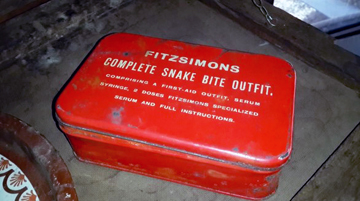
Today we would refer to the unit as a Camper Van but in the 1930s and onward, much of now-Zimbabwe was bush, so hunting and fishing excursions were commonplace. The Dodge was used extensively by various owners for trips all over Rhodesia. Tarred roads were virtually non-existent and, although the Dodge is not four-wheel drive, it travelled many many miles around the country. The vehicle is remarkably complete even to the point of having the original snake bite kit still on board!
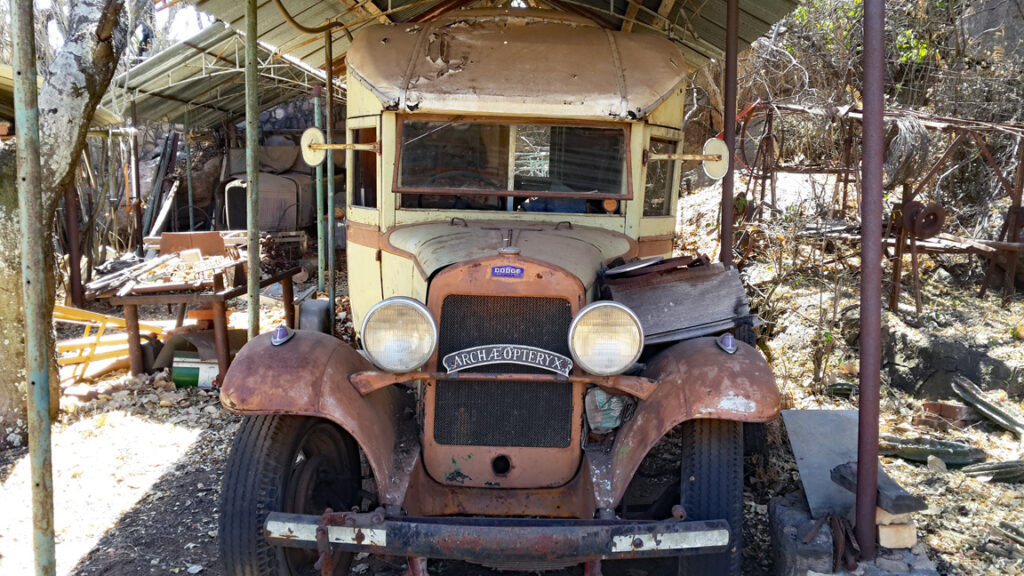
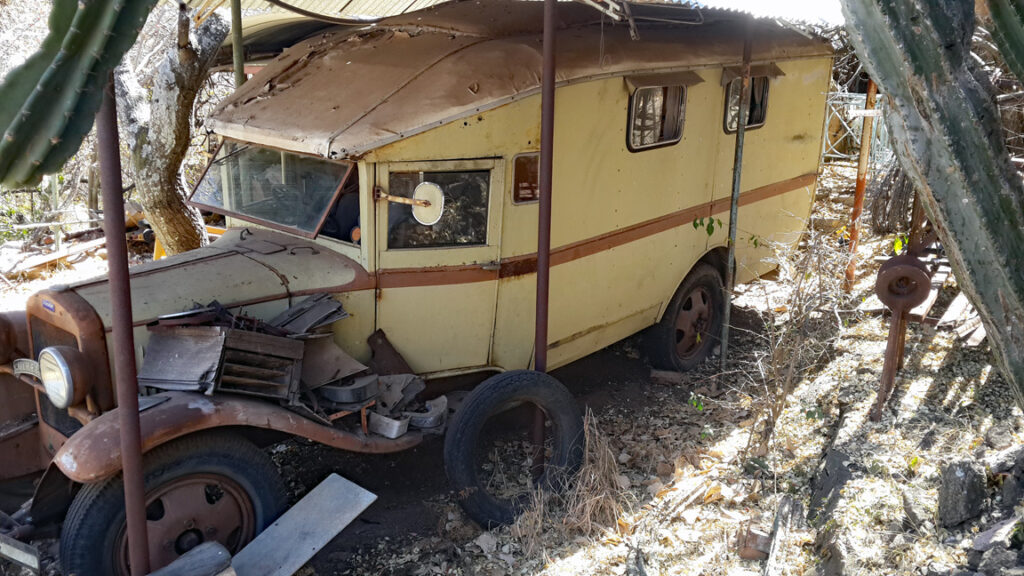
Arrangements began in early 2020 to purchase the vehicle but soon the Covid pandemic hit the world and negotiations stopped as any movement of the vehicle would have been impossible. As Covid retreated negotiations for the purchase resumed in January 2022. These went smoothly, and were finalised, but for an administrative error in Zimbabwe with the licensing of the vehicle.
The vehicle was originally licensed in 1931 as G3789. These old type Rhodesian registrations were changed in 1971 to a computerised system and the Dodge was allocated a new number. In 2006 the number plate system was changed again and the Dodge received another number. This is where the obstacles began. Although the paperwork showed all the correct numbers, the system at the Zimbabwean licensing department did not! After almost 12
months of wrangling, whereby the problem was even escalated to ministerial level, the Dodge was released from the country and arrived in South Africa in February 2023.
Mr Wilfred Mole of Sandstone takes up the story in a note to Martin Sanderson:
“What a superb day it was for us, Martin, when we woke up on Monday morning and found at our gate a truck, belonging to a transportation company from Harare, with the Dodge on the back. The Old Girl is safely in our workshop and we are currently evaluating the situation. The bodywork is in much better condition than we thought it was and we will have no difficulty bringing that up to a high standard.
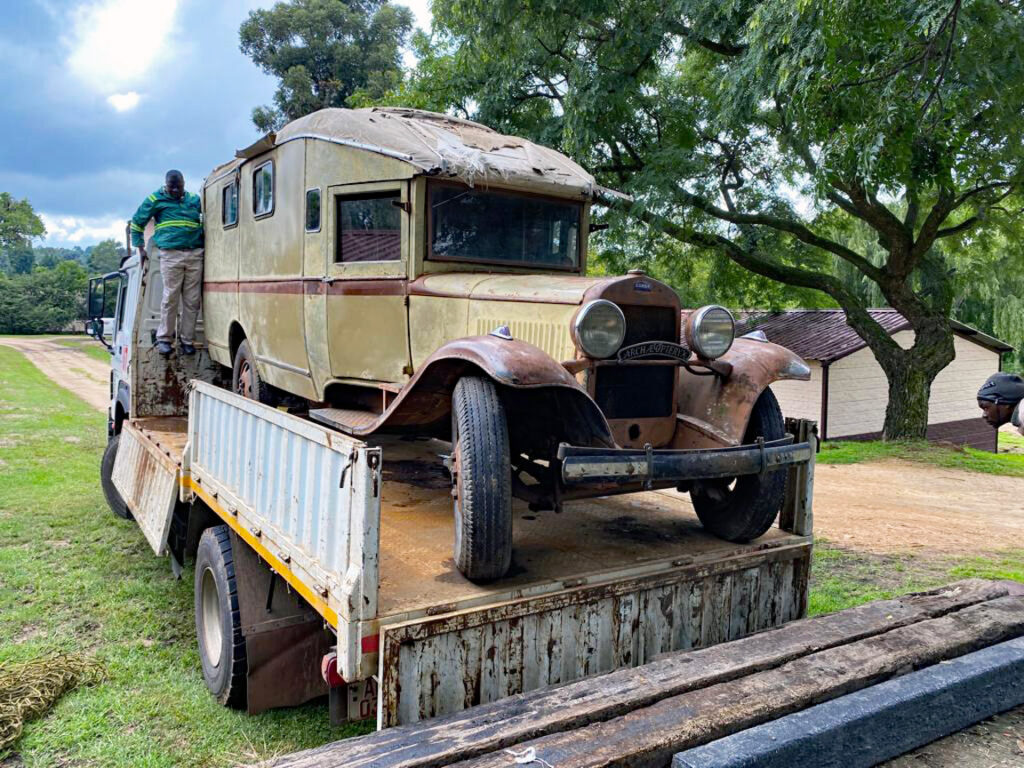
“The engine also looks OK. Obviously the cylinder head was removed but we are going to take the engine out and completely overhaul it, so that it is back to full original spec’. Fortunately I know a guy who is familiar with this generation of engines – and is supported by an engineering shop that does superb work on machining – should that be required as well.
“We are going to leave it in its original patina; i.e. it will not be repainted. We’ll just bring it back to full useable condition while leaving it looking very much as it does now.
“I would also like to thank you for the meticulous way in which you included a workshop manual, as well as some provenance on the vehicle, which I have with me.
“Thank you for your patience and thank you for trusting this old vehicle to us. You are always welcome to come and visit us at any time, and obviously once it is going we will take it for a spin.”
After just over a year since the 1931 Dodge Hunting Van arrived at Sandstone from Bulawayo, Sandstone has been busy with various restoration items, but in particular the Dodge engine, after suitable parts were sourced from the USA. In March 2024 the Dodge took a few trial runs in Johannesburg and the engine proved to be perfect.
Visit Sandstone at:
http://www.sandstone-estates.com/
Views: 48
Leave a Reply