An article on post-WW2 bubble cars
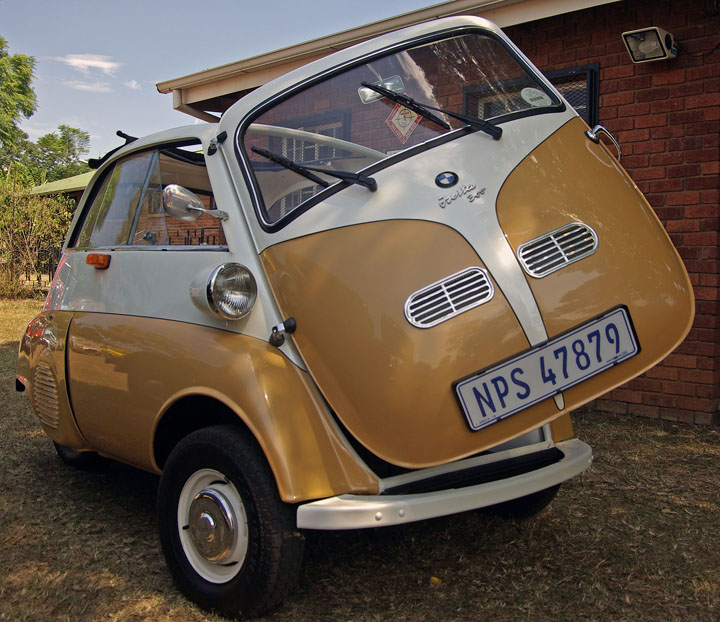
Bubble, or microcars: No known cure
Originally published in Weekend Witness Motoring on Saturday April 23, 2011
“The microcar bug is a disease,” said Bruce Baker “and there is no known cure.” He should know. Shortly before Baker and his wife Pat moved from Johannesburg to the South Coast, they owned seven. “It’s all her fault actually,” Baker grins, “fifteen years ago she told me she wanted a BMW Isetta and, well, what can a man do?” An advertisement in one of those freebie car-ad magazines led them to the home of an artist in the Cape winelands and a deal was struck. The Isetta was restored and the rest is history.
Microcars, also known affectionately as bubble cars because many were egg-shaped with bubble-like windows, were a phenomenon of the post-WW ll era when fuel and raw materials were in short supply. Ordinary people needed cheap, short-range cars; so various manufacturers willingly filled the need. Most were single- or two-seaters with or without nominal luggage space and powered typically by small motorcycle engines.
Brands reaching our shores included BMW Isetta, Goggomobil, Bond Minicar, Heinkel Kabine and Messersmitt KR. Interestingly, Isettas were built under a variety of names under licence from Italian company Iso in France, Spain, Belgium, Brazil and the UK, where the BMW badge was used as well. BMW bought not only a manufacturing licence but the body tooling too, so most cars built by other manufacturers had their own coachwork. Despite owning the tooling, BMW modified the car to such an extent that its own version had no panels in common with the original Iso body. Even the engine made way for a modified version of BMW’s own R25/3 unit.
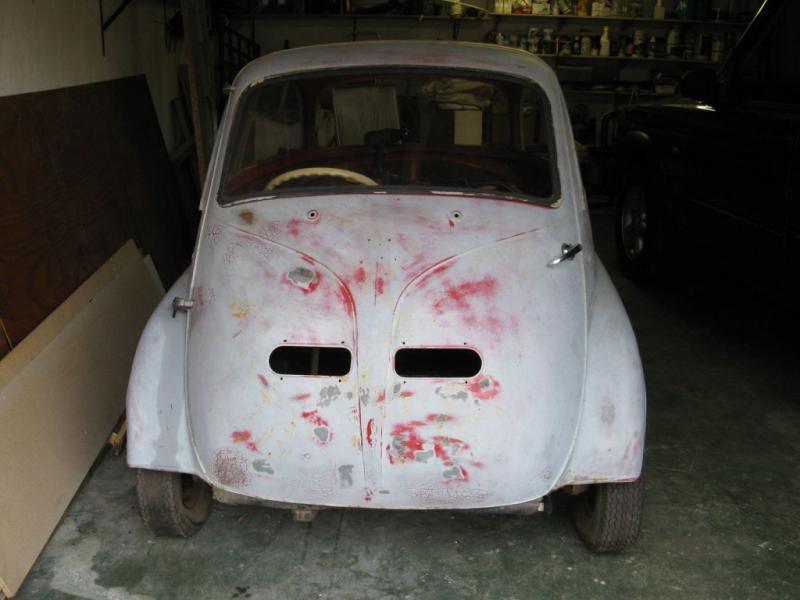
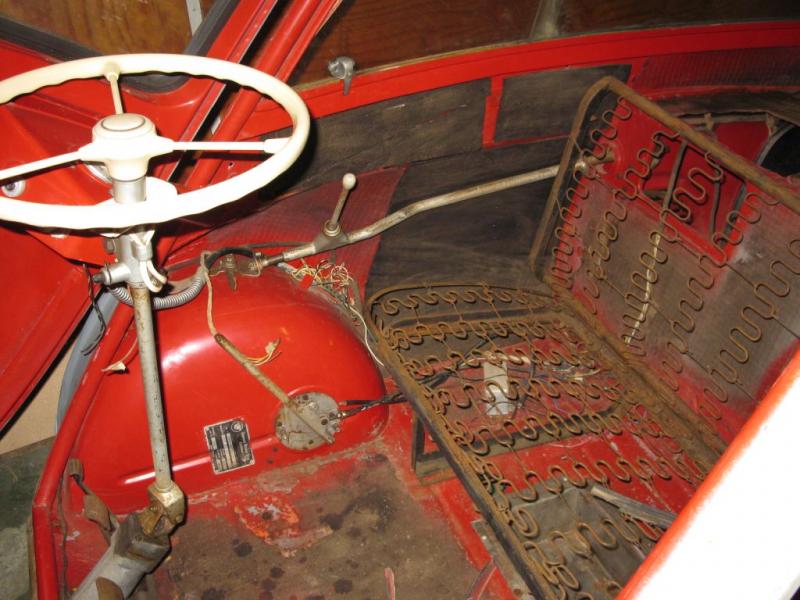
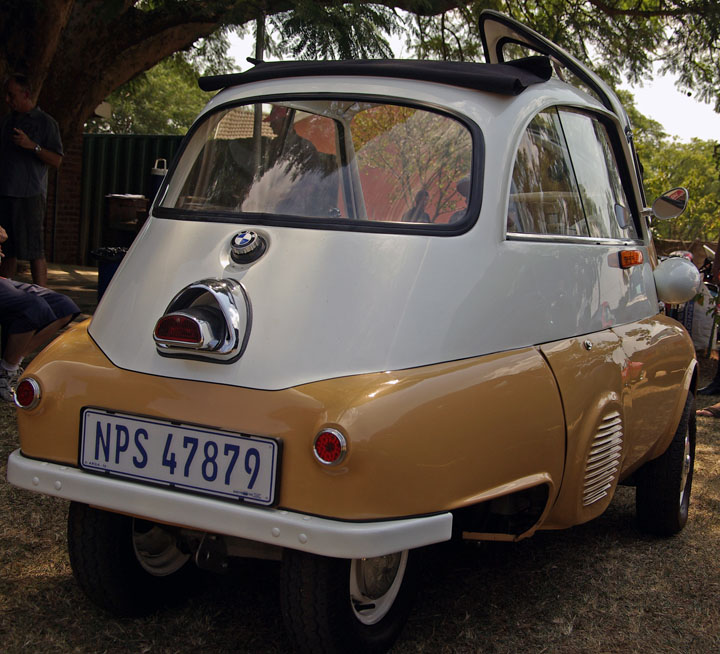
Proof that microcars are addictive is the fact that the Bakers simply could not shake off the disease after settling into their new habitat. A 1957 BMW Isetta 300 surfaced (yawn if you’ve heard this before) in a garden shed in Eshowe some 18 months previously. (Yes, it had weeds growing out of it.) Money changed hands and restoration began with the Bakers doing everything except upholstery and paintwork. The result is the magnificent little car pictured here. “Pat helps a lot,” Baker grins, “because microcars need small hands to work on them.”
Since then the collection has grown with two Messerschmitt KR 200s, one running and one a work in progress and a Goggomobil coupé fitted with a 400cc two-stroke twin. The latter is Pat’s present car, with a history of its own. One of the original seven, it was sold to a Ladysmith enthusiast when they left Johannesburg. He completed the restoration but subsequently passed away. Fittingly, the Bakers bought it from his estate.
Messerschmitts have a certain cachet. After WW ll, the fighter plane company was forbidden to follow that particular line of work so it turned to manufacturing microcars. First up was the KR 175 kabineroller (cabin scooter) powered by a 173 cc Fichtel and Sachs two-stroke single. This was manufactured between 1953 and 1955, when a much-improved KR 200 with 191 cc motor took to the streets.
There remained a hint of aircraft heritage in all but the rag-topped cabriolet versions however. A distinctive, side-hinged acrylic bubble provided access to the two seats set in tandem. Another distinctive feature is that these cars have four forward speeds and four reverse. Heard of that? Of course you have. The secret lies in the fact that the engine runs backwards when the ignition key is pressed in to a second position and the motor restarted. “Messerschmitts sell purely by word of mouth because they are so eagerly sought,” Baker told us. Having turned down an offer well into six figures for his own running example, he should know.
The couple is currently restoring an Isetta coupé on behalf of a German enthusiast who will take it back home with him once it’s complete. There are only two known running examples in Germany at present. This project will make it three.
“Microcars are among the few classics with investment value,” Baker said, “and there is some money to be made from good examples, but that’s only because they truly are an incurable disease.”
END
Views: 8
Leave a Reply