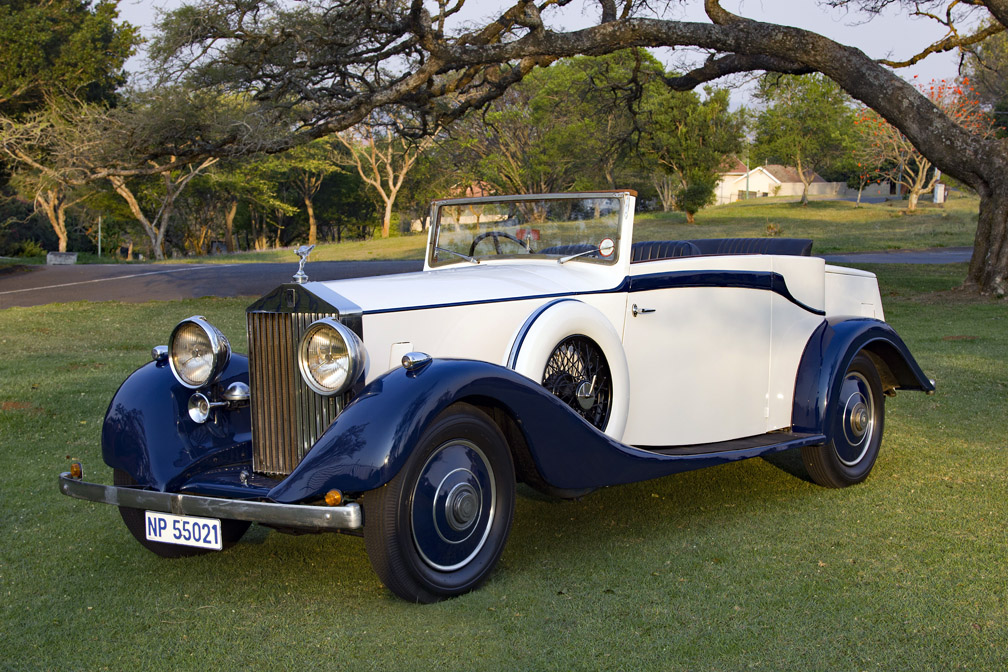
Body doubles, transplants and makeovers: 1936 Rolls-Royce 25/30 HP
A regal beauty
Back before That War Rolls-Royce, and other vendors of upper-crust motor-cars, did things differently. Pre-empting the modern fad, for turning every feature a buyer wants into an “optional extra,” Rolls-Royce simply supplied bare engines and chassis’. Choice of coachbuilder, body style, and all the bits and bobs inside, was up to the buyer. He or she negotiated with a chosen body firm, typically Hooper’s or Vanden Plas, then let them get on with it and thereafter return the finished job to the dealer who did the final invoicing.
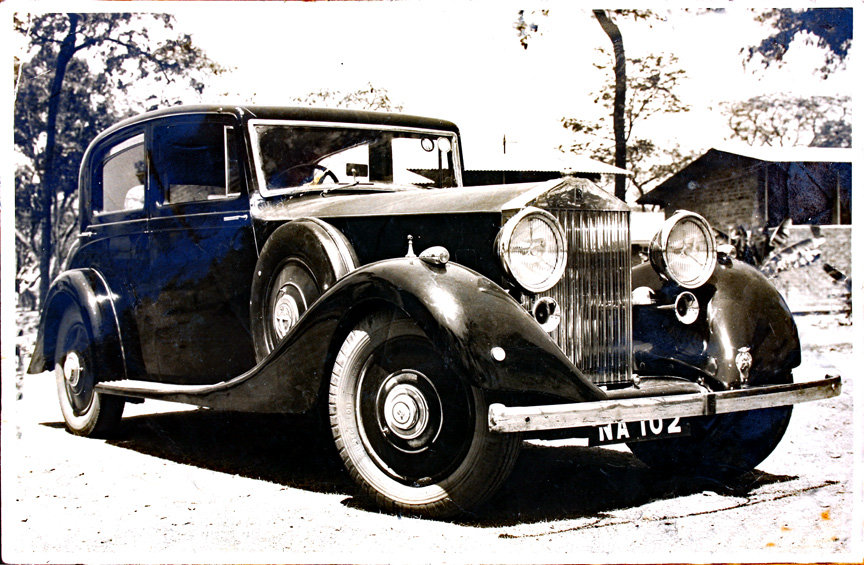
So it was that Commander C.H. Davey, RN, requested that his Rolls-Royce 25/30, Chassis No. GXM68, be built by Vanden Plas and modelled after his existing 20/25 four-door, four-light, saloon. Messrs. Jack Barclay Ltd of Hanover Square, London W.1, invoiced the completed car out to him on September 16, 1936. Typical list price at the time was £1605 complete, although options included a sliding roof for £20 or a drop-window divider priced at £25.
The car’s history is vague after that, undergoing an engine transplant and swapping homes between gentry and commoners, until we pick up its trail on 25th August 1956. That was when Mr A.G.B. Skinner bought it for £445 from Conway Motors (Hove) Ltd, of 107 King’s Road Chelsea.
Mr. Skinner shipped it to Cape Town, on the Bloemfontein Castle, shortly thereafter and promptly drove it via what is now Zimbabwe to present-day Zambia. Possibly as result of a cracked cylinder head – it has known a few of those during its lifetime – the car suffered engine failure while on a rally in South Africa during 1959. It was railed back to Kitwe for repairs.
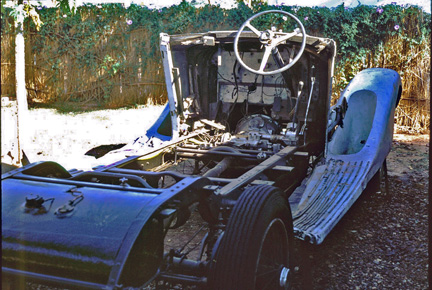
The body rotted away, its wooden frame crumbling to powder, in subsequent years and he finally sold the car somewhere around 1965. By 1970, Nature and scavengers had reduced it to an unrecognisable hulk. (Left)
Then came salvation: In December of that year Captain Vic. S. Meakin, an airline pilot from Lusaka, Zambia, bought the car and set about restoring it. Originally a woodwork and metal-craft teacher before his career change, Vic Meakin was able to apply his considerable skills to restoring GXM68. He began the project soon after building a small workshop and carport in the back garden of his home in Lusaka. The engine overhaul came first – the list of parts required was long – there can’t have been much left of it when he began.
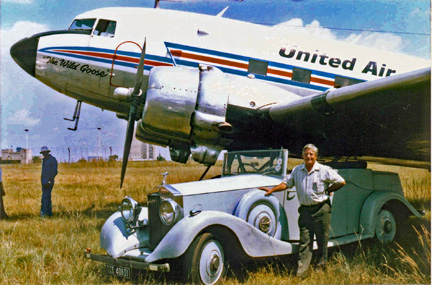
Five years of spare-time work later, the motor and chassis repairs were complete. He had also crafted a replica, Gurney Nutting-style, drop-head coupé body by adapting blueprints for a similar shell that had been designed for a Phantom 1. Nothing wrong with that; some humans have plastic surgeons resculpt their details with impunity. And there had always been body choices when the car was born.
But nothing came easily. In order to fabricate rear wings, for example, Vic first had to construct a wooden form and then hand-shape aluminum over that. The car eventually passed its roadworthiness test, in Lusaka, during June 1975.
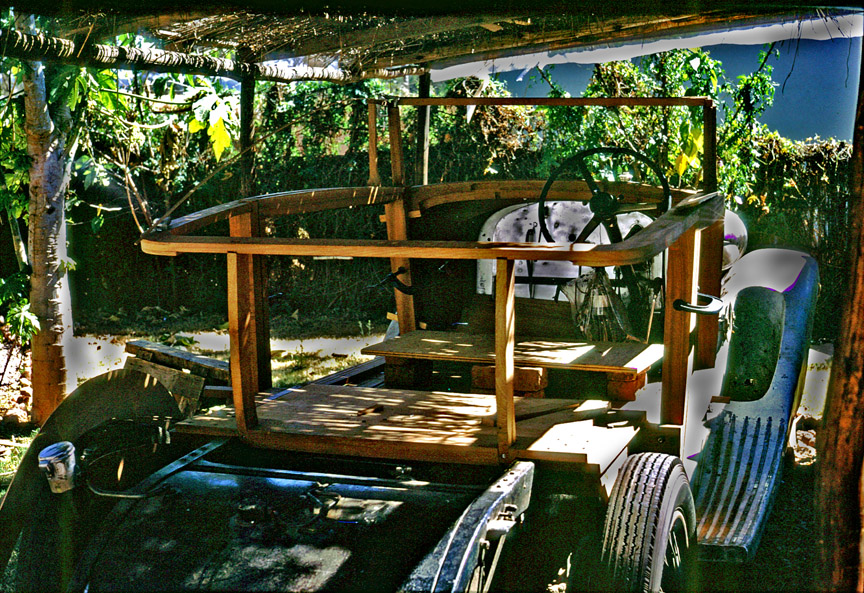
The car was brought to South Africa in 1976 and used until late 1990 when Captain Vic ascended to the great hangar in the sky. GXM68 then passed to his daughter, ornithological artist Penny Meakin. Owing to more pressing issues in her life, however, it stood unattended because the recalcitrant cylinder head had developed hairline cracks yet again.
By then in Pietermaritzburg, work resumed during 2000 with a further attempt to repair the troublesome component. But several days had first to be spent releasing the clutch that should, apparently, have been ‘jacked out’ during storage. (Why does nobody tell one these things beforehand?). The rewelded head didn’t last very long, unfortunately, before water again contaminated the oil. The old warrior was off the road yet again. A replacement cylinder head was among many parts imported from UK suppliers or collected in the course of flying visits.
Penny’s husband, John Carlyon, regales anyone interested with an enthralling tale of one such trip that culminated in his arrival, in the “Items to declare” queue at OR Tambo International, sporting a pair of tyres looped over one shoulder. We may even post it someday. We did: https://oldcars.net.za/blog/2025/01/29/tyres-and-tribulations/
Once again restored, its current colour scheme was applied during March 2005 by M. Bizarre Panelbeaters in Pietermaritzburg. She is now a regal beauty in Volvo ‘Polar White’ with Rolls-Royce ‘Pacific Blue’ mudguards and stripes.
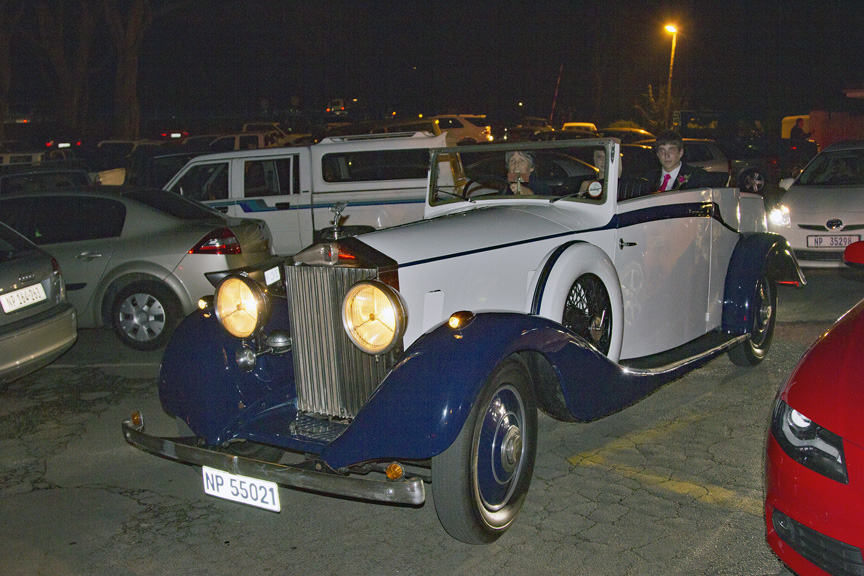
Penny’s heirloom has graced many shows, been written about in newspapers, transported blushing brides to weddings, ferried starry-eyed Matriculants to year-end dances, and now enjoys the pasture years to which every noble old Rolls is surely entitled.
Technical:
Country of origin: England
Number built: 1201
Engine: Inline-6, single-coil ignition
Block and head: Cast iron
Position: Front, Longitudinal
Aspiration Natural
Carburettor: Stromberg DC42 downdraft
Fuel pumps: 2 x SU
Electrics: 12V Rolls-Royce dynamo, starter motor, direction indicators and others
Battery: 12V/60A/hr. negative earth
Valvetrain: Pushrod Operated OHV
Displacement: 4257 cc / 260 in³
Bore/stroke: 89 mm/114 mm
Compression: 6.0:1
Power: 85.8 kw / 115 bhp at 4500 rpm
Zero to 60 mph: 23.5 seconds
Max. speed: Approx. 130 km/h / 80 mph
Fuel consumption, driven hard, 17.2 mpg
Fuel tank: 18 gallons
Specific output: 29.4 hp
Body / frame: Aluminium, over wooden frame
Driven wheels: RWD
Tyres: 600×19 cross-ply
Brakes: Drums, front and rear, w/Servo Assist under licence from Hispano-Suiza
Steering: Marles’ cam and roller
Suspension: Semi-elliptic springs, hydraulic dampers, Live axle at rear
Wheelbase: 3353 mm / 132 in
Transmission: Four-Speed Manual, synchromesh on third and fourth
Clutch: Borg and Beck single dry plate
Gear ratios: 3.10:1, 1.98:1, 1.32:1, 1.00:1
Final drive: 4.55:1
Propellor shaft: Hardy-Spicer
Views: 29
Leave a Reply