Porsche’s brief brush with agriculture
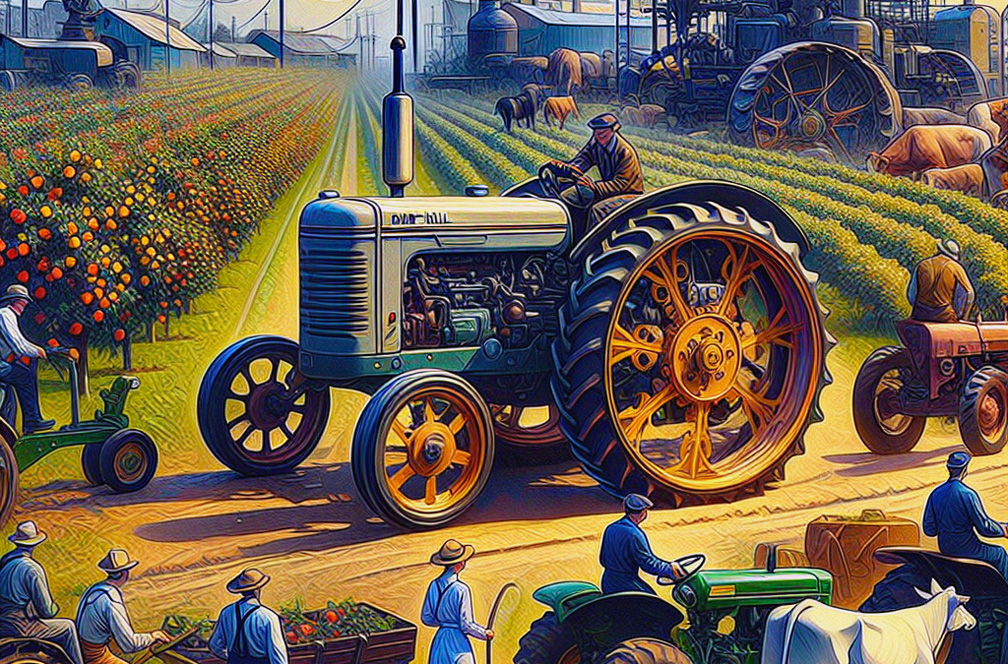
Before its sleek sports cars took to Autobahnen and dazzled enthusiasts worldwide, the Porsche legacy was rooted in something quite different; farm tractors.
It started in the 1930s: After making a name for himself, as creator of the iconic Volkswagen Beetle, Ferdinand Porsche turned his thoughts to new projects. Europe was in the grip of economic turmoil and the post-World War I landscape saw farmers in urgent need of reliable machinery. Enter the Porsche tractor. He completed his first three prototypes, with petrol engines and a hydraulic coupling between engine and transmission, in 1934.
He then established Dr. Ing. h.c. F. Porsche GmbH; a company focussed on producing not just cars, but also agricultural vehicles, in 1937. His first commercial tractors rolled off an assembly line in 1950. Sporting the aerodynamic design that would become a Porsche hallmark, they boasted levels of performance and efficiency that were ahead of their time. It wasn’t just any old tractor; it was a transformed workhorse that made farming more accessible and effective.
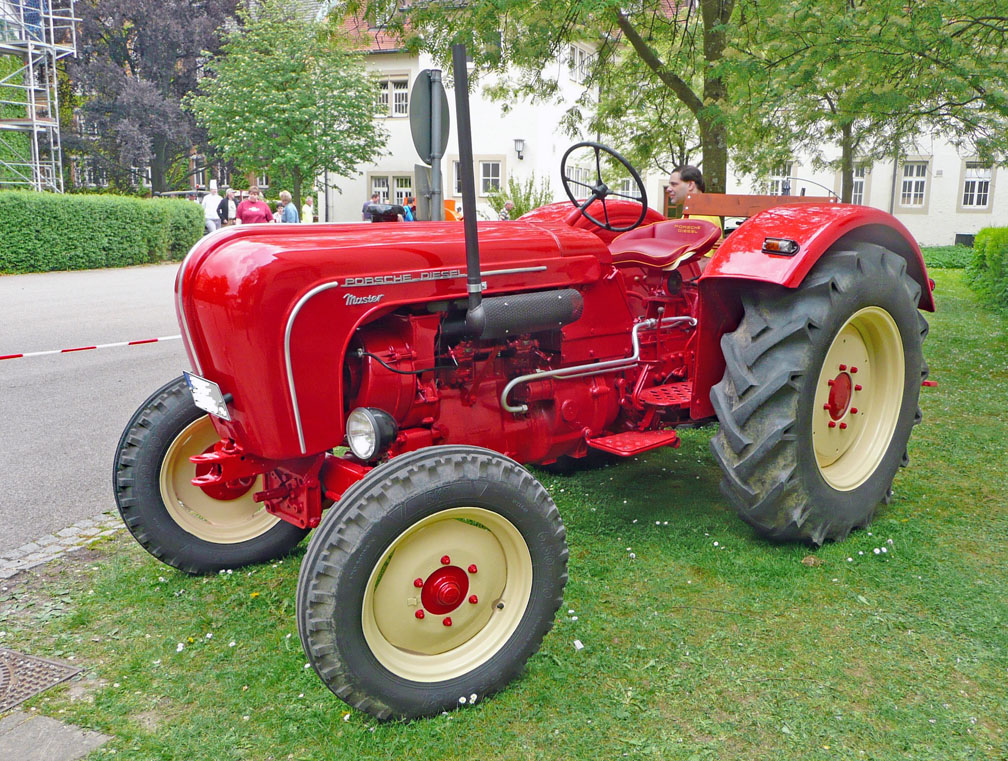
They were not only functional, but stylish; embodying the same design philosophy that defined Porsche automobiles. Farmers in Germany and beyond quickly took notice with models like Porsche Junior and Porsche Master becoming sought-after equipment for those looking to revolutionise their farms. His tractors offered reliability and power, allowing them to work the land more productively.
The history of Porsche tractors isn’t just about machinery, however, it’s about a shift in perception. While the world ultimately recognised Porsche as a leader in high-performance sports cars, the tractor line laid the groundwork for innovation and quality. Agricultural machinery showcased the company’s engineering brilliance long before it shifted gears toward high-performance autobahn- and track machinery.
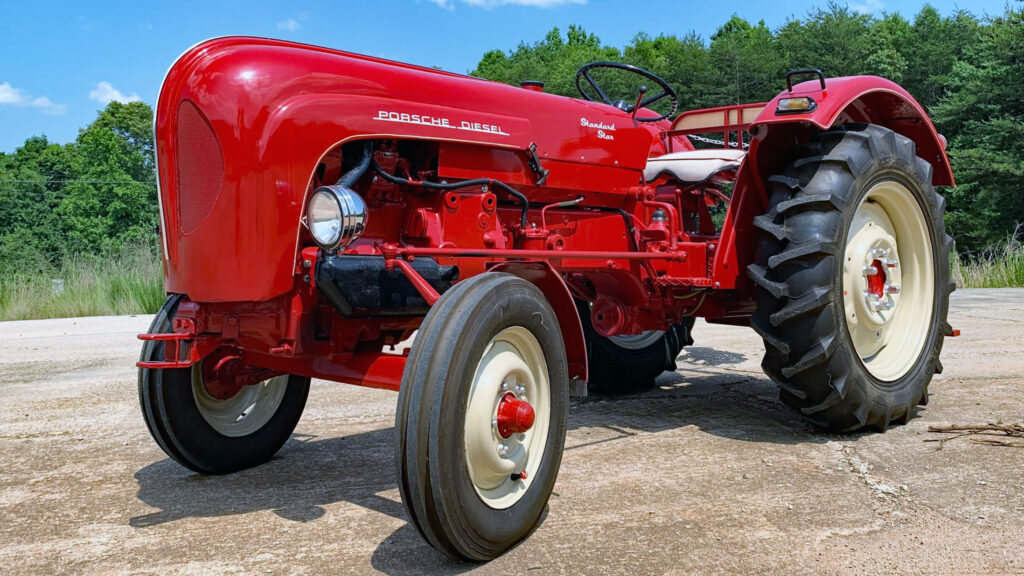
But Porsche could not build any itself: Post-WW ll regulations stipulated that, because Porsche had not been established as a tractor maker before hostilities commenced, it could not do so post-1945. The job had to be licensed out to established manufacturers. The job went first to Allgeier, in 1947, and later to Mannesmann. See below.
Porsche-Diesel
Just over eight years later, Porsche-Diesel GmbH took over the Allgaier production plants in Friedrichshafen on 01.01.1956. This new company was a subsidiary of Mannesmann AG, in which Porsche controlled development and design. Since Allgaier had worked closely with Porsche in the years before the sale, and built tractors “Allgaier System Porsche”, production continued seamlessly. In the various model designations, “A” for Allgaier gradually gave way to “P” for Porsche but, in practice, it took almost a year for this to happen.
The Porsche tractor range comprised 47 different versions over the years. They ranged from single-cylinder Juniors to four-cylinder Masters, with two- and three-cylinder models – as well as narrow-gauge and plantation tractors – in the mix as well.
Here are some typical specs from the four model ranges:
Model: Porsche-Diesel 419 ‘Master’
Manufacturer Porsche-Diesel Motorenbau GmbH
Production 1960–1963
Length 3380 mm
Width 1826 mm
Height 1637 mm
Weight 2100 kg
Propulsion Diesel engine
Engine model Porsche F 419 (Diesel, 3500 cm³)
Flywheel power 50 PS (37 kW)
Speed 19.4 km/h
Engine:
Type designation: Porsche F 419
Type: Inline four-cylinder diesel
Fuel system: Swirl-chamber injection
Fuel type: ≥44 CN
Bore × stroke: 98 × 116 mm
Displacement: 3500 cm3
Rated power (DIN 70020): 50 PS (37 kW) at 2100 min
Model: ‘Super’ Export 339
Years of manufacture: 1962 – 1963
Quantity built, approx: 3400
Max. speed: 19,2 km/h
Kerb mass: 1585 kg
GVM: 2500 kg
Axle load, f / r kg: 1050 / 1600
L / W / H mm: 3510 / 1530 / 1450
Wheelbase mm: 1965
Front track mm: 1248, opt. 1148 – 1648
Rear track mm: 1250 or 1500, opt. 1225 – 1725
Front tyre Size: 5.50-16 / 6.00-16
Rear tyre size: 10-28 / 11-28 / 9-32
Service brake: Drums at the back
Steering brake: Yes
Engine Manufacturer: Porsche-Diesel Motorenbau GmbH
Type: F329a (F339a)
Fuel: Diesel
Cooling: Air
Cylinders: 3
Displacement: 2625 cc
Bore/stroke mm: 98 / 116
Power at rpm: 30 hp at 2300 rpm
Gearbox and drive: Deutz T25, manual
Gears f/r: 8/2
Ranges: 2
Output axle: Behind
Differential lock: Yes
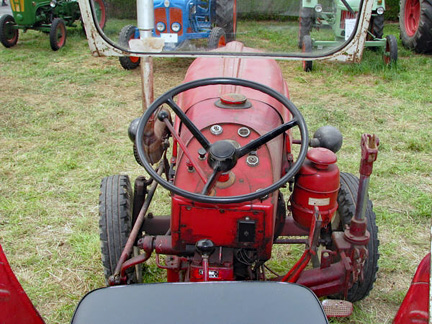
Model: Porsche-Diesel 218 ‘Standard’
Manufacturer Porsche-Diesel Motorenbau GmbH
Production 1957–1963
Approx. quantity: 3400
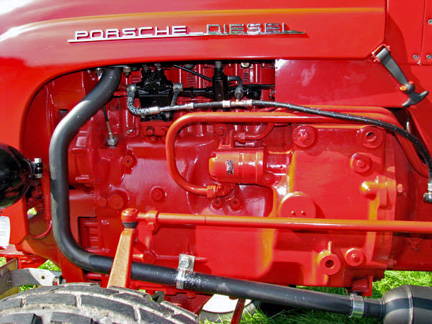
Engine: Porsche F218, two-cylinder, air cooled, four-stroke diesel with swirl-chamber injection, OHV
Capacity: 1644 cc
Bore × Stroke: 95 × 116 mm
Rated power: 25 PS (18.4 kW) at 2000 rpm
Maximum torque: 91.2 Nm at 1800 rpm
Compression ratio: 19:1
Fuel quality: Diesel engine fuel with 44 CN
Length 2835 mm
Width 1570 mm
Height 1600 mm
Weight 625 kg (including extra weights)
Propulsion Air-filled tyres
Drawbar pull 1,500 kp (14.7 kN)
Speed 20 – 25 km/h
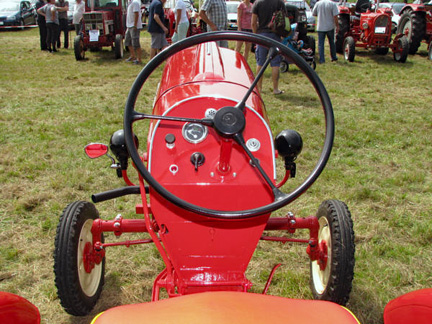
Model: Porsche ‘Junior’ 109 G
Years of manufacture: 1961 – 1963
Approximate number built: 2,500 (all variants)
Max. speed: 20 Km/h
Kerb weight kg: 1000
Total weight kg: 1600
Axle load f/r kg: 600 / 1000
L / W / H mm: 2560 / 1490 / 1500
Wheelbase mm: 1544
Gauge f/r mm: 1250 – 1650 / 1250 – 1650
Front tyre size: 4.00-16
Rear tyre size: 8-24 / 9-24
Service brakes: Drums at the back
Steering brake: Yes
Engine: Porsche Diesel
Cooling: Air
Cylinder: 1
Displacement: 875 cc
Bore/stroke, mm: 98 / 116
Power at rpm: 15 hp at 2250 rpm
Gearbox and drive: ZF A4, manual
Gears f/r: 6 / 2
Ranges: 2
Output axle: Rear
Differential lock: Yes
Views: 16
Leave a Reply