Growing up with a Model A, by Mike Leisegang
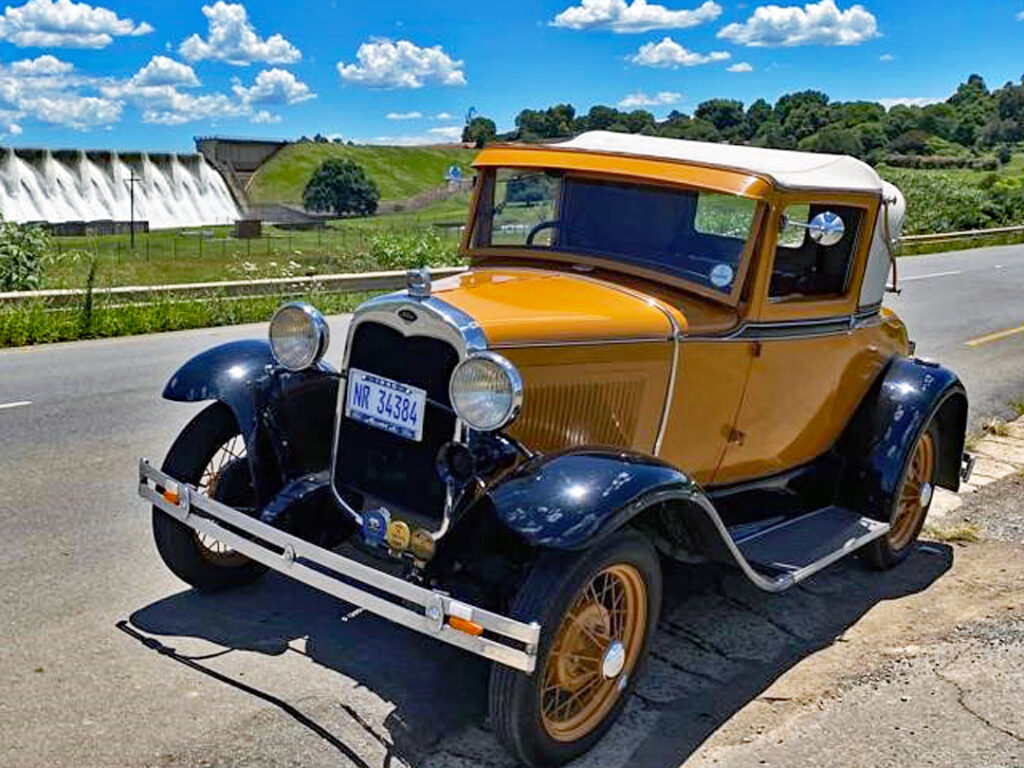
As a child, of about seven, I rode in this car when it belonged to my father’s cousin in Bedfordview.
It had been bought new by an old man in Kensington (Johannesburg) and, when he passed away, his son dismantled the car with the idea of making a hotrod out of it. The project thankfully never took off. The car was subsequently found by a Mr Henry Bessinger who rescued it and brought it to his home in Bedfordview. My dad’s cousin Gordon Stewart, an avid Ford fanatic, while attending a children’s birthday party at Mr Bessinger’s house, saw the car in pieces in the garage and bought it. It was rebuilt to its current state sometime in the 1970s.
Gordon kept the car in a special spot in his garage, and it was only taken out on very special occasions. Getting it out of the garage meant moving many Ford Cortinas, Ford 20Ms and so on. He eventually retired and moved to Howick, taking the car with him. It again stood in a spot, the one farthest from the garage door, where the petrol tank corroded to a point at which the car was undriveable. It remained like that for 15 years until Gordon decided to sell it in 2012 on, of all unfortunately named places, “Junkmail”. I couldn’t let that happen so, in order to keep it in the family, I immediately approached him to arrange a deal.
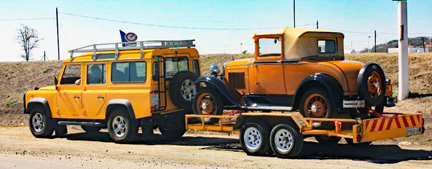
We trailered the Model A from Howick and, once in Randburg, began stripping the fuel tank out. Silverton Radiators in Eloff Street did a marvellous job of cleaning the tank up. In the meantime my wife and I were frantically trying to find out more about motor car mechanics, those knowledgeable about Model As in particular, so that we could get the engine running. We learned a lot from the Internet and managed, eventually, to fire it up.
We subsequently discovered that there are many more Model As remaining in existence than we initially thought and, during 2013, the Model A Club of South Africa was formed. Within six years this nation-wide club grew to over 100 members – representing around 200 cars – making it, at the time, the biggest single-model club affiliated to the South African Vintage and Veteran Association (SAVVA).
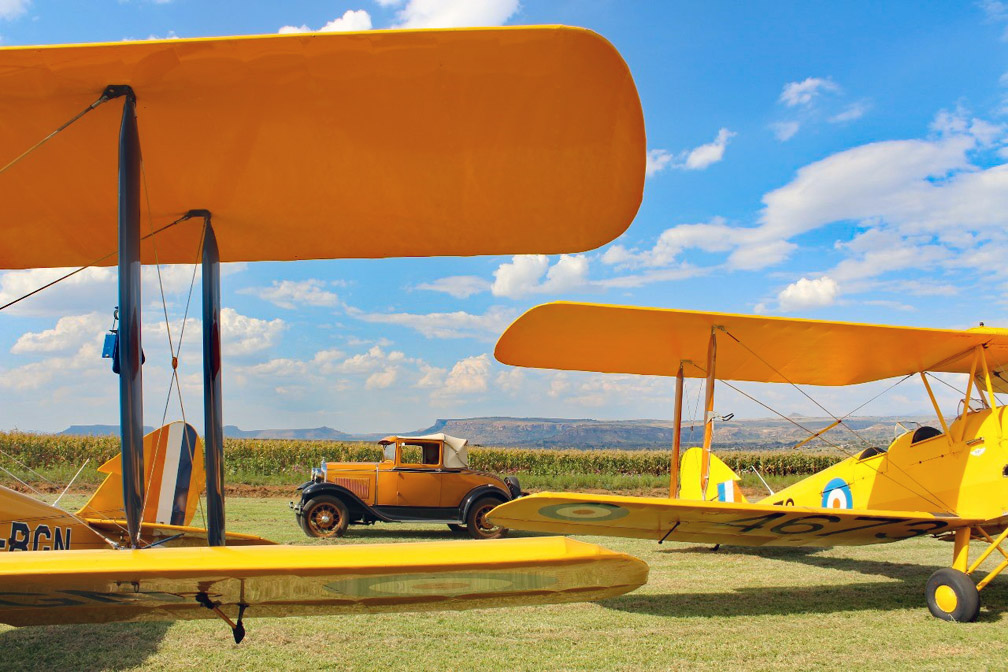
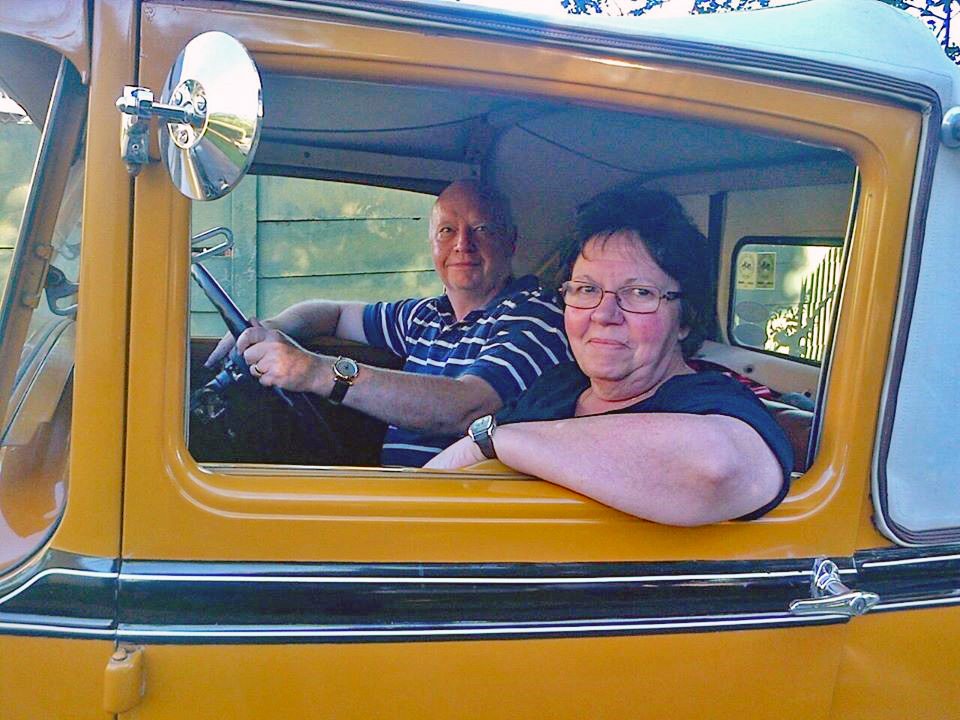
Our trusty old Model A became known as ‘Betsy’ and she has given us endless fun and enjoyment. She is driven regularly and I often used to take her to work! Betsy has motored from Johannesburg to KZN twice, without a moment’s trouble, and we have been able to share her with Gordon Stewart whenever we visited him.
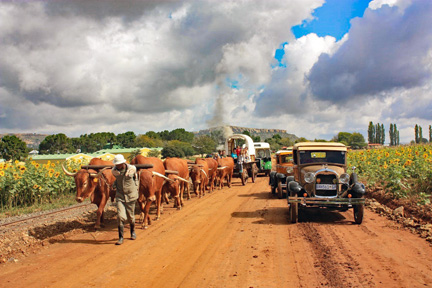
She has also visited the Sandstone Heritage Trust museum near Ficksburg twice:
https://museumexplorer.co.za/sandstone-heritage-museum/
https://www.sandstone-estates.com/
What a pleasure and joy to drive; and a completely different way to see our beautiful country! Betsy now lives in Howick and is often seen driving around town.
For those who “have to know”, here are some technical details:
Ford Model A 1928 – 1931
How did the Model A come about? It was derived from the Lincoln – and was affectionately called a “Baby Lincoln” – because Edsel Ford ran said motor company until his father brought him in, to help the ailing Ford company, when Model T sales were dropping in 1926/7.
Where was it made? There were 35 production plants in the USA. Cars destined for South Africa, and other Commonwealth countries, were produced in Windsor, Canada. Ford manufactured Model As in the United States, Canada, France, Germany and England. There were assembly plants in Australia, South Africa, Argentina, Chile, Japan, Denmark, Ireland, and Russia.
When was it made? 1928 (late 1927) – 1931
How many were made? Around 4 ½ to 5 million. It took VW’s Beetle much longer to reach such numbers by the way.
How many are in South Africa? Over 350; about half of which are running.
How much did it cost when new? $455 to $795
What are they worth now? In running, drivable condition, about R250 000 and upwards
How much does it weigh? 2,255 pounds, or 1,023 Kilograms
Where was the engine? In the front
What size is the engine ? 3,286 cc / 200.5 cu in. / 3.3 litre four-cylinder
How powerful is the engine? 40 HP (29.44 KW) @ 2,206 RPM
What about the gearbox? Manual: Three forward speeds, one reverse
What is the fuel consumption? Between 25 and 30 mpg (US), 8 to 12 km/l or 12.5 to 8.3 l/100 km. Those are official figures. South African owners of the time, who kept meticulous records, state that the best they ever achieved was 19 mpg Imperial or about 16 mpg US.
Front or rear wheel drive? Rear-wheel drive
How fast can it go? Top speed is around 65 mph (104 km/h). Official figure again; owners say that its top speed was more like 50 mph – unless one freewheeled downhill in order to save fuel.
How does it stop? Four-wheel mechanical drum brakes (300 working parts when the brake pedal is pressed).
Where is the petrol tank? In front of the windscreen – fuel is gravity-fed to the carburettor
How big is the petrol tank? 1928/29: 10 US gallons / 38 litres; 1930/31: 11 US gallons / 41 litres
How far can you go on a tank of fuel? About 250 km
How long is it? 103.5 inches, or 2.62 metres
Can you still get parts? Almost everything is still available; mostly from US suppliers
What about tyres? Tyre sizes: 1928 – 1929, 440/450 x 21. 1930-on, 475/500 x 19.
Recommended inflation pressure: 35 psi = about 2.4 bar.
Tyres have to be imported from the USA
Some fun facts: The Model A
- Had higher annual production figures (1.2 million per year) than the Model T (773,000 per year).
- Was the first Ford to use the standard set of driver controls with conventional clutch and brake pedals, throttle and gearshift.
- Was the first Ford to wear the famous Blue Oval radiator badge as we know it today.
- Canadian Model A Fords had black radiator badges
- Was the first car to have safety glass
- Model As have been to the South Pole.
- Model A engines have been used to power aeroplanes
- The Soviet Union company GAZ, that started as a cooperation between Ford and the Soviet Union, made a licensed version of the Model A from 1932-36.
- Rarest Model A is the 1931 Town Car Delivery
Views: 15
Leave a Reply